
Attic Mold Removal
Attic mold is usually a ventilation or roof-leak problem in disguise. The fix is removing the growth, replacing contaminated insulation, and correcting the airflow issue that caused it — not just cleaning the sheathing.
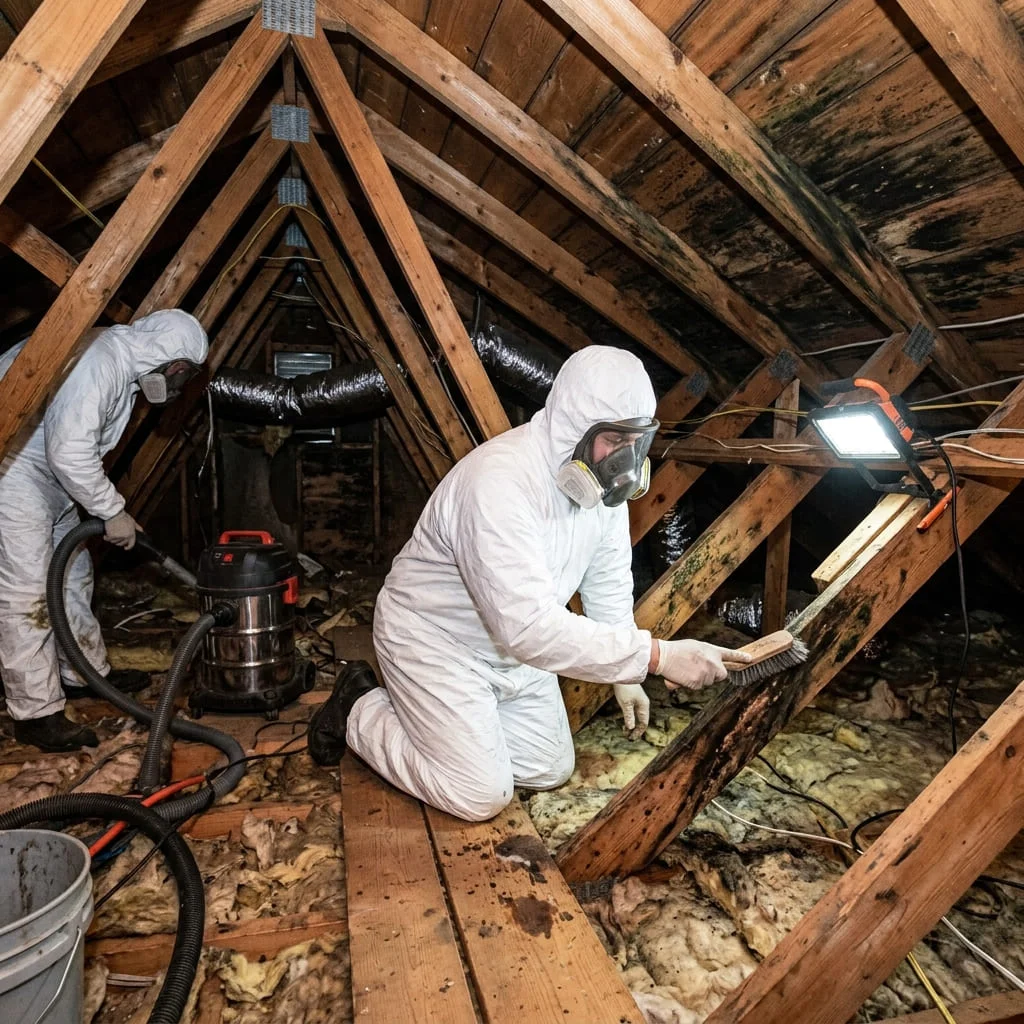 Attic mold growth on roof sheathing caused by poor ventilation and a roof leak
Mold on your roof sheathing? The fix is removal plus better airflow.
The attic is one of the most common places mold turns up, and one of the most overlooked — few homeowners climb up there until an inspection or a roof issue forces the discovery. When mold appears on the underside of the roof sheathing or across the rafters, it is almost always a story about moisture that had nowhere to go: a roof leak that let water in, or an attic that traps warm, humid air because it cannot breathe. Removing the growth without correcting the cause simply resets the clock.
A proper attic job starts by identifying the moisture source. If a roof leak is feeding the mold, that flashing or shingle failure has to be addressed. If the real culprit is poor ventilation — blocked soffit vents, a bathroom fan dumping humid air into the attic instead of outside, or inadequate ridge venting — no amount of cleaning will keep the mold from returning until the airflow is fixed. A contractor who quotes removal without assessing ventilation is quoting half the job.
Removal itself should be done carefully and under containment so spores do not drift down into the living space through gaps and light fixtures. Contaminated insulation, which traps moisture and cannot be effectively cleaned, is removed and bagged. Structural wood surfaces are HEPA-vacuumed, treated, and, where appropriate, encapsulated. The result you are paying for is a clean, dry, properly ventilated attic — not a temporarily scrubbed one.
What an attic job covers
What it costs
Attic mold removal ranges from a few hundred dollars for a small, contained area to several thousand when contaminated insulation must be removed and replaced and ventilation corrected. The biggest cost drivers are the amount of affected sheathing and whether the roof or airflow problem behind it needs work.
Make sure the quote covers the moisture source and the ventilation fix, not just the cleaning — a scope that stops at the visible growth is the one that comes back.
From first call to final clearance.
Call & describe
Tell us what you are seeing or smelling over the phone. We ask the right questions to understand the situation and which kind of contractor fits it.
Get connected
We put you in touch with mold companies serving your area, so you can compare free, no-obligation quotes rather than guessing from a search result.
Assessment & scope
The contractor inspects on site, traces the moisture source, and gives you a clear written plan and price before any work begins.
Remediation & clearance
The crew contains the area, removes the mold, dries it to normal moisture levels, and independent clearance testing confirms the result.
Attic Mold Removal — what people ask.
What causes mold to grow in an attic?
Attic mold is almost always caused by trapped moisture — either a roof leak letting water in, or poor ventilation that lets warm, humid air condense on the cold underside of the roof. Bathroom or dryer vents that discharge into the attic instead of outside are a frequent hidden cause.
Does attic mold affect the air in the rest of my house?
It can. Spores travel through gaps around light fixtures, attic hatches, and ductwork, and the stack effect naturally pulls attic air down into living spaces. That is why the work area should be contained and the ventilation addressed, rather than just cleaning the visible growth.
Does the removed insulation get replaced?
Contaminated insulation traps moisture and spores and cannot be reliably cleaned, so it is removed and bagged as part of the job. Ask any contractor how replacement is handled and whether it is included in the quote — new insulation should go back into a dry, properly ventilated attic to perform as intended.
How do I know if I have attic mold?
Common signs include a musty smell in upstairs rooms, dark staining on the roof sheathing or rafters, moisture in the attic during cooler months, and higher-than-expected humidity upstairs. An attic inspection confirms it — call and we will connect you with inspectors serving your area.
Concerned about mold? Compare quotes.
Free quotes, honest guidance, and no obligation. Call now to be connected with mold specialists serving your area.