
Water Damage Restoration
Water damage becomes mold damage in as little as 24 to 48 hours. Fast extraction and thorough drying protect the property — and stop mold before it starts. Call to reach restoration crews serving your area.
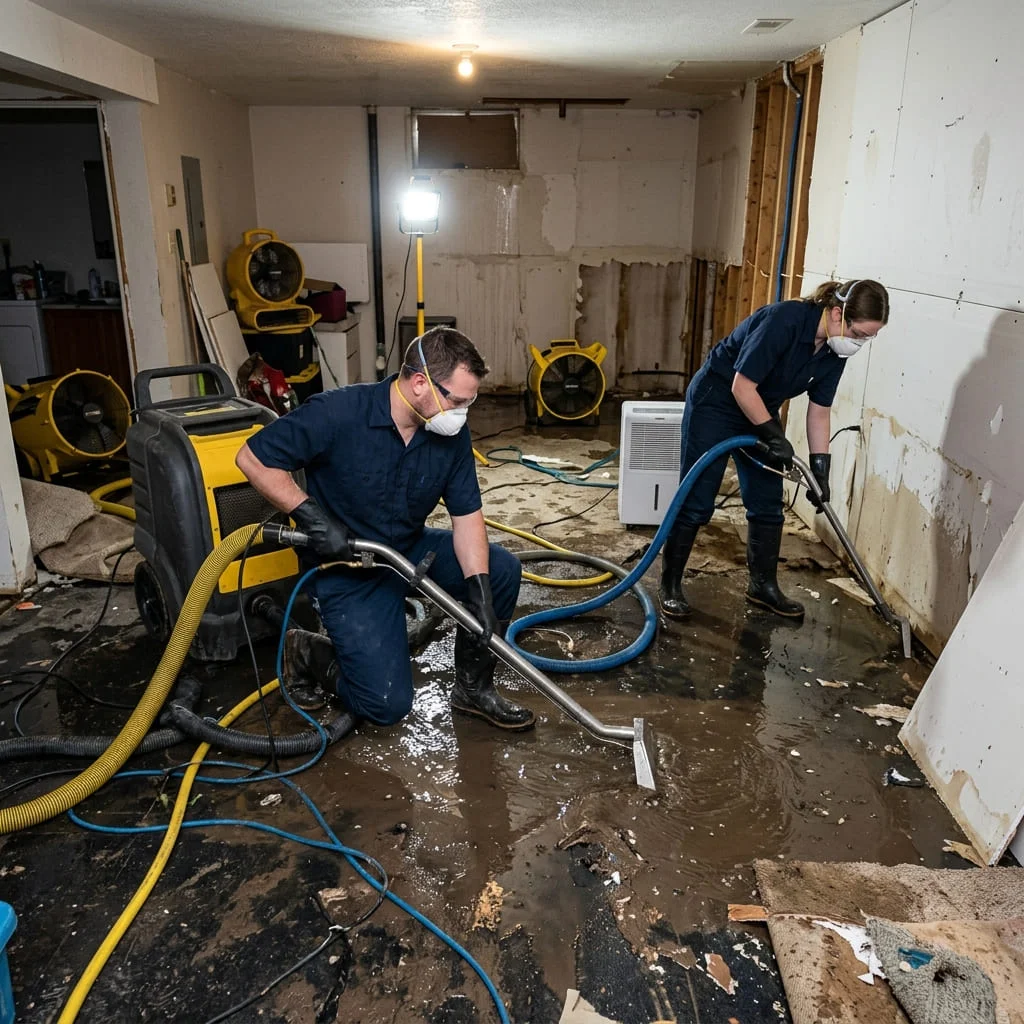 Emergency water extraction and structural drying after a home water leak
Dry it fast, dry it right — before water damage turns into a mold problem.
When water floods in from a burst pipe, a failed water heater, a roof leak, or a monsoon storm, the clock starts immediately. Within 24 to 48 hours, damp drywall, carpet, and framing become the perfect breeding ground for mold. That is why water damage restoration and mold prevention are two sides of the same job — and why speed matters so much. The single most useful thing you can do is get a restoration crew on site quickly to extract the water and begin drying.
The work starts by stopping the intrusion and removing standing water with truck-mounted and portable extraction equipment. Then comes structural drying: commercial air movers and dehumidifiers pulling moisture out of framing, subfloor, and wall cavities that a shop vac and household fans never reach. Moisture levels should be monitored with meters throughout, because the water you cannot see — wicked up inside a wall or trapped under flooring — is exactly what feeds mold later.
Mold prevention is what separates a thorough restoration from a quick pump-out. Look for antimicrobial treatment of at-risk surfaces, verification that materials are dried to normal moisture content rather than just dry to the touch, and a clear call on anything that cannot be salvaged. Thorough photo and moisture documentation matters too — it is what supports your insurance claim when the adjuster asks.
What a restoration job covers
What it costs
Water damage restoration is usually priced by the size of the affected area and the volume of water. For sudden events like a burst pipe or appliance failure, much of the cost may be covered by your homeowners insurance; smaller dry-outs can run a few hundred dollars, while larger losses cost more.
Many restoration companies bill directly through insurance, which can limit out-of-pocket cost to your deductible. Ask whether they do, and make sure the damage is documented with photos and moisture readings for the claim.
From first call to final clearance.
Call & describe
Tell us what you are seeing or smelling over the phone. We ask the right questions to understand the situation and which kind of contractor fits it.
Get connected
We put you in touch with mold companies serving your area, so you can compare free, no-obligation quotes rather than guessing from a search result.
Assessment & scope
The contractor inspects on site, traces the moisture source, and gives you a clear written plan and price before any work begins.
Remediation & clearance
The crew contains the area, removes the mold, dries it to normal moisture levels, and independent clearance testing confirms the result.
Water Damage Restoration — what people ask.
How fast can a contractor respond to a water emergency?
Water damage is time-sensitive, and the companies in this directory prioritize emergency calls — many aim to be on site the same day, often within hours. The sooner extraction and drying begin, the less damage you face and the lower the chance of mold taking hold.
How long does it take to dry out a water-damaged area?
Structural drying typically takes three to five days depending on how much water was absorbed, which materials are involved, and the humidity. A thorough crew monitors moisture levels daily with meters and does not pull the equipment until readings confirm the structure is genuinely dry.
Will my insurance cover water damage restoration?
Sudden, accidental water damage — like a burst pipe or an appliance failure — is commonly covered by homeowners insurance, while gradual leaks may not be. A good restoration company documents everything with photos and moisture readings and provides the paperwork your adjuster needs, but coverage ultimately depends on your specific policy.
Can water damage really cause mold that quickly?
Yes. Under the right conditions, mold can begin growing on wet materials within 24 to 48 hours. That is precisely why fast, thorough drying is the single most effective way to prevent a water event from becoming a mold remediation project.
Concerned about mold? Compare quotes.
Free quotes, honest guidance, and no obligation. Call now to be connected with mold specialists serving your area.