
Black Mold Removal
Black mold demands a stricter, more cautious protocol. Identifying Stachybotrys correctly and removing it with the right containment and protection is what separates a qualified crew from a general cleanup — here is what to look for.
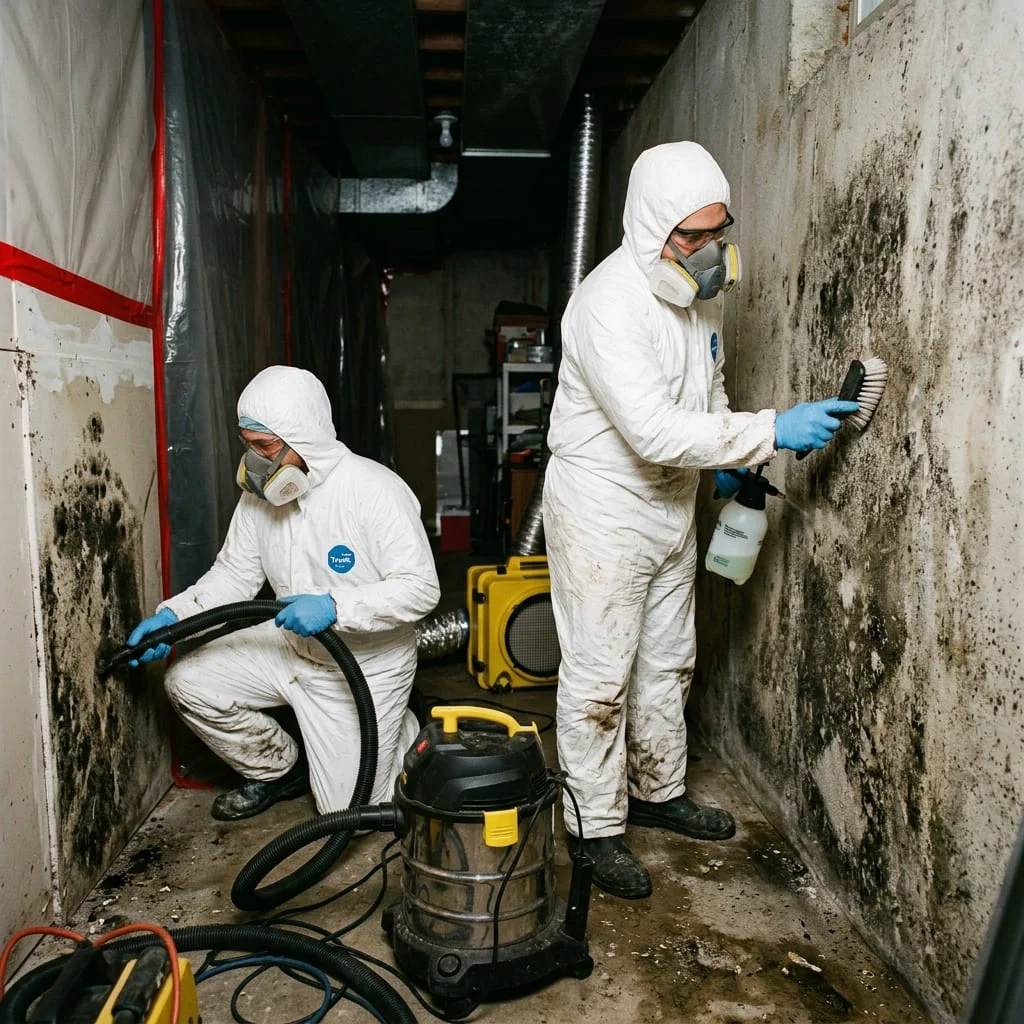 Specialist removing black mold under protective containment protocol
Suspected black mold? Handle it with caution and the right protocol.
Not all dark mold is toxic black mold, and not all black mold looks the same — which is exactly why identification matters. Stachybotrys chartarum, the species most people mean by "black mold," is a slimy, dark greenish-black growth that thrives on constantly wet, cellulose-rich materials like drywall, ceiling tile, and wood that has stayed damp for days or weeks. It is associated with a heavier health burden than common household molds, so a qualified contractor treats every suspected case with elevated caution until lab testing confirms what it is.
Removing black mold safely requires stricter controls than routine remediation: full containment under negative air pressure, appropriate respiratory protection for the crew, and careful removal of contaminated porous materials without disturbing the colony any more than necessary. Aggressive DIY scrubbing is the worst possible response — it aerosolizes an enormous number of spores and mycotoxins into the air you breathe.
Physical removal is only half the job. Expect a plain-language explanation of the health risk and a hard look at the moisture problem that allowed a demanding species like Stachybotrys to establish itself, because black mold only grows where water sits. When the work is done, clearance testing by an independent party is the way to confirm the space is genuinely safe again.
What a black mold job covers
What it costs
Because black mold (Stachybotrys) demands stricter containment and additional protective equipment, it generally costs more to remove than common household mold. Most black mold jobs in Arizona fall in the $1,500 to $6,000+ range, depending on how widespread it is and how much contaminated material has to come out.
Identification and scoping should come before any number. Expect a written estimate after the species is confirmed and the extent is measured — and no pressure to book on the spot.
From first call to final clearance.
Call & describe
Tell us what you are seeing or smelling over the phone. We ask the right questions to understand the situation and which kind of contractor fits it.
Get connected
We put you in touch with mold companies serving your area, so you can compare free, no-obligation quotes rather than guessing from a search result.
Assessment & scope
The contractor inspects on site, traces the moisture source, and gives you a clear written plan and price before any work begins.
Remediation & clearance
The crew contains the area, removes the mold, dries it to normal moisture levels, and independent clearance testing confirms the result.
Black Mold Removal — what people ask.
How do I know if it is really toxic black mold?
You cannot confirm the species by look or smell alone — several harmless molds appear dark. The only reliable way to identify Stachybotrys is laboratory analysis of a sample, which a mold inspector can collect and submit before anyone quotes a removal plan.
Is black mold dangerous to my health?
Black mold can cause more significant respiratory irritation, headaches, and allergy-like symptoms than common molds, particularly for children, older adults, and anyone with asthma or a weakened immune system. Because of that, suspected cases warrant heightened caution — and leaving the growth undisturbed until a professional assesses it.
Should I try to remove black mold myself?
No. Disturbing black mold without containment releases a heavy concentration of spores and mycotoxins into your air, spreading the problem and exposing your household. It is one of the situations where professional handling genuinely matters for safety.
What causes black mold to grow in an Arizona home?
Despite the dry climate, black mold shows up wherever water sits for an extended time — behind a slow plumbing leak, under a roof that failed during monsoon season, around an overflowed water heater, or in poorly ventilated spaces where condensation collects. Finding and fixing that water source is essential to keeping it gone.
Concerned about mold? Compare quotes.
Free quotes, honest guidance, and no obligation. Call now to be connected with mold specialists serving your area.