Mold Inspection & Testing
Before you remediate, you need to know exactly what you are dealing with. A proper inspection locates hidden mold, maps the moisture feeding it, and confirms the findings with lab-grade air testing — here is what that should include, and how to compare inspectors near you.
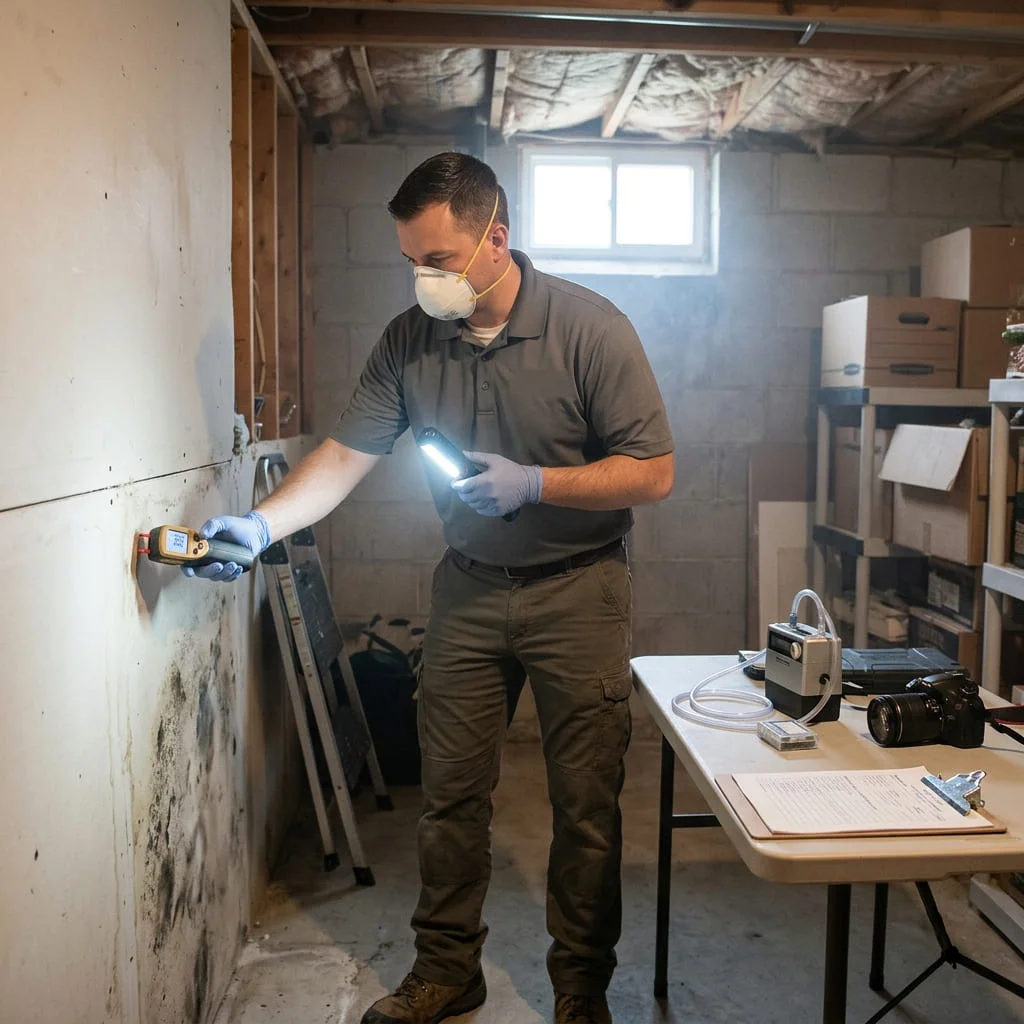 Mold inspection in progress with moisture-testing equipment
Know exactly what you are dealing with — before spending a dollar on removal.
Mold rarely announces itself. A musty smell, a lingering allergy, or a single stain behind a baseboard is often the only clue that a much larger colony is growing inside a wall cavity, under flooring, or above a ceiling. A proper inspection replaces guesswork with facts. A specialist inspector combines a thorough visual assessment with moisture meters, thermal imaging, and laboratory air sampling to show you precisely where mold is, how far it has spread, and — just as important — what is feeding it.
The moisture source matters more than the mold itself. Remove the visible growth without fixing the leak, condensation, or humidity problem behind it, and the mold simply returns. A worthwhile inspection traces the water intrusion to its origin, whether that is a slow plumbing leak, a failed roof flashing, poor attic ventilation, or the condensation that builds up on Arizona ductwork during monsoon humidity swings.
What you should walk away with is a clear, written report you can actually use — findings in plain language, lab results when air samples are taken, and honest guidance on what needs remediation versus what simply needs to dry out. An inspector worth hiring will also tell you when a property is clean. If a company jumps to a remediation quote before establishing where the water is coming from, that is a reason to get a second opinion.
What a full inspection covers
What it costs
A basic visual mold assessment is often free. When laboratory air or surface sampling is involved, professional mold inspections in Arizona typically run about $300 to $1,025, depending on the size of the property and how many samples are collected and lab-analyzed.
These are general market ranges, not a quote. Ask any inspector to confirm the exact price before paid testing begins — call and we will connect you with companies that will price your specific situation.
From first call to final clearance.
Call & describe
Tell us what you are seeing or smelling over the phone. We ask the right questions to understand the situation and which kind of contractor fits it.
Get connected
We put you in touch with mold companies serving your area, so you can compare free, no-obligation quotes rather than guessing from a search result.
Assessment & scope
The contractor inspects on site, traces the moisture source, and gives you a clear written plan and price before any work begins.
Remediation & clearance
The crew contains the area, removes the mold, dries it to normal moisture levels, and independent clearance testing confirms the result.
Mold Inspection & Testing — what people ask.
How much does a mold inspection cost?
Pricing depends on the size of the property and whether laboratory air samples are collected. A basic visual assessment is often free, and any paid testing should be quoted at a clear, flat price before it begins. Call and we will connect you with inspectors who can price your specific situation.
Do I really need testing, or can I just see the mold?
If you can see mold and you already know the source, you may not need testing to start remediation. Testing matters when mold is suspected but not visible, when you need to identify the species, when you want to document the problem for a sale or insurance claim, or when you need clearance testing to confirm a remediation worked.
How long does an inspection take?
A typical residential inspection takes one to two hours on site depending on the size of the home and how many areas need sampling. When air or surface samples are collected, lab results usually come back within two to three business days, and the inspector should walk you through what they mean.
What is post-remediation clearance testing?
After mold has been removed, clearance testing confirms the work was successful and that airborne spore levels are back to normal. It is independent proof the job was done right, which is why it is worth arranging as a separate step — ideally through someone other than the company that performed the removal, especially for a real estate transaction.
Concerned about mold? Compare quotes.
Free quotes, honest guidance, and no obligation. Call now to be connected with mold specialists serving your area.