
Mold Remediation
The most requested service in this directory. Proper remediation removes mold safely and completely using industry-standard containment and HEPA filtration, then treats and dries the area so it does not come back.
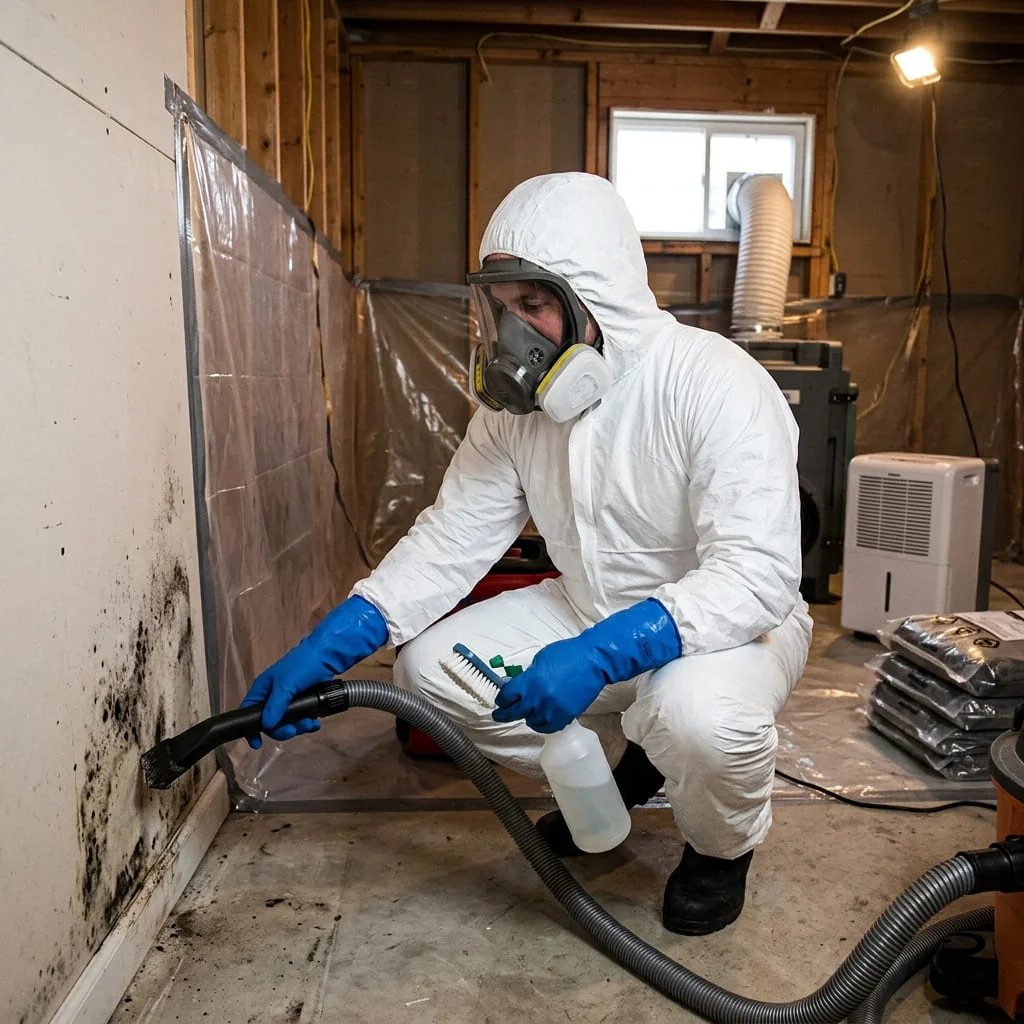 Mold remediation in progress with containment barriers and HEPA air filtration
Mold removed the right way — contained, filtered, and treated at the source.
Mold remediation is not the same as cleaning. Wiping visible growth with bleach may hide the problem for a week, but it disturbs the colony, sends millions of spores airborne, and does nothing about the mold rooted inside porous materials. Proper remediation follows a disciplined protocol designed to remove the mold without spreading it through the rest of the home — and the ANSI/IICRC S520 standard is what defines that protocol. A contractor who can explain how their scope maps to it is giving you something you can hold them to.
Every remediation should begin with containment. The crew seals off the affected area with physical barriers and puts it under negative air pressure using HEPA-filtered air scrubbers, so spores cannot migrate into clean rooms during the work. Contaminated porous materials — drywall, insulation, carpet padding — are removed and bagged. Salvageable surfaces are HEPA-vacuumed, cleaned, and treated with an EPA-registered antimicrobial that resists regrowth.
Because mold is always a moisture problem, the job is not finished until the area is fully dried and the water source is addressed. That means commercial dehumidifiers and air movers bringing materials back to normal moisture content, verified with meters rather than judged by touch. The last step worth insisting on is independent clearance testing, so the proof that the space is safe comes from someone other than the company being paid for the removal.
What a full remediation covers
What it costs
Most residential mold remediation in Arizona runs roughly $1,500 to $6,500, with small, isolated areas sometimes as low as $500 and widespread contamination costing more. As a rule of thumb, remediation is often priced at about $10 to $25 per square foot of affected area.
The final figure depends on how much material must be removed, drying time, and any repairs afterward. Have the contractor assess the extent and put a clear, flat price in writing before work starts, and compare at least a couple of scopes.
From first call to final clearance.
Call & describe
Tell us what you are seeing or smelling over the phone. We ask the right questions to understand the situation and which kind of contractor fits it.
Get connected
We put you in touch with mold companies serving your area, so you can compare free, no-obligation quotes rather than guessing from a search result.
Assessment & scope
The contractor inspects on site, traces the moisture source, and gives you a clear written plan and price before any work begins.
Remediation & clearance
The crew contains the area, removes the mold, dries it to normal moisture levels, and independent clearance testing confirms the result.
Mold Remediation — what people ask.
How long does mold remediation take?
Most residential remediation projects take one to three days depending on the size of the affected area, how many materials must be removed, and drying time. A good contractor gives you a realistic timeline in writing before starting and keeps you updated as the work progresses.
Do I need to leave my home during remediation?
In most cases you can stay, because containment isolates the work area from the rest of the home. For larger jobs, or when remediation involves a bedroom or the main HVAC system, a contractor may recommend staying elsewhere for a night or two — ask them to be specific about why and for how long.
Will the mold come back after remediation?
Not if the moisture source is fixed. Mold needs water to grow, so a proper remediation always addresses the leak, condensation, or humidity problem behind it. When the source is corrected and the area is properly dried, the mold does not return — which is why a quote that ignores the water source is a warning sign.
Is bleach enough to kill mold myself?
Bleach is not recommended for porous materials like drywall and wood. It removes surface staining but leaves the root structure behind, and disturbing mold without containment spreads spores through your home. EPA guidance suggests that anything much beyond about 10 square feet is generally past a do-it-yourself cleanup.
Concerned about mold? Compare quotes.
Free quotes, honest guidance, and no obligation. Call now to be connected with mold specialists serving your area.