Accu Clean Environmental
Licensed environmental remediation company specializing in mold removal, asbestos removal, and water damage for residential and commercial properties across the West Valley.
Compare ratings, reviews, and services from the best mold remediation contractors serving Buckeye and the surrounding area — then get matched with a free, no-obligation quote.
Comparing top-rated mold removal companies serving Buckeye, ArizonaBuckeye covers more ground than any other city in Arizona and has been among the fastest-growing cities in the country for years, which produces a mold problem most of the valley does not have: an enormous number of homes young enough that their owners assume mold is impossible. It is not. A brand-new house has a tight, well-sealed envelope, and when a shower pan, a window flashing, or an air conditioning condensate line was installed wrong, that envelope holds the moisture in rather than letting it dry out.
The other half of Buckeye is much older — the historic downtown and the surrounding Buckeye Valley farmland, where flood irrigation, canals, and the Gila River to the south have kept water moving through the ground for well over a century. Arizona Mold Pros compared the mold remediation contractors that cover this end of the West Valley, which matters here because Verrado, Festival Ranch, Tartesso, and downtown Buckeye are a long way apart. Start with mold inspection and testing, or with water damage restoration if water has already come in.
Last Updated: July 2026
Every company listed below is evaluated on customer reviews, Google ratings, licensing and insurance status, response time and availability, the range of mold services offered, and experience with Arizona-specific mold issues like monsoon moisture and swamp cooler condensation. We only feature companies that actively serve the Buckeye area.
Verified Google ratings and the volume and consistency of homeowner reviews.
Companies that carry the licensing and insurance Arizona homeowners should expect.
How quickly a company can be on site — including 24/7 emergency coverage.
Inspection, testing, remediation, and water damage restoration under one roof.
Familiarity with monsoon moisture, swamp cooler condensation, and desert construction.
Only companies that actively serve the Buckeye area make our list.
Licensed environmental remediation company specializing in mold removal, asbestos removal, and water damage for residential and commercial properties across the West Valley.
National brand with local ownership serving the West Valley including Litchfield Park, Tolleson, Avondale, and Goodyear for mold remediation and water damage.
Professional mold remediation company using advanced moisture detection to eliminate mold and prevent recurrence. Serves Phoenix, Mesa, Chandler, Gilbert, and beyond.
Certified mold specialists providing 24/7 emergency mold removal and remediation with transparent pricing, free inspections, and eco-friendly treatments.
Established restoration company serving Arizona since 1998 with over 7,000 five-star reviews for mold removal, water damage repair, and carpet cleaning.
| Service | Average Cost Range |
|---|---|
| Mold Inspection | $300 – $600 |
| Small Area Remediation (under 50 sq ft) | $1,500 – $3,500 |
| Medium Remediation (50–200 sq ft) | $3,500 – $6,000 |
| Full Home Remediation (200+ sq ft) | $5,000 – $10,000 |
| Attic Mold Removal | $2,000 – $6,000 |
| Crawl Space Mold Removal | $2,500 – $7,000 |
| Black Mold Removal | $3,000 – $8,000 |
| Commercial Mold Remediation | $5,000 – $25,000+ |
Costs in Buckeye can vary depending on the size of the affected area, type of mold, accessibility, and whether structural repairs are needed. Arizona's dry climate means mold often concentrates around specific moisture sources — monsoon water intrusion, swamp cooler leaks, or plumbing failures — rather than spreading across entire homes. We recommend getting at least 3 quotes from licensed contractors to compare pricing.
Compare free quotes from top Buckeye mold removal companiesNew construction is the defining Buckeye risk, and it surprises people. Master-planned neighborhoods like Verrado, Festival Ranch, and Tartesso are full of homes only a few years old, and the failures that turn up in those first years are installation defects rather than wear: a shower pan that was not sealed correctly, window flashing lapped the wrong way, an unsealed penetration through the building wrap, roof valley flashing that was never finished properly, or an air conditioning condensate line that drains where it should not.
A tightly built envelope makes each of those worse, because a leak that would have dried out in a drafty older house instead stays wet inside a sealed wall cavity. Oversized cooling equipment adds to it: a unit far larger than the house needs satisfies the thermostat quickly and short-cycles, which cools the air without running long enough to pull much moisture out of it. The result is a five-year-old home with growth behind a shower wall and an owner who never thought to look because the house is new.
The second factor is water in the ground, which in Buckeye goes back to the farms. The Buckeye Valley has been irrigated agricultural land for generations, canals and laterals still run through and alongside developed areas, and flood irrigation saturates fields on a schedule through the growing season. Plenty of newer subdivisions sit on or beside ground that was farmed within living memory and still drains like it.
Terrain adds the rest. The White Tank Mountains shed runoff eastward toward the Verrado and Festival Ranch side of the city during monsoon storms, alluvial washes cross the area, and the Gila River runs south of town. Water arriving from the ground announces itself at the bottom of a wall — bubbling paint, softened baseboard, efflorescence on block, flooring lifting along an exterior edge — rather than as a stain coming down from a ceiling. Outlying properties on wells and septic have a further set of sources in the pressure tank, pump house, and leach field that a standard metro inspection never opens.
Third is everything that is not new. Historic downtown Buckeye and the older housing around it carry aging plumbing, worn shower pans, evaporative coolers that run humid air through the house all summer, and bathrooms that vent poorly or vent into an attic instead of outside. Manufactured homes on the outskirts have their own characteristic failure — water trapped in the skirted underfloor cavity beneath the belly wrap, sitting against subfloor sheathing with no way to dry, which is the situation crawl space mold removal exists to handle.
Then there are the seasonal residents. Sun City Festival and similar neighborhoods have a substantial number of part-year owners who leave for the summer, and a house closed up through a Phoenix July with nobody in it is where a slow leak does its best work. Whatever the vintage of the building, if water has been sitting long enough for a smell to develop in a closed room, the job needs containment and HEPA filtration rather than bleach and a rag — the standard behind proper black mold removal.

If your Buckeye home is still young and you find mold, the order of operations matters as much as the work itself. Do not start demolition before the problem is documented. Photograph everything with dates, note where the water appears to be coming from, and notify the builder in writing while the home is inside its warranty period — Arizona sets out a notice and opportunity to repair process for construction defect claims, and skipping the written notice can complicate things later. Getting that notice on the record early costs nothing and preserves your options.
None of that means waiting while the house stays wet. Emergency water extraction and drying are urgent regardless of who eventually pays, because growth can start on wet drywall and insulation within 24 to 48 hours. The move that protects you is getting an independent moisture assessment alongside the builder's, so the record is not composed entirely by the party whose repair bill depends on the finding. Keep the moisture readings and drying logs — a reputable restoration firm produces both — and ask whether the builder's remediation will include post-remediation verification performed by someone other than the crew doing the removal.
The second Buckeye-specific issue is simply distance. This is the largest city by land area in the state, and Verrado at the base of the White Tanks, Festival Ranch to the north, Tartesso out west, and historic downtown are far apart from each other, let alone from a Phoenix dispatch office. When you call, give a cross street rather than just the city, ask directly whether a travel charge applies, and ask for an arrival window rather than accepting a same-day promise that sounds unrealistic for the drive.
On the work itself, the questions are the same everywhere: will containment and HEPA filtration be set up before any demolition begins, how far above the visible damage will material be removed, and will dryness be verified with a moisture meter rather than by touch. Arizona Mold Pros can connect you with a licensed contractor covering the area — compare mold removal companies in Goodyear, Avondale, Arlington, and Tonopah, browse all service areas, or get in touch.
The most obvious sign is visible growth — black, green, or white spots spreading across walls and ceilings, under sinks, or around window frames. But mold in Buckeye homes often hides, so a persistent musty or earthy odor in a bathroom, closet, or other enclosed space is just as important to take seriously. That smell usually means moisture is feeding something you can't yet see.
Context matters too. If your Buckeye home has had recent water damage, flooding, or a plumbing leak, mold can begin growing within 24 to 48 hours. Watch for peeling paint, bubbling wallpaper, or discoloration on surfaces, and pay attention to condensation collecting on windows or walls. Unexplained respiratory symptoms, worsening allergies, or headaches that ease when you leave the house can also point to a hidden mold problem.
If you notice any of these signs in your Buckeye home, contact a licensed mold remediation professional for an inspection before the problem spreads.
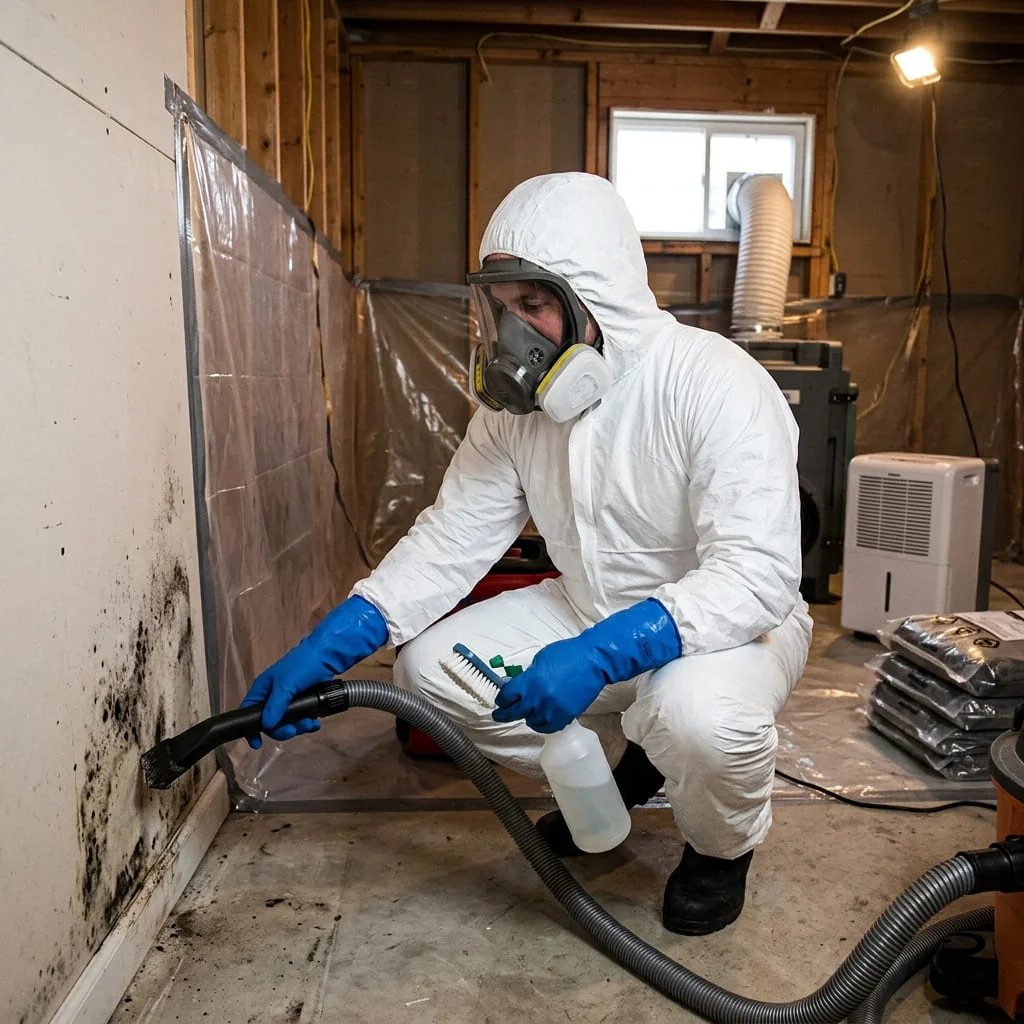
A quality mold removal company in Buckeye starts with an inspection and assessment to identify the type of mold and the extent of the problem. Once the scope is clear, the crew contains the affected area with plastic sheeting and negative air pressure so spores don't spread to clean parts of the house, then runs HEPA air filtration to capture anything airborne.
From there, the actual remediation begins: physical removal of mold using antimicrobial treatments and scrubbing, followed by thorough drying and dehumidification of the affected areas. Any damaged materials — drywall, insulation, or flooring — are repaired or replaced, and reputable contractors finish with post-remediation testing to confirm mold levels are back to normal.
The best mold removal companies serving Buckeye will provide a detailed scope of work and walk you through each step before starting any remediation.
Mold remediation is one of the few home services where the homeowner carries most of the verification burden. These four checks apply to every contractor on this page, and they are worth running before you sign anything.
Arizona does not issue a license specifically for mold remediation. Crews generally work under an Arizona Registrar of Contractors (ROC) license instead, which means verifying a contractor's ROC status and insurance is on the homeowner rather than on the state.
Check a license at the Arizona ROC →EPA guidance suggests that mold covering roughly more than 10 square feet is generally beyond a do-it-yourself cleanup and warrants professional remediation. Smaller patches can often be handled yourself — provided you have also fixed the moisture source feeding them.
EPA mold cleanup guidance →The ANSI/IICRC S520 standard is the widely recognized standard of care for professional mold remediation, covering containment, worker protection, and verification. A contractor who can tell you how their scope maps to it is giving you something you can hold them to.
Post-remediation verification confirms the work succeeded. Where the budget allows, have it performed by someone independent of the company that did the removal, so the party certifying the result is not the party being paid for it.
How this guide works. Arizona Mold Pros is a directory — we are not the remediation contractor and we do not perform the work ourselves. Listings are compiled from publicly available information about companies advertising mold services in the Buckeye area, and ratings and review counts are approximate figures gathered from public sources that change over time, so verify them yourself before hiring. We may be compensated when a homeowner connects with a contractor through this site. That does not change the evaluation criteria above, and we recommend comparing at least three written scopes regardless of who you call.
Yes, and newer neighborhoods like Verrado, Festival Ranch, and Tartesso see it regularly. The failures in a young home are installation defects rather than wear — an improperly sealed shower pan, window flashing lapped the wrong way, an unsealed penetration, or a condensate line draining where it should not. A tightly built envelope then holds that moisture in a wall cavity instead of letting it dry, so a five-year-old house can have growth behind a shower wall with no visible warning.
Do both, in the right order. Document the damage with dated photographs before anything is removed and notify the builder in writing while the home is within its warranty period, since Arizona provides a notice and opportunity to repair process for construction defect claims. At the same time, get emergency extraction and drying underway, because growth can begin within 24 to 48 hours. An independent moisture assessment alongside the builder’s keeps the record from being written entirely by one side.
Coverage varies, and Buckeye is the largest city by land area in Arizona, so this is a real question rather than a formality. Verrado, Festival Ranch, Tartesso, and historic downtown are a long way from each other and from a Phoenix dispatch office. Give a cross street rather than just the city name when you call, ask whether a travel charge applies, and ask for an arrival window instead of a same-day promise that does not match the drive.
Mold removal costs in Buckeye typically range from $1,500 for small areas to $10,000 or more for full-home remediation. The exact cost depends on the size of the affected area, type of mold, and whether structural repairs are needed. We recommend getting at least 3 quotes from licensed contractors.
Most residential mold remediation jobs in Buckeye take 1 to 5 days. Larger projects involving multiple rooms, extensive water damage, or structural repairs can take up to 2 weeks. Your contractor should provide a timeline before work begins.
It depends on the cause. Arizona homeowners insurance typically covers mold remediation if the mold resulted from a sudden, accidental event like a burst pipe or storm damage. Mold caused by ongoing neglect, deferred maintenance, or pre-existing conditions is usually not covered. Check with your insurance provider for specifics.
Yes. Despite Arizona's dry climate, black mold (Stachybotrys chartarum) can develop anywhere with persistent moisture — bathrooms, attics, crawl spaces, and behind walls near plumbing. Monsoon season, swamp coolers, and water heater failures are common causes of black mold growth in Buckeye homes.
It depends on the severity. For small, contained areas, you can usually stay home while the remediation crew works. For larger projects involving multiple rooms or HVAC system contamination, temporary relocation may be recommended — especially for households with children, elderly family members, or anyone with respiratory conditions.
Fix the moisture source first — that's the number one priority. After that, improve ventilation in bathrooms and kitchens, use exhaust fans, consider a dehumidifier for enclosed spaces, and schedule regular inspections especially before and after monsoon season (July through September). In Buckeye, pay extra attention to swamp cooler areas and any rooms adjacent to exterior plumbing.
Don't wait for mold to spread. Compare the top-rated mold removal contractors serving Buckeye and the surrounding area. Get your free estimate today — no obligation, no pressure.
Call Now for Free QuotesFree estimates · No obligation · Licensed contractors