Preferred Choice Restoration
Quality-focused restoration company specializing in mold remediation, water damage, and insurance claim assistance for residential properties.
Services Tempe and the surrounding area
Compare mold testing and inspection companies serving Tempe — what a proper test should check, what it costs, and how to read the results — then get matched with a free quote.
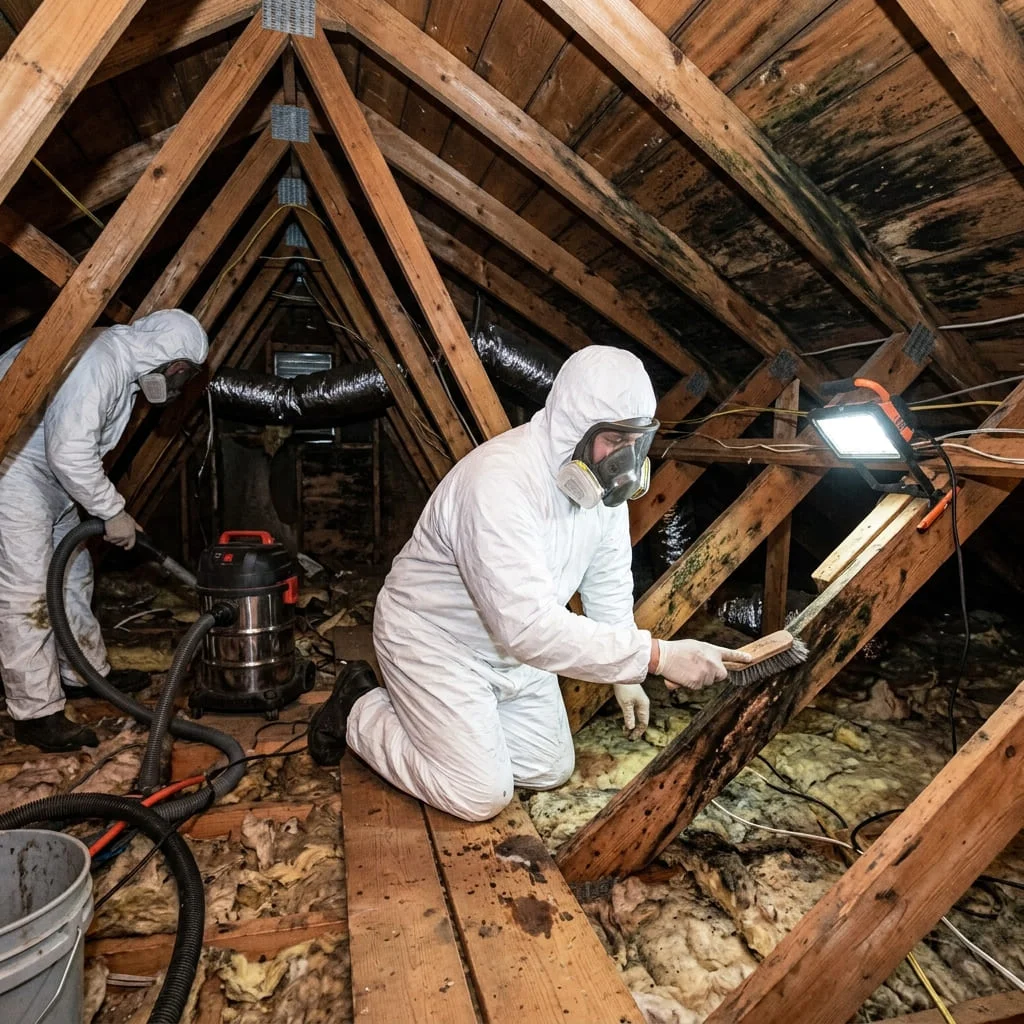 Mold testing and inspection equipment used to assess a Tempe, Arizona home
Tempe has the oldest housing stock in the East Valley, and its mid-century plumbing is exactly the kind of hidden moisture source that a surface-level mold test misses. Homes in Maple-Ash, Broadmor, Mitchell Park, and the other grid neighborhoods around downtown and campus were built in the 1950s and 1960s with galvanized supply lines and cast iron drains, both of which are now well past a normal service life and fail as slow, invisible weeps rather than dramatic bursts. Arizona Mold Pros compared the companies offering mold testing across Tempe so you can find one equipped to check concealed plumbing, not just run an air sample. If testing already confirmed a problem, see mold removal companies in Tempe or the remediation process itself.
Last Updated: September 2026
The companies below offer mold testing and inspection in the Tempe area. We do not rank them, rate them, or verify their credentials on your behalf — that check is yours to make, and the steps below are the ones worth making it with.
Not disqualifying, but worth knowing. If the same company both tests and quotes the fix, an independent second opinion is cheap insurance on anything but a small job.
If air or surface samples are taken, ask which lab processes them and whether it holds AIHA or equivalent accreditation — the sample is only as reliable as the lab reading it.
An indoor spore count means little on its own. A same-day outdoor sample for comparison is what turns a number into an actual finding.
A real report names the specific locations checked, the readings taken, and any lab results — not just "looks fine" or "you have mold" over the phone.
Arizona issues no mold-specific license. A tester should hold a relevant ROC classification or operate as an independent environmental consultant — ask which, and verify it.
Testing scope and price vary by property size and sampling method in Tempe. Two quotes tell you whether a price is thorough or simply high.
Quality-focused restoration company specializing in mold remediation, water damage, and insurance claim assistance for residential properties.
Professional mold remediation company using advanced moisture detection to eliminate mold and prevent recurrence. Serves Phoenix, Mesa, Chandler, Gilbert, and beyond.
Arizona's leading mold and water damage restoration company specializing in emergency response, mold inspection, and full property restoration.
Mold specialists handling emergency mold removal and remediation with itemized scopes of work.
Mold damage restoration specialists offering inspection, containment, removal, and repairs.
A musty smell with nothing visible in a pre-1970 Tempe home is the single most common reason to test here, and it's worth understanding why before you book. Galvanized and cast iron plumbing fails gradually — a pinhole weep in a supply line or a separated joint in a drain — and the water it releases can feed a wall cavity or a slab-adjacent area for months before producing a visible stain. A test aimed at this needs moisture meter readings taken at the wall base and slab edge in the rooms nearest plumbing runs, not just a visual walkthrough or a single air sample in the hallway. If the source turns out to be a drain line rather than a supply line, that matters for what happens next: drain water is a more contaminated category, and any sampling should reflect that distinction rather than treating it as an ordinary clean-water event.
The second thing worth testing for is the roof and attic, particularly in homes that once had an evaporative cooler. A roof penetration left behind after a conversion to refrigerated air, capped quickly and rarely inspected since, is one of the more reliable sources of a slow roof leak in this housing stock. Ask whether the test includes checking the underside of any current or former cooler opening from inside the attic, and whether duct insulation along the way is checked for the kind of condensation damage a shallow, hot Tempe attic produces every summer. If you rent, ask what documentation the inspector provides — a dated written report with photographs is exactly the record that matters if a dispute over when a problem was first reported comes up later.
A proper mold test starts with a visual assessment of the area of concern and a conversation about what you've noticed — a smell, a stain, a health symptom, or simply wanting a clean bill of health before buying or selling a home. From there, the inspector uses a moisture meter and often a thermal imaging camera to check walls, floors, and ceilings near likely sources: plumbing runs, exterior walls, attic penetrations, and anywhere staining or an odor points to.
If the visual and moisture survey doesn't turn up an obvious answer, or if you need documented lab results — for a real estate transaction, an insurance claim, or a landlord dispute — air and surface samples are collected and sent to an accredited lab, typically alongside an outdoor sample for comparison. Results usually come back within a few business days. Either way, you should walk away with a written report: what was checked, what was found, and what it means for next steps — not just a verbal impression.
See our guide to mold inspection versus remediation for how testing and removal fit together, or start with the Mold Inspection & Testing service page for what a full inspection covers statewide.
Home test kits — petri dish or tape-lift kits you mail to a lab — have a real limitation: mold spores exist in the air of nearly every home at some level, so many kits return a "positive" result whether or not you actually have a problem. What they can't tell you is whether your indoor levels are elevated compared to the outdoor air, which is the actual question that matters.
A professional test solves that by taking a same-day outdoor sample alongside the indoor one, so the lab result means something in context. If mold is already visible, testing it is usually unnecessary — the EPA's own guidance is to remediate what you can see rather than pay to confirm it. Testing earns its cost when there's a smell or symptom with no visible source, or when you need documentation for a sale, an insurance claim, or a rental dispute.
A musty smell with no visible mold in an older Tempe house is not a reason to skip testing — it's exactly the situation testing exists for, and the test needs to be aimed at concealed plumbing rather than run as a generic air sample.
Ask for moisture meter readings, not just a walkthrough. The diagnostic question in a slab-on-grade home with original galvanized supply lines is whether there's elevated moisture at the wall base or slab in a specific location — that's a reading you can compare to a dry reference spot, not an opinion from looking at the wall. If the company you're calling can't describe how they'll take that reading, ask what else is in the visit.
Say whether you've ever repiped. If your home is pre-1970 and still has its original supply and drain lines, tell the inspector on the first call. It changes what they check and what they bring: a drain leak from a failing cast iron line is a different contamination category than a clean supply leak, and the inspection — and any sampling that follows — should reflect that difference rather than treating every wet spot the same way.
Get the roof and attic checked together. If your home ever had an evaporative cooler, the test should include the roof penetration from outside and its underside from inside the attic — a cracked or poorly sealed cap is one of the most common slow leaks in this housing stock, and it often shows up first as a faint ceiling stain far from where you'd expect a roof problem to start.
If you rent, get everything in writing. Most disputes in Tempe rental housing near ASU turn on when a problem was first reported, not whether it exists. A dated inspection report with photographs — even a modest, targeted test rather than a full-house workup — creates the kind of record that protects you if a landlord or property manager pushes back on responsibility later. Arizona's residential landlord-tenant law treats a written repair request as starting a documented clock, which is worth far more than a phone call nobody logged.
Arizona Mold Pros can connect you with a company covering Tempe. Compare testing options in Chandler and Phoenix, browse the full Tempe mold removal guide, or get in touch.
A standard mold inspection in the Tempe area runs $300 to $600, covering the visual assessment and moisture survey. Lab fees for air or surface samples are typically billed per sample on top of that base price — ask for the per-sample cost upfront so you know the total before any samples are collected. If testing confirms a problem, remediation costs are separate; see the full Tempe mold removal guide for that pricing.
Get free quotes from mold testing companies in TempeMold remediation is one of the few home services where the homeowner carries most of the verification burden. These four checks apply to every contractor on this page, and they are worth running before you sign anything.
Arizona does not issue a license specifically for mold remediation. Crews generally work under an Arizona Registrar of Contractors (ROC) license instead, which means verifying a contractor's ROC status and insurance is on the homeowner rather than on the state.
Check a license at the Arizona ROC →EPA guidance suggests that mold covering roughly more than 10 square feet is generally beyond a do-it-yourself cleanup and warrants professional remediation. Smaller patches can often be handled yourself — provided you have also fixed the moisture source feeding them.
EPA mold cleanup guidance →The ANSI/IICRC S520 standard is the widely recognized standard of care for professional mold remediation, covering containment, worker protection, and verification. A contractor who can tell you how their scope maps to it is giving you something you can hold them to.
Post-remediation verification confirms the work succeeded. Where the budget allows, have it performed by someone independent of the company that did the removal, so the party certifying the result is not the party being paid for it.
How this guide works. Arizona Mold Pros is a directory — we are not the remediation contractor and we do not perform the work ourselves. Listings are compiled from publicly available information about companies advertising mold services in the Tempe area, and ratings and review counts are approximate figures gathered from public sources that change over time, so verify them yourself before hiring. We may be compensated when a homeowner connects with a contractor through this site. That does not change the evaluation criteria above, and we recommend comparing at least three written scopes regardless of who you call.
Yes. Homes from that era typically have galvanized supply lines and cast iron drains, both of which fail as slow weeps and separated joints that can feed a wall cavity for months before anything is visible. Ask for a test that includes moisture meter readings at the wall base and slab rather than just a visual walkthrough or a single air sample, and tell the inspector upfront whether the home has ever been repiped — it changes what they check for and how any sample they take should be handled.
Check your lease, but generally a tenant can arrange an inspection of a unit they occupy. What matters more than permission is documentation: report the issue to your landlord or property manager in writing with the date and photographs before or alongside any test, and keep your own copy. Most disputes in this rental market turn on when a problem was first reported rather than whether it exists, and a written record settles that question far better than a verbal request.
If your home ever had a roof-mounted cooler, yes — it's worth having checked specifically. A poorly sealed or aging cap on the old penetration is one of the more common slow roof leaks in Tempe's mid-century housing stock, and because it sits over a shallow attic, the resulting moisture reaches ceiling drywall faster than it would in a home with more attic clearance. Ask whether the test includes checking the underside of the opening from inside the attic, not just a look at the roof from outside.
A standard mold inspection runs $300 to $600 in the Tempe area, depending on the size of the property and whether air or surface samples are sent to a lab. Add-on lab fees for sampling are typically billed per sample rather than folded into the base price, so ask for that broken out before you book.
Home test kits — petri dish or tape-lift kits you mail to a lab — have a real limitation: mold spores are present in the air of nearly every home, so many kits return a "positive" result regardless of whether you have an actual problem. A professional test is more useful because it compares an indoor air sample against an outdoor baseline sample taken the same day, which tells you whether indoor levels are actually elevated rather than just present.
A visual and moisture-meter inspection can often be summarized the same day. If air or surface samples are sent to an accredited lab, results typically take 2 to 5 business days, depending on the lab's turnaround and whether you pay for expedited processing.
If mold is already visible, the EPA's own guidance is that testing to confirm what you can already see is usually unnecessary — the visible growth should simply be remediated. Testing earns its cost when there's a smell or symptom with no visible source, when you need to confirm a space is clear after remediation, or when you're buying a home and want documentation of its condition.
Get a clear answer instead of guessing. Compare mold testing and inspection companies serving Tempe and the surrounding area. Free quotes, no obligation.
Call Now for Free QuotesFree estimates · No obligation · Licensed contractors