SERVPRO of Litchfield / West Phoenix
National brand with local ownership serving the West Valley including Litchfield Park, Tolleson, Avondale, and Goodyear for mold remediation and water damage.
Services Wittmann and the surrounding area
Compare ratings, reviews, and services from the best mold remediation contractors serving Wittmann and the surrounding area — then get matched with a free, no-obligation quote.
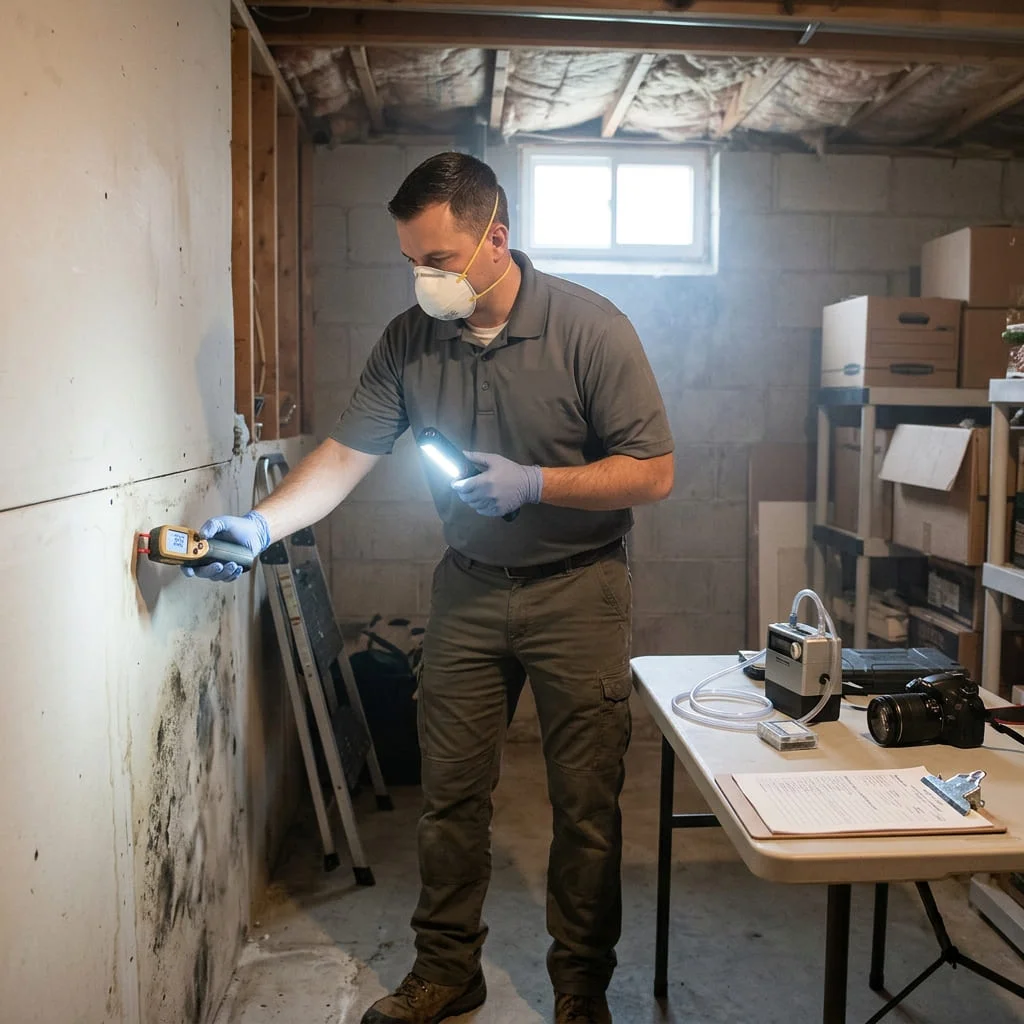 Comparing top-rated mold removal companies serving Wittmann, Arizona
Wittmann sits along US 60 at the northwest edge of the valley, in the zone where metro Phoenix stops being suburban and starts being rural. That transition is the defining thing about mold here, because Wittmann effectively has two housing stocks with two different problems: long-standing rural properties on wells and septic with horse setups, outbuildings, and manufactured homes, and newer stucco-and-tile construction pushing out from Surprise onto ground that was farmland not long ago.
Arizona Mold Pros compared the mold remediation contractors serving Wittmann and the surrounding northwest Valley on ratings, coverage, and response time, since not every valley firm runs this far up Grand Avenue. Whether you are dealing with a musty smell in an older manufactured home, a slab-edge stain in a five-year-old build, or the aftermath of monsoon sheet flow across a graded lot, start with mold inspection and testing and compare the companies below.
Last Updated: September 2026
The companies below serve the Wittmann area. We do not rank them, rate them, or verify their credentials on your behalf — that check is yours to make, and the steps below are the ones worth making it with. Arizona issues no mold-specific license, so the burden of confirming a contractor's licensing, insurance, and scope of work sits with the homeowner.
Arizona issues no mold-specific license, so crews work under a Registrar of Contractors license. Ask for the number and look it up — status, classification, and complaint history are all public.
Request a certificate of liability insurance naming you, sent directly from the insurer or agent rather than a copy from the contractor.
A written scope should name the moisture source, the containment method, what gets removed versus dried, and how completion will be confirmed.
Prices for the same job vary widely. Three written quotes tell you whether an outlier is thorough or simply expensive.
Remediation before the leak is repaired means paying for the same work twice. Any quote silent on the source is incomplete.
For anything past a small area, have post-remediation verification done by someone other than the company that did the removal in Wittmann.
National brand with local ownership serving the West Valley including Litchfield Park, Tolleson, Avondale, and Goodyear for mold remediation and water damage.
Environmental remediation company handling mold removal, asbestos abatement, and related remediation work.
General contractor offering mold removal, testing, water damage restoration, and reconstruction.
General contractor handling mold remediation, with an emphasis on assessment and a written scope before work begins.
Mold remediation specialists handling containment, removal, and structural drying.
| Service | Average Cost Range |
|---|---|
| Mold Inspection | $300 – $600 |
| Small Area Remediation (under 50 sq ft) | $1,500 – $3,500 |
| Medium Remediation (50–200 sq ft) | $3,500 – $6,000 |
| Full Home Remediation (200+ sq ft) | $5,000 – $10,000 |
| Attic Mold Removal | $2,000 – $6,000 |
| Crawl Space Mold Removal | $2,500 – $7,000 |
| Black Mold Removal | $3,000 – $8,000 |
| Commercial Mold Remediation | $5,000 – $25,000+ |
Costs in Wittmann can vary depending on the size of the affected area, type of mold, accessibility, and whether structural repairs are needed. Arizona's dry climate means mold often concentrates around specific moisture sources — monsoon water intrusion, swamp cooler leaks, or plumbing failures — rather than spreading across entire homes. We recommend getting at least 3 quotes from licensed contractors to compare pricing.
Get free quotes from top Wittmann mold removal companiesOn the rural side of Wittmann, the water infrastructure is the first place to look. Wells bring pump houses, pressure tanks, and buried supply lines; storage tanks bring fittings, float valves, and pressure lines that weep quietly; septic systems bring leach fields whose problems appear as soft or unusually green ground rather than as anything indoors. All of it sits away from the house, in the part of the property nobody inspects on a normal day.
Horse properties add more of the same. Automatic waterers, hydrants, wash racks, and the long runs of pipe that feed them are all potential slow leaks, and they sit close to barns, tack rooms, and feed storage where damp material has plenty to grow on. Where any of that water reaches a building, it wicks into bottom plates and framing rather than evaporating, which is the usual precursor to crawl space mold removal or a wall-cavity remediation. Tell the inspector about your setup when you book so the scope covers it.
Wittmann's ground is the second factor, and it works against you in two directions. Much of the area is former or active agricultural land, so soil moisture runs higher than open desert and irrigation infrastructure — laterals, emitters, ditches — keeps it that way close to buildings. A broken emitter or a cracked lateral can run on a timer for months without producing any visible clue at the surface while quietly saturating the ground against a foundation.
Then the monsoon arrives, and open graded lots with unpaved ground mean runoff shows up as sheet flow rather than as water managed by curbs and storm drains. It hits a structure all at once and pushes under garage doors and ground-level thresholds, and how badly it goes depends almost entirely on how the ground was graded around the building. Staining low on an exterior wall or chalky white efflorescence near the base of a block wall points to soil moisture rather than a plumbing failure — a distinction that changes the entire scope of the remediation, because removing the mold without correcting the drainage means paying for the same work again after the next storm.
The newer side of Wittmann has the opposite problem. Recent construction is built to much tighter envelope standards, which is excellent for energy bills and much less forgiving of moisture, because a modern sealed assembly gives water very few ways back out once it has got in. New homes also carry construction moisture in framing, concrete, and drywall, and a house closed up quickly at the end of a build can hold that dampness in the assemblies for a long time.
The failure modes in newer builds are unglamorous and common: a poorly sealed window or door penetration, a stucco crack at a corner, an appliance supply line that was never fully tightened, a condensate drain that clogs in its first few summers. On a slab-on-grade home, water from any of these travels sideways and shows up as staining or lifting flooring along the base of a wall. A home being new is not a reason to rule mold out — if you can smell it, get it looked at, and treat visible growth as a case for professional black mold removal rather than a cleaning product.
Comparing contractors in Wittmann is easier once you know which Wittmann your property belongs to, because the two housing stocks here need genuinely different things from an inspection.
If you are on an older rural property — a manufactured home, an established ranch parcel, anything on a well and septic — the investigation needs to be broad and it needs to go outside. The inspector should be looking at the pump house, the pressure tank, the storage tank fittings, the buried supply line route, any part of the leach field staying saturated, and the skirted underfloor space beneath the home, which is dark, poorly ventilated, and one of the easiest places in Arizona for mold to establish unnoticed. Barns, tack rooms, and feed storage are worth including too. What you are buying here is time on site, so be wary of a quote that assumes a one-hour visit.
If you are in a newer build, the investigation is narrower but more technical. The questions are where the envelope has been penetrated and whether moisture is trapped in an assembly that cannot dry — window and door flashing, stucco cracks at corners and control joints, appliance and refrigerator supply lines, the HVAC condensate pan and drain line, and the slab edge. Here what matters is instrumentation: moisture meters and thermal imaging that find water inside a wall that shows nothing on its surface. In both cases, insist that the written scope names the moisture source and its correction rather than only the square footage coming out — that one line is the difference between a repair and an annual expense. Arizona Mold Pros can help you get matched with a specialist covering Wittmann; nearby you can also compare mold removal companies in Sun City West, Waddell, and Morristown.
On the rural side of Wittmann, corrosion or a damp ring at a well pump house, storage tank, or horse-property waterer fitting is the earliest sign of trouble — check these before assuming a leak is inside the house.
On the newer side of town, a stucco crack at a window or door penetration, or a warm or discolored spot low on a slab-edge wall in a home only a few years old, points to an installation defect rather than wear — being new does not rule mold out.
Staining or chalky efflorescence low on an exterior wall near farmland or an irrigation line is a soil-moisture sign rather than a plumbing sign, and it is common on either side of Wittmann's two housing stocks.
Expect the inspection to differ substantially depending on which Wittmann you're in — an older rural property needs a broad, outside-in investigation, while a newer build needs a narrower, more technical one focused on envelope penetrations.
On a rural or horse property, expect the well, pump house, storage tank, septic field, and any skirted underfloor space to be checked, not just the interior.
On a newer build, expect moisture meters and thermal imaging used to find water inside a wall that shows nothing on the surface, rather than a visual walkthrough.
Mold remediation is one of the few home services where the homeowner carries most of the verification burden. These four checks apply to every contractor on this page, and they are worth running before you sign anything.
Arizona does not issue a license specifically for mold remediation. Crews generally work under an Arizona Registrar of Contractors (ROC) license instead, which means verifying a contractor's ROC status and insurance is on the homeowner rather than on the state.
Check a license at the Arizona ROC →EPA guidance suggests that mold covering roughly more than 10 square feet is generally beyond a do-it-yourself cleanup and warrants professional remediation. Smaller patches can often be handled yourself — provided you have also fixed the moisture source feeding them.
EPA mold cleanup guidance →The ANSI/IICRC S520 standard is the widely recognized standard of care for professional mold remediation, covering containment, worker protection, and verification. A contractor who can tell you how their scope maps to it is giving you something you can hold them to.
Post-remediation verification confirms the work succeeded. Where the budget allows, have it performed by someone independent of the company that did the removal, so the party certifying the result is not the party being paid for it.
How this guide works. Arizona Mold Pros is a directory — we are not the remediation contractor and we do not perform the work ourselves. Listings are compiled from publicly available information about companies advertising mold services in the Wittmann area, and ratings and review counts are approximate figures gathered from public sources that change over time, so verify them yourself before hiring. We may be compensated when a homeowner connects with a contractor through this site. That does not change the evaluation criteria above, and we recommend comparing at least three written scopes regardless of who you call.
Yes. Newer homes are built to much tighter envelope standards, which means moisture that gets into an assembly has far fewer ways back out, and new construction also carries built-in moisture in framing, concrete, and drywall. The usual triggers are a poorly sealed window or door penetration, a stucco crack, an appliance supply line that was never fully tightened, or a condensate drain that clogs in its first few summers. Being new is not a reason to rule mold out.
It contributes. Former and active agricultural ground holds higher soil moisture than open desert, and irrigation infrastructure keeps it that way close to buildings. A broken emitter or cracked lateral can run on a timer for months with no visible surface clue while saturating the ground against a foundation. Staining low on an exterior wall or white efflorescence near the base of a block wall usually points to soil moisture rather than a plumbing leak.
More than the house. Automatic waterers, hydrants, wash racks, and the long pipe runs feeding them are all potential slow leaks, and they sit near barns, tack rooms, and feed storage where damp material gives mold plenty to grow on. A thorough inspection should also include the well or pump house, storage tank fittings, and any skirted underfloor space. Mention the full setup when booking so the contractor allows enough time on site.
Costs run the usual $1,500-to-$10,000-plus range. A rural property with a well or septic issue can run higher if the water system itself needs work; a newer home may run higher if an envelope defect like a shower pan or window flashing needs correcting alongside the remediation.
Most jobs take 1 to 5 days, the same as elsewhere in the northwest Valley.
On a rural property, a sudden well or plumbing failure is treated like anywhere else, but sewage backup from septic is frequently excluded without a separate endorsement. On a newer home, a construction defect may be a builder-warranty matter rather than an insurance one — sort out which applies before assuming either way.
On the rural side, it shows up most often from a well, tank, or septic issue. On the newer side, it shows up from an installation defect — a poorly sealed shower pan, window flashing, or condensate line — trapped inside a tightly sealed envelope.
On a rural or horse property, check the well, storage tank, and septic system on a normal schedule. On a newer home, check window and door sealant and appliance supply lines periodically even without a visible problem. On either, keep irrigation and drainage away from the foundation.
Don't wait for mold to spread. Compare the top-rated mold removal contractors serving Wittmann and the surrounding area. Get your free estimate today — no obligation, no pressure.
Call Now for Free QuotesFree estimates · No obligation · Licensed contractors