SERVPRO of Litchfield / West Phoenix
National brand with local ownership serving the West Valley including Litchfield Park, Tolleson, Avondale, and Goodyear for mold remediation and water damage.
Services Wickenburg and the surrounding area
Compare ratings, reviews, and services from the best mold remediation contractors serving Wickenburg and the surrounding area — then get matched with a free, no-obligation quote.
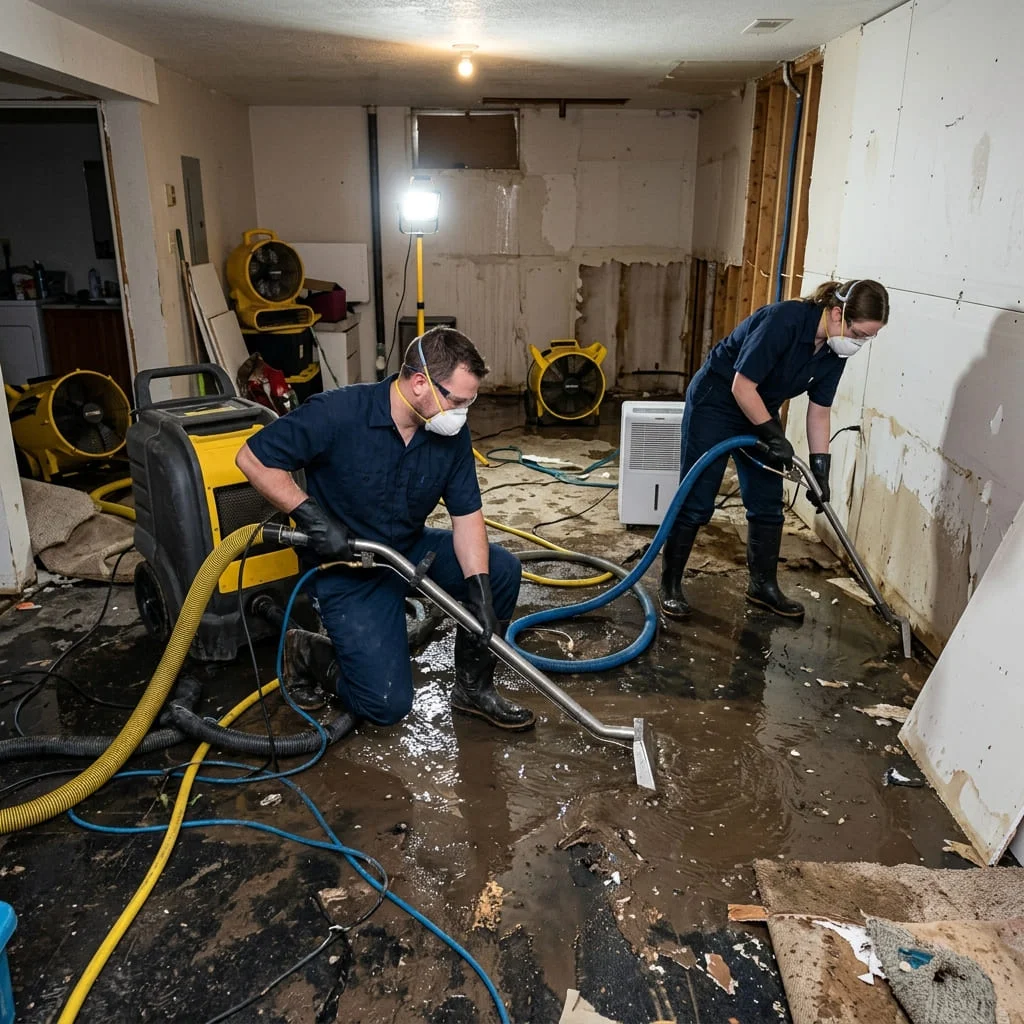 Comparing top-rated mold removal companies serving Wickenburg, Arizona
Wickenburg is not a Phoenix suburb, and treating it like one is how mold problems here get mishandled. The town sits about seventy miles northwest of the metro at roughly two thousand feet of elevation, along the Hassayampa River, with a historic core dating to its founding as a gold mining town in 1863. Cooler nights, more winter rain than the valley floor, a river with a documented history of flash flooding, and a building stock that includes genuine adobe and early masonry all add up to a different mold picture than a Scottsdale tract home presents.
Arizona Mold Pros compared the mold remediation companies that will actually make the drive out to Wickenburg — plenty of valley contractors list it in a service area and then quote a response time measured in half-days — so you can weigh ratings, coverage, and emergency availability in one place. Whether you need post-flood water damage restoration, mold inspection and testing, or full mold remediation, compare your options below.
Last Updated: September 2026
The companies below serve the Wickenburg area. We do not rank them, rate them, or verify their credentials on your behalf — that check is yours to make, and the steps below are the ones worth making it with. Arizona issues no mold-specific license, so the burden of confirming a contractor's licensing, insurance, and scope of work sits with the homeowner.
Arizona issues no mold-specific license, so crews work under a Registrar of Contractors license. Ask for the number and look it up — status, classification, and complaint history are all public.
Request a certificate of liability insurance naming you, sent directly from the insurer or agent rather than a copy from the contractor.
A written scope should name the moisture source, the containment method, what gets removed versus dried, and how completion will be confirmed.
Prices for the same job vary widely. Three written quotes tell you whether an outlier is thorough or simply expensive.
Remediation before the leak is repaired means paying for the same work twice. Any quote silent on the source is incomplete.
For anything past a small area, have post-remediation verification done by someone other than the company that did the removal in Wickenburg.
National brand with local ownership serving the West Valley including Litchfield Park, Tolleson, Avondale, and Goodyear for mold remediation and water damage.
Environmental remediation company handling mold removal, asbestos abatement, and related remediation work.
General contractor offering mold removal, testing, water damage restoration, and reconstruction.
General contractor handling mold remediation, with an emphasis on assessment and a written scope before work begins.
Mold remediation specialists handling containment, removal, and structural drying.
| Service | Average Cost Range |
|---|---|
| Mold Inspection | $300 – $600 |
| Small Area Remediation (under 50 sq ft) | $1,500 – $3,500 |
| Medium Remediation (50–200 sq ft) | $3,500 – $6,000 |
| Full Home Remediation (200+ sq ft) | $5,000 – $10,000 |
| Attic Mold Removal | $2,000 – $6,000 |
| Crawl Space Mold Removal | $2,500 – $7,000 |
| Black Mold Removal | $3,000 – $8,000 |
| Commercial Mold Remediation | $5,000 – $25,000+ |
Costs in Wickenburg can vary depending on the size of the affected area, type of mold, accessibility, and whether structural repairs are needed. Arizona's dry climate means mold often concentrates around specific moisture sources — monsoon water intrusion, swamp cooler leaks, or plumbing failures — rather than spreading across entire homes. We recommend getting at least 3 quotes from licensed contractors to compare pricing.
Get free quotes from top Wickenburg mold removal companiesElevation changes the drying equation. At around two thousand feet, Wickenburg runs cooler than the valley floor and picks up more winter precipitation, which means wet materials dry more slowly and condensation forms more readily on cool interior surfaces during the winter months. A north-facing wall or a shaded courtyard that rarely sees direct sun can hold dampness for days after a storm that central Phoenix shrugged off entirely.
That also means Wickenburg has two distinct wet seasons doing two different kinds of damage. Monsoon microbursts between July and September hit hard and fast, finding failures through sheer volume. Slow winter rain exploits an entirely different set of weaknesses — tired flashing, unsealed parapet caps, hairline stucco cracks — seeping in gradually over hours instead of flooding through in minutes. That gradual winter intrusion is precisely the kind of moisture that can feed a colony behind a wall for an entire season before anyone notices a smell.
The Hassayampa River is the second factor, and it is the one that produces the worst-case jobs. The river runs underground along much of its course and looks like nothing at all most of the year, which makes it easy to forget that it has a long documented history of significant flooding. When it runs, it runs hard, and desert washes across the surrounding area do the same — sheeting water across open ground and arriving at a structure all at once, pushing under garage doors, through ground-level thresholds, and into any low spot where the grade falls back toward the foundation.
Floodwater is materially worse than clean water because it carries silt and organic material into wall cavities and under flooring, where it becomes food for mold rather than merely moisture. Anything that has taken flood water is treated as contaminated, which changes the protocols, the protective equipment, and what materials can be salvaged versus removed. After any intrusion the 24-to-48-hour window matters far more than the size of the puddle, which is why prompt water damage restoration is the cheapest mold prevention available out here.
The third factor is what Wickenburg is built from. The historic core includes adobe and early masonry structures, and older adobe behaves nothing like a stucco-over-frame house — it is designed to absorb and release moisture, and it depends on breathable finishes and good drainage at its base to do that. Sealing an adobe wall with a modern cement stucco or an impermeable paint traps moisture inside the wall instead of letting it escape, which is a well-documented cause of deterioration in historic earthen buildings and an easy way to create a hidden mold problem while trying to fix a cosmetic one.
Outside town, ranch and guest-ranch properties on wells and septic bring the risks Rio Verde owners will recognize: pump houses, pressure tanks, storage tanks, and buried supply lines that all sit outside the part of the property you look at daily. Add outbuildings, tack rooms, and casitas that go weeks without a visit, and there is no shortage of places for a slow failure to run unnoticed — the usual precursor to black mold removal or crawl space mold removal.
If your Wickenburg property includes adobe or early masonry, the most important thing to know is that these walls are supposed to breathe. Traditional earthen construction manages water by absorbing it and releasing it back out through a permeable finish, and the whole system works as long as moisture can leave as easily as it arrives. The classic modern mistake is to treat a damp adobe wall like a damp frame wall and seal it — cement stucco, elastomeric coating, impermeable paint. The dampness disappears from view, and then it accumulates inside the wall with nowhere to go.
The signs to watch for are the ones that show up low: crumbling or spalling at the base of a wall, a chalky white efflorescence bloom on the surface, paint or render bubbling and detaching in sheets, and a persistent earthy smell in a room whose exterior wall faces the weather. Rising damp from poor drainage at the base of a wall is a far more common cause than a roof leak in these buildings, so the fix usually involves grade, gutters, and splash management rather than anything on the roof.
Practically, this means asking a contractor how they approach historic and earthen construction before they start. A crew whose entire method is cut out the drywall, spray, and replace does not have a plan for an adobe wall, because there is no drywall to cut out. What you want is someone who will identify where the water is entering, address drainage first, and specify breathable finishes on the repair — and who will say plainly if the job needs a preservation specialist alongside the remediation. Arizona Mold Pros can connect you with a contractor covering the Wickenburg area; nearby you can also compare mold removal companies in Morristown and Wittmann, or view all service areas.
A north-facing wall or a shaded courtyard that stays visibly damp for days after a storm is worth noting in Wickenburg — the higher elevation and greater winter precipitation here mean moisture lingers longer than it does on the valley floor.
Crumbling or spalling stucco, or a chalky efflorescence bloom low on an adobe or early masonry wall, is a sign that a modern sealant is trapping moisture the wall needs to release, not a sign of ordinary wear.
A silt line or debris at a garage or threshold after the Hassayampa or a nearby wash has run is a contamination sign, not just a water sign — floodwater needs a different response than a clean supply leak.
Expect the contractor to ask what the building is made of — frame, adobe, or early masonry — before quoting, since the remediation approach differs completely between them.
Confirm the company will actually make the roughly 70-mile drive and give a realistic on-site window rather than a same-day promise that does not match the distance.
If floodwater from the Hassayampa or a wash was involved, expect it to be treated as contaminated material requiring removal rather than drying.
Mold remediation is one of the few home services where the homeowner carries most of the verification burden. These four checks apply to every contractor on this page, and they are worth running before you sign anything.
Arizona does not issue a license specifically for mold remediation. Crews generally work under an Arizona Registrar of Contractors (ROC) license instead, which means verifying a contractor's ROC status and insurance is on the homeowner rather than on the state.
Check a license at the Arizona ROC →EPA guidance suggests that mold covering roughly more than 10 square feet is generally beyond a do-it-yourself cleanup and warrants professional remediation. Smaller patches can often be handled yourself — provided you have also fixed the moisture source feeding them.
EPA mold cleanup guidance →The ANSI/IICRC S520 standard is the widely recognized standard of care for professional mold remediation, covering containment, worker protection, and verification. A contractor who can tell you how their scope maps to it is giving you something you can hold them to.
Post-remediation verification confirms the work succeeded. Where the budget allows, have it performed by someone independent of the company that did the removal, so the party certifying the result is not the party being paid for it.
How this guide works. Arizona Mold Pros is a directory — we are not the remediation contractor and we do not perform the work ourselves. Listings are compiled from publicly available information about companies advertising mold services in the Wickenburg area, and ratings and review counts are approximate figures gathered from public sources that change over time, so verify them yourself before hiring. We may be compensated when a homeowner connects with a contractor through this site. That does not change the evaluation criteria above, and we recommend comparing at least three written scopes regardless of who you call.
Some do, but the list is much shorter than it is inside the metro, and a listing in a service area is not the same as a fast arrival. Wickenburg is roughly seventy miles from central Phoenix, so ask for a realistic on-site time for an emergency call rather than a yes on coverage, and check whether a travel charge applies. When a structure is wet, the difference between a two-hour and a next-day arrival can be the difference between drying and remediation.
Adobe is designed to absorb and release moisture through breathable finishes, so the standard approach of sealing a damp wall actively makes things worse by trapping water inside it. Crumbling at the base of a wall, white efflorescence, and render detaching in sheets usually point to rising damp and drainage problems rather than a roof leak. The correction typically starts with grade and water management at the base of the wall, and any repair should specify permeable finishes.
Yes, and flood-related jobs are the most severe kind here. The Hassayampa runs underground much of the year but has a long history of significant flooding, and desert washes across the area behave the same way during monsoon storms. Floodwater drives silt and organic material into wall cavities and under flooring, where it feeds mold growth, and anything that has taken flood water is treated as contaminated — which changes both the protocols and what can be salvaged.
Costs run the usual $1,500-to-$10,000-plus range, but reconstruction on an adobe or historic masonry property can cost more if breathable lime or mud plaster needs to replace an earlier cement stucco repair — that material swap is often the larger line item.
Most jobs take 1 to 5 days, but confirm response time when you call given the distance from most Phoenix-based crews, and expect a flood-related job to run longer since contaminated material generally has to be removed rather than dried.
If the damage came from Hassayampa River flooding, check whether you carry separate flood insurance — a standard homeowners policy typically excludes rising flood water regardless of cause. An ordinary plumbing failure is evaluated the way it would be anywhere else.
It shows up most often from moisture trapped behind a sealed adobe or masonry wall, from a well, tank, or septic failure on a ranch property, or from floodwater carrying silt into wall cavities after a Hassayampa or wash event.
Never seal an adobe or earthen wall with cement stucco or an impermeable paint — use a breathable lime or mud plaster instead. On a ranch property, check well and septic fittings and outbuildings on a normal schedule. Know your flood insurance status given the property's relationship to the Hassayampa floodplain.
Don't wait for mold to spread. Compare the top-rated mold removal contractors serving Wickenburg and the surrounding area. Get your free estimate today — no obligation, no pressure.
Call Now for Free QuotesFree estimates · No obligation · Licensed contractors