SERVPRO of Tucson Valley
Locally owned franchise of the national restoration brand, handling mold remediation and water damage across the Tucson valley.
Services Ajo and the surrounding area
Compare ratings, reviews, and services from the best mold remediation contractors serving Ajo and the surrounding area — then get matched with a free, no-obligation quote.
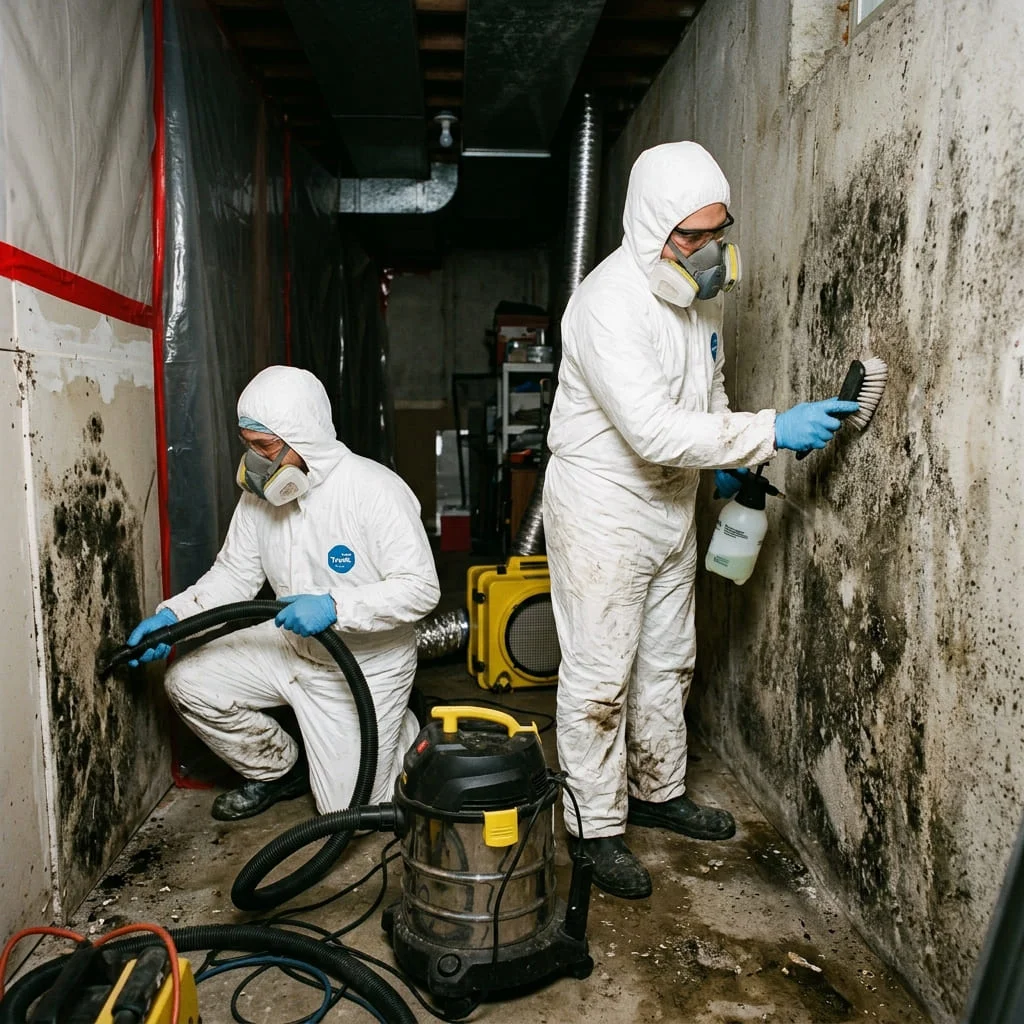 Comparing top-rated mold removal companies serving Ajo, Arizona
Ajo has a housing stock unlike anywhere else in Arizona, and that is the whole story when it comes to mold. This was a purpose-built copper company town: the Spanish Colonial Revival plaza went up in 1917, and streets of small, solidly built company houses followed through the 1920s and 1930s, laid out around the New Cornelia open pit. The mine stopped operating in 1985, but the buildings stayed, and a great many Ajo homes today are a century old or close to it — with the plumbing, roofing, and ventilation history that implies.
Old buildings in a dry climate are not automatically a mold problem. They become one when something goes wrong and stays wrong, and in Ajo the second half of that sentence is the hard part. Ajo sits out on AZ-85 roughly 110 miles west of Tucson and a comparable distance southwest of Phoenix, which means the nearest remediation crew is realistically a two-hour drive away in either direction. The 24-to-48-hour window in which wet materials can still be dried rather than removed is a window that closes while you are waiting for a return call.
Arizona Mold Pros compared the mold remediation contractors whose published coverage genuinely extends into western Pima County, so you can weigh ratings, service range, and emergency availability in one place instead of working through a phone list. Whether you need mold inspection and testing, full mold remediation after a plumbing failure, or urgent water damage restoration, start with the comparison below.
Last Updated: September 2026
The companies below serve the Ajo area. We do not rank them, rate them, or verify their credentials on your behalf — that check is yours to make, and the steps below are the ones worth making it with. Arizona issues no mold-specific license, so the burden of confirming a contractor's licensing, insurance, and scope of work sits with the homeowner.
Arizona issues no mold-specific license, so crews work under a Registrar of Contractors license. Ask for the number and look it up — status, classification, and complaint history are all public.
Request a certificate of liability insurance naming you, sent directly from the insurer or agent rather than a copy from the contractor.
A written scope should name the moisture source, the containment method, what gets removed versus dried, and how completion will be confirmed.
Prices for the same job vary widely. Three written quotes tell you whether an outlier is thorough or simply expensive.
Remediation before the leak is repaired means paying for the same work twice. Any quote silent on the source is incomplete.
For anything past a small area, have post-remediation verification done by someone other than the company that did the removal in Ajo.
Locally owned franchise of the national restoration brand, handling mold remediation and water damage across the Tucson valley.
Full-service restoration franchise covering southern Arizona, offering mold remediation, water and fire damage repair, and reconstruction under one contract.
Emergency-focused franchise handling mold removal and water damage response across the Tucson area.
Franchise territory covering the northwest corridor — Marana, Avra Valley, Oro Valley, and Casas Adobes — for mold remediation, water extraction, and post-storm structural drying.
Neighborly-affiliated restoration franchise handling mold remediation, water damage mitigation, and odor removal for residential and light commercial properties.
| Service | Average Cost Range |
|---|---|
| Mold Inspection | $300 – $600 |
| Small Area Remediation (under 50 sq ft) | $1,500 – $3,500 |
| Medium Remediation (50–200 sq ft) | $3,500 – $6,000 |
| Full Home Remediation (200+ sq ft) | $5,000 – $10,000 |
| Attic Mold Removal | $2,000 – $6,000 |
| Crawl Space Mold Removal | $2,500 – $7,000 |
| Black Mold Removal | $3,000 – $8,000 |
| Commercial Mold Remediation | $5,000 – $25,000+ |
Costs in Ajo can vary depending on the size of the affected area, type of mold, accessibility, and whether structural repairs are needed. Arizona's dry climate means mold often concentrates around specific moisture sources — monsoon water intrusion, swamp cooler leaks, or plumbing failures — rather than spreading across entire homes. We recommend getting at least 3 quotes from licensed contractors to compare pricing.
Get free quotes from top Ajo mold removal companiesStart with the age of the systems inside the walls. Homes built in the Ajo townsite in the 1920s and 1930s have generally been re-plumbed, re-roofed, and rewired at least once, but "at least once" covers an enormous range — some were carefully modernized, others carry patchwork repairs made decades ago by whoever was available. Supply lines, drain lines, shower pans, and tub surrounds all have finite lives, and a joint weeping inside the wall of a ninety-year-old house does not announce itself. It shows up as bubbling paint low on a wall, a soft spot in the baseboard, a stain spreading on a closet floor, or simply a persistent earthy smell in one room.
Water heaters deserve their own mention. In an older Ajo house the heater often sits in a closet, a utility room, or an attached garage, where a slow weep from the tank or the relief valve can run for weeks against a wall or a slab edge before anybody sees it. If a room in your house smells musty and you cannot find the cause, work outward from the plumbing — that is where a good mold inspection in Ajo begins, rather than at the visible mark on the wall.
The second factor is cooling. Evaporative coolers remain common in Ajo, and they are a rational choice here: the climate is hot and genuinely dry for most of the year, and a swamp cooler is far cheaper to run than refrigerated air. But an evaporative cooler works by deliberately adding water to the air it pushes through the house, which means that all summer long every cavity and closed closet in the building sees humidity it would not otherwise see. Add a roof-mounted unit whose pan, float, or supply line drips onto the roof deck or down into a ceiling, and you have both a moisture source and a delivery system.
The practical version of this: keep a cooler serviced, watch the ceiling directly under a rooftop unit for staining, run the blower for a while after shutting off the water pump at the end of the season so the pads and ducts dry out, and crack windows so the humid air has somewhere to go rather than pressurizing the house. When the monsoon arrives in July and outdoor humidity climbs, an evaporative cooler stops cooling well and starts simply adding moisture to already damp air — which is precisely the window in which black mold gets its start in an Ajo bathroom or closet.
Third is what happens above your head, and how the buildings are occupied. Older Ajo houses include a fair number of low-slope and built-up roof sections, which do not shed water the way a pitched tile roof does — they hold it briefly and rely on a coating and correct drainage to move it off. Coatings chalk, crack, and blister on a predictable schedule under this sun, and once one fails, monsoon rain enters through the roof plane and can travel a considerable distance through the assembly before it appears as a ring on a ceiling well away from the actual breach. That is the classic signature of an attic and roof-cavity mold problem rather than a wall leak.
Occupancy compounds it. Ajo has a substantial winter-visitor population and a number of homes that sit closed through the hot months, and a sealed, uncooled house through an Ajo summer is an excellent incubator for anything already damp inside it. A supply line or an icemaker line that fails in a closed house in July will not be discovered until October. If you own a seasonal property here, the cheapest insurance available is shutting the water off at the main when you leave and having somebody walk the house after the monsoon storms.
Every guide to water damage tells you that mold can begin growing on wet drywall, insulation, and carpet padding within 24 to 48 hours. In Tucson or Phoenix that is a warning about calling promptly. In Ajo it is a logistics problem, because the nearest remediation crew is roughly two hours out on AZ-85 in either direction and may not be able to mobilize the same day at all. What you do before anyone arrives has more influence on the final cost of the job here than almost anywhere else in the state.
Stop the water first. Know where your main shutoff is and make sure everyone in the household knows too — the single most expensive variable in a burst-line claim is how long the water ran. Then kill power to the affected circuits at the breaker if water is anywhere near outlets, wiring, or a panel, and do not walk into standing water with the power on. Photograph everything before you move a single item: every affected room, the high-water line on the walls, the underside of furniture, and the source itself if you can see it. Those dated photographs are what your insurer will actually be working from.
Then start removing water and moving air. Get standing water out with whatever you have, pull up soaked rugs and carpet padding and take them outside, lift furniture off wet flooring or put foil or blocks under the legs so finishes do not bleed into the carpet, and open closets, cabinets, and vanity doors so trapped air can move. Run every fan you own, and take advantage of the one real gift of the climate — outside the monsoon, Ajo air is extremely dry, so opening the house up and moving air through it is genuinely effective drying rather than a gesture. During a humid monsoon stretch, do the opposite: close the house up, run refrigerated air if you have it, and rely on fans indoors.
Be honest about the limits, though. Homeowner drying works on surfaces and open rooms. It does not reach water that has traveled into a wall cavity, under a run of cabinets, beneath vinyl or laminate flooring, or into the insulation above a ceiling — and those are exactly the places where a colony gets established quietly. If a wall sounds dull when you knock on it, if flooring is lifting or cupping, or if a musty smell persists after everything looks dry, the water went somewhere you cannot see and you need someone with a moisture meter. Call early rather than waiting for certainty, because in Ajo the call itself has a two-hour lead time built into it.
One last piece of advice specific to distance: when you call, be precise about what you have, because it determines what the crew loads on the truck. Give the approximate square footage affected, the flooring and wall materials, whether it was clean supply water or a sewage backup, how long it ran, and what you have already done. A contractor two hours away cannot easily come back for equipment, and vagueness on the phone turns into a second trip. Arizona Mold Pros can connect you with a licensed contractor covering the Ajo area — compare listings for mold removal companies in Lukeville and Gila Bend, browse all service areas, or get in touch.
Bubbling paint low on a wall, a soft baseboard, or a persistent earthy smell in a single room of a century-old Ajo home usually traces to a plumbing joint weeping inside the wall rather than anything visible.
A weeping water heater in a closet, utility room, or garage — common in older Ajo houses — can run against a wall or slab edge for weeks before anyone notices.
A ceiling ring appearing well away from any obvious roof damage points to a low-slope roof coating failure letting water travel through the deck before it shows.
Given the roughly two-hour drive from Tucson or Phoenix, expect to be precise on the phone about square footage, materials, and whether the water was clean or contaminated — the crew loads the truck once.
Understand that homeowner drying works on open surfaces but not on water inside a wall cavity, under cabinets, or beneath flooring — those need a professional with a moisture meter.
If your property sits empty part of the year, expect the contractor to ask whether the water was shut off at the main while you were away.
Mold remediation is one of the few home services where the homeowner carries most of the verification burden. These four checks apply to every contractor on this page, and they are worth running before you sign anything.
Arizona does not issue a license specifically for mold remediation. Crews generally work under an Arizona Registrar of Contractors (ROC) license instead, which means verifying a contractor's ROC status and insurance is on the homeowner rather than on the state.
Check a license at the Arizona ROC →EPA guidance suggests that mold covering roughly more than 10 square feet is generally beyond a do-it-yourself cleanup and warrants professional remediation. Smaller patches can often be handled yourself — provided you have also fixed the moisture source feeding them.
EPA mold cleanup guidance →The ANSI/IICRC S520 standard is the widely recognized standard of care for professional mold remediation, covering containment, worker protection, and verification. A contractor who can tell you how their scope maps to it is giving you something you can hold them to.
Post-remediation verification confirms the work succeeded. Where the budget allows, have it performed by someone independent of the company that did the removal, so the party certifying the result is not the party being paid for it.
How this guide works. Arizona Mold Pros is a directory — we are not the remediation contractor and we do not perform the work ourselves. Listings are compiled from publicly available information about companies advertising mold services in the Ajo area, and ratings and review counts are approximate figures gathered from public sources that change over time, so verify them yourself before hiring. We may be compensated when a homeowner connects with a contractor through this site. That does not change the evaluation criteria above, and we recommend comparing at least three written scopes regardless of who you call.
Plan on a significant wait. Ajo sits about 110 miles west of Tucson on AZ-85 and a comparable distance from the Phoenix area, so the nearest crews are roughly two hours out and same-day mobilization is not guaranteed. Expect a travel charge, confirm coverage explicitly when you call, and be precise about the size and type of the loss so the crew brings the right equipment — a contractor two hours away cannot easily return for a second load.
Not because of their age alone — they were solidly built and the climate is dry. The risk comes from what has happened since. Homes from the 1920s and 1930s carry decades of plumbing repairs, re-roofing, and modifications of widely varying quality, along with aging shower pans, tub surrounds, and water heaters. Any of those can weep inside a wall for weeks. Older low-slope roof sections are a second common source, where a failed coating lets monsoon water into the roof assembly.
It can contribute. A swamp cooler adds moisture to the air by design, so it raises humidity throughout the house all summer, and a rooftop unit with a dripping pan, float, or supply line adds a direct leak onto the roof deck or into a ceiling. Keep the unit serviced, watch the ceiling beneath it for staining, crack windows so humid air can escape, and run the blower without the pump at the end of the season so the pads and ducts dry out.
Costs run somewhat higher than a comparable metro job mainly due to the travel charge for the roughly two-hour drive — confirm that charge upfront, and be precise about the loss on the phone so the crew brings the right equipment on the first trip.
A sudden plumbing or water heater failure is treated like anywhere else, but a slow weep from a century-old plumbing joint that ran for weeks or months before discovery is the kind of gradual, preventable loss insurers routinely deny.
It shows up most often from aging plumbing joints in the town's century-old housing stock, from a low-slope roof coating that's failed and let water travel through the deck, or from a leak that ran unattended in a home closed up for part of the year.
Have plumbing age assessed in an older home even without an active leak, and check any low-slope roof section for coating condition before monsoon season. If the property sits empty part of the year, shut the water off at the main before you leave and have someone check it after storms.
Don't wait for mold to spread. Compare the top-rated mold removal contractors serving Ajo and the surrounding area. Get your free estimate today — no obligation, no pressure.
Call Now for Free QuotesFree estimates · No obligation · Licensed contractors