SERVPRO of Tucson Valley
Locally owned franchise of the national restoration brand, handling mold remediation and water damage across the Tucson valley.
Services Arivaca and the surrounding area
Compare ratings, reviews, and services from the best mold remediation contractors serving Arivaca and the surrounding area — then get matched with a free, no-obligation quote.
 Comparing top-rated mold removal companies serving Arivaca, Arizona
Arivaca breaks the rule that Arizona is dry. This small unincorporated community sits at roughly 3,600 feet in the oak grassland of southern Pima County, about eleven miles north of the Mexican border and some 56 miles southwest of Tucson — and it has something almost nothing else in the region has: year-round surface water. Arivaca Creek runs perennially in stretches, and the Arivaca Cienega, a rare desert wetland now managed as part of the Buenos Aires National Wildlife Refuge, holds standing water and saturated ground through the year. Living near a cienega is lovely. It also means the ambient moisture your building has to deal with is nothing like what a Tucson home contends with.
The second thing that makes Arivaca different is how the buildings got here. There is no municipal water system and no municipal sewer. Properties run on private wells and septic, a great many of them are owner-built or heavily owner-modified, and plenty run partly or entirely on solar with battery storage rather than grid power. Every one of those facts changes what a mold problem looks like and, crucially, changes what it takes to fix one.
Arizona Mold Pros compared the mold remediation contractors covering southern Pima County so Arivaca property owners can weigh coverage, response time, and emergency availability in one place — because the drive out Arivaca Road from I-19 is real and not every firm makes it. If you have found staining, lifting flooring, or a persistent musty smell, start with mold inspection and testing; if a well line or pressure tank has let go, water damage restoration is the urgent step.
Last Updated: September 2026
The companies below serve the Arivaca area. We do not rank them, rate them, or verify their credentials on your behalf — that check is yours to make, and the steps below are the ones worth making it with. Arizona issues no mold-specific license, so the burden of confirming a contractor's licensing, insurance, and scope of work sits with the homeowner.
Arizona issues no mold-specific license, so crews work under a Registrar of Contractors license. Ask for the number and look it up — status, classification, and complaint history are all public.
Request a certificate of liability insurance naming you, sent directly from the insurer or agent rather than a copy from the contractor.
A written scope should name the moisture source, the containment method, what gets removed versus dried, and how completion will be confirmed.
Prices for the same job vary widely. Three written quotes tell you whether an outlier is thorough or simply expensive.
Remediation before the leak is repaired means paying for the same work twice. Any quote silent on the source is incomplete.
For anything past a small area, have post-remediation verification done by someone other than the company that did the removal in Arivaca.
Locally owned franchise of the national restoration brand, handling mold remediation and water damage across the Tucson valley.
Full-service restoration franchise covering southern Arizona, offering mold remediation, water and fire damage repair, and reconstruction under one contract.
Emergency-focused franchise handling mold removal and water damage response across the Tucson area.
Franchise territory covering the northwest corridor — Marana, Avra Valley, Oro Valley, and Casas Adobes — for mold remediation, water extraction, and post-storm structural drying.
Neighborly-affiliated restoration franchise handling mold remediation, water damage mitigation, and odor removal for residential and light commercial properties.
| Service | Average Cost Range |
|---|---|
| Mold Inspection | $300 – $600 |
| Small Area Remediation (under 50 sq ft) | $1,500 – $3,500 |
| Medium Remediation (50–200 sq ft) | $3,500 – $6,000 |
| Full Home Remediation (200+ sq ft) | $5,000 – $10,000 |
| Attic Mold Removal | $2,000 – $6,000 |
| Crawl Space Mold Removal | $2,500 – $7,000 |
| Black Mold Removal | $3,000 – $8,000 |
| Commercial Mold Remediation | $5,000 – $25,000+ |
Costs in Arivaca can vary depending on the size of the affected area, type of mold, accessibility, and whether structural repairs are needed. Arizona's dry climate means mold often concentrates around specific moisture sources — monsoon water intrusion, swamp cooler leaks, or plumbing failures — rather than spreading across entire homes. We recommend getting at least 3 quotes from licensed contractors to compare pricing.
Get free quotes from top Arivaca mold removal companiesThe defining local condition is water that never leaves. Arivaca Creek and the Arivaca Cienega keep soil moisture and near-ground humidity elevated year round in the low-lying parts of the community, and that changes the arithmetic for any structure sitting near them. A crawl space or a slab edge that would dry out in a week in Tucson may simply not dry at all here, and materials in contact with damp ground stay damp. Riparian vegetation adds dense shade that keeps sun off north and east elevations, so siding, skirting, decks, and the ground beside a foundation hold moisture far longer than you would expect anywhere else in the county.
The practical consequence is that crawl space mold and ground-level moisture are the signature problems on the low properties here rather than the ceiling stains that dominate elsewhere. Look for bubbling paint low on interior walls, softened baseboard, efflorescence on block or masonry, flooring that is cupping or lifting along an exterior wall, and a musty smell that is strongest near the floor. A properly scoped inspection in Arivaca includes the crawl space, the perimeter grading, and the drainage path from any upslope ground — not just the room where the stain appeared.
The second factor is that almost every property here is on a private well and a septic system, which puts several moisture sources outside the part of the house anybody looks at. Pressure tanks, pump houses, pitless adapters, and buried supply lines all sit out of sight, and a leak in any of them is discovered by a rising electric bill or a smell rather than by a puddle. A septic system that is undersized, saturated, or backing up creates its own problem — not only moisture but a contaminated water category that dramatically changes how remediation has to be performed and what can be salvaged.
Water quality matters too. A property whose well pumps hard water or whose plumbing has been extended and modified over the years by successive owners tends to accumulate weak joints, and in Arivaca there is often no inspection record to consult about who did what and when. Tell the contractor you are on a well and septic when you book, and make sure the scope includes the pump house, the pressure tank, and the supply line route, because a standard city-water inspection would never look there. If wastewater is involved at all, say so on the phone — that single detail determines the crew, the equipment, and the protocol.
Third, Arivaca's building stock is genuinely idiosyncratic. This is a place with a long ranching and mining history and a strong tradition of owner-built and owner-extended housing, and structures range from historic adobe and stone through manufactured homes, cabins, converted outbuildings, and additions put on over the decades in whatever materials were to hand. Standard assumptions do not hold: an addition may have no vapor barrier under the slab, a crawl space may be unvented and bare earth, a roof may be three layers deep, and the junction between an original structure and a later addition is a very common place for water to enter and never be seen.
Manufactured and mobile homes deserve a separate note, since there are a number of them here. Their belly wrap and underfloor insulation can hold water for a very long time once a plumbing leak or ground moisture gets in, and because the damage sits under the floor it is routinely discovered only when the flooring goes soft or the smell becomes impossible to ignore. Roof-to-wall seams, window seals, and the seam at a double-wide marriage line are the other habitual entry points. Any of these can support a colony behind the finishes long before the room looks wrong, which is why the smell should be treated as evidence and why black mold removal in an older Arivaca structure often turns out to involve more hidden material than the visible patch suggested.
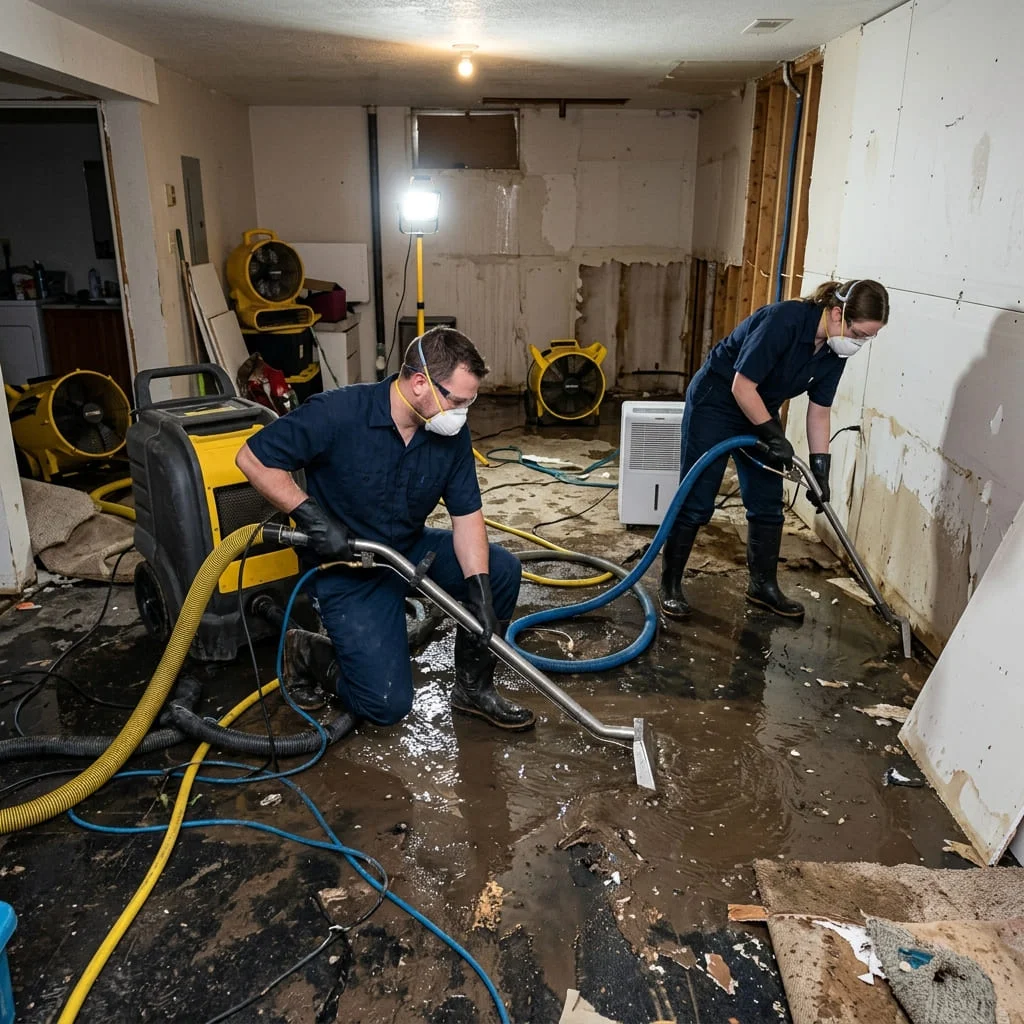
Here is the constraint that catches Arivaca property owners out, and it has nothing to do with mold biology. Professional structural drying is an electrical load. A single low-grip air mover typically pulls a few amps, a commercial dehumidifier considerably more, and a real drying setup for a couple of wet rooms is several air movers plus at least one dehumidifier running continuously for three to five days. On grid power that is a scheduling detail. On a solar and battery system sized for a well pump, a refrigerator, and lights, it is simply not available — and a modest portable generator will not close the gap either, because the problem is not peak wattage for an hour, it is sustained draw around the clock for the better part of a week.
So raise it on the first call. Tell the contractor exactly what your power situation is: grid, solar with battery, generator, or some combination, and what your realistic continuous output is. A crew that knows this in advance can bring appropriately sized generators and fuel and plan the drying strategy around them. A crew that finds out on arrival has driven an hour out Arivaca Road for nothing, and you have lost a day of a window measured in days. Ask specifically how many air movers and dehumidifiers the scope calls for and what they draw, then work backward from that to what has to be trucked in.
The same distance problem shapes everything else about the engagement. Arivaca Road runs roughly 23 miles from Amado on I-19, and the drive from Tucson is around an hour and a half each way. That means fewer firms will come, travel charges are normal rather than a sign of gouging, and the crew will want to do as much as possible per trip. It also means you should ask up front how monitoring will work — proper drying involves daily moisture readings until materials reach a dry standard, and a contractor who is not going to make that drive daily should tell you honestly how they intend to handle it, whether that is remote-logging equipment, a longer equipment placement, or a local check-in arrangement. Get the answer before work begins, not after.
There is a documentation angle here too, and it is worth taking seriously precisely because you are far from everything. Photograph the damage before anything is moved, keep the moisture readings and drying logs the contractor produces, and keep receipts for any equipment you rented or fuel you bought yourself. If an insurance claim follows, that paperwork is what separates a covered loss from an argument, and rural claims tend to attract more questions about response time and mitigation than urban ones do. Ask the contractor for a written scope before demolition starts, including how far beyond the visible damage material will be removed and whether containment and HEPA filtration go up first.
Finally, insist on independent verification for anything beyond a small contained patch. Post-remediation testing performed by someone who is not the company that did the removal is the only real check that the work succeeded, and it matters more, not less, when the property is remote and you are unlikely to have a second contractor stop by casually. Arizona Mold Pros can connect you with a licensed contractor covering the Arivaca area — compare listings for mold removal companies in Sasabe, Green Valley, and Sahuarita, browse all service areas, or get in touch.
Cupping flooring, softened baseboard, or a musty smell strongest near the floor on a low-lying property near Arivaca Creek or the cienega points to ground moisture that doesn't dry out the way it would elsewhere in the county.
A rising electric bill or a persistent smell — rather than a puddle — is often the first sign of a well or septic failure, since the pump house and leach field sit out of sight.
A musty smell at the seam where an addition meets an older structure, or along a manufactured home's marriage line or roof-to-wall seam, is common given how much of Arivaca's housing was owner-built or extended over time.
Tell the contractor about your power situation — grid, solar and battery, or generator — on the first call, since structural drying is an electrical load a small off-grid system usually cannot sustain.
Ask upfront how daily moisture monitoring will work if the crew isn't driving out every day — remote-logging equipment, an extended equipment placement, or a local check-in arrangement.
Given the remoteness, expect documentation — photographs, moisture readings, drying logs — to matter more than usual, since a second contractor is unlikely to casually stop by.
Mold remediation is one of the few home services where the homeowner carries most of the verification burden. These four checks apply to every contractor on this page, and they are worth running before you sign anything.
Arizona does not issue a license specifically for mold remediation. Crews generally work under an Arizona Registrar of Contractors (ROC) license instead, which means verifying a contractor's ROC status and insurance is on the homeowner rather than on the state.
Check a license at the Arizona ROC →EPA guidance suggests that mold covering roughly more than 10 square feet is generally beyond a do-it-yourself cleanup and warrants professional remediation. Smaller patches can often be handled yourself — provided you have also fixed the moisture source feeding them.
EPA mold cleanup guidance →The ANSI/IICRC S520 standard is the widely recognized standard of care for professional mold remediation, covering containment, worker protection, and verification. A contractor who can tell you how their scope maps to it is giving you something you can hold them to.
Post-remediation verification confirms the work succeeded. Where the budget allows, have it performed by someone independent of the company that did the removal, so the party certifying the result is not the party being paid for it.
How this guide works. Arizona Mold Pros is a directory — we are not the remediation contractor and we do not perform the work ourselves. Listings are compiled from publicly available information about companies advertising mold services in the Arivaca area, and ratings and review counts are approximate figures gathered from public sources that change over time, so verify them yourself before hiring. We may be compensated when a homeowner connects with a contractor through this site. That does not change the evaluation criteria above, and we recommend comparing at least three written scopes regardless of who you call.
On the low-lying properties, yes. Perennial surface water and saturated wetland ground keep soil moisture and near-ground humidity elevated year round, and dense riparian shade keeps sun off the north and east sides of a building. Materials that would dry out in a week in Tucson may not dry at all. The signs show up low — bubbling paint near the floor, softened baseboard, efflorescence on masonry, cupping flooring along an exterior wall — and crawl spaces are the most commonly affected area.
Yes, but only if you tell them it is off grid before they drive out. Structural drying means several air movers and at least one commercial dehumidifier running continuously for three to five days, which is far beyond what a solar and battery system sized for a well pump and household loads can sustain. A crew that knows in advance can bring adequately sized generators and fuel and plan around them. Say what your continuous power output actually is on the first call.
The remediation is the same, but the investigation should be wider. The inspector should include the pump house, pressure tank, pitless adapter, and the buried supply line route, plus any part of the septic field that stays saturated — moisture sources a standard city-water inspection would never look at. If wastewater was involved at all, say so when you book, because contaminated water changes the protocol, the equipment, and what materials can be saved.
Costs run higher than a comparable Tucson job, mainly due to travel time on Arivaca Road and, on an off-grid property, the cost of bringing generators sized for continuous multi-day drying equipment.
It shows up more readily on low-lying properties near Arivaca Creek and the cienega, where ground moisture holds year-round, or from a well or septic issue that ran unnoticed on a property with no municipal utilities.
Check well and septic components on a normal schedule, and watch crawl spaces and ground-level areas on low-lying property for persistent dampness. On an owner-built or extended home, keep an eye on the seams where additions meet the original structure.
Don't wait for mold to spread. Compare the top-rated mold removal contractors serving Arivaca and the surrounding area. Get your free estimate today — no obligation, no pressure.
Call Now for Free QuotesFree estimates · No obligation · Licensed contractors