Preferred Choice Restoration
Quality-focused restoration company specializing in mold remediation, water damage, and insurance claim assistance for residential properties.
Services Chandler and the surrounding area

Compare ratings, reviews, and services from the best mold remediation contractors serving Chandler and the surrounding area — then get matched with a free, no-obligation quote.
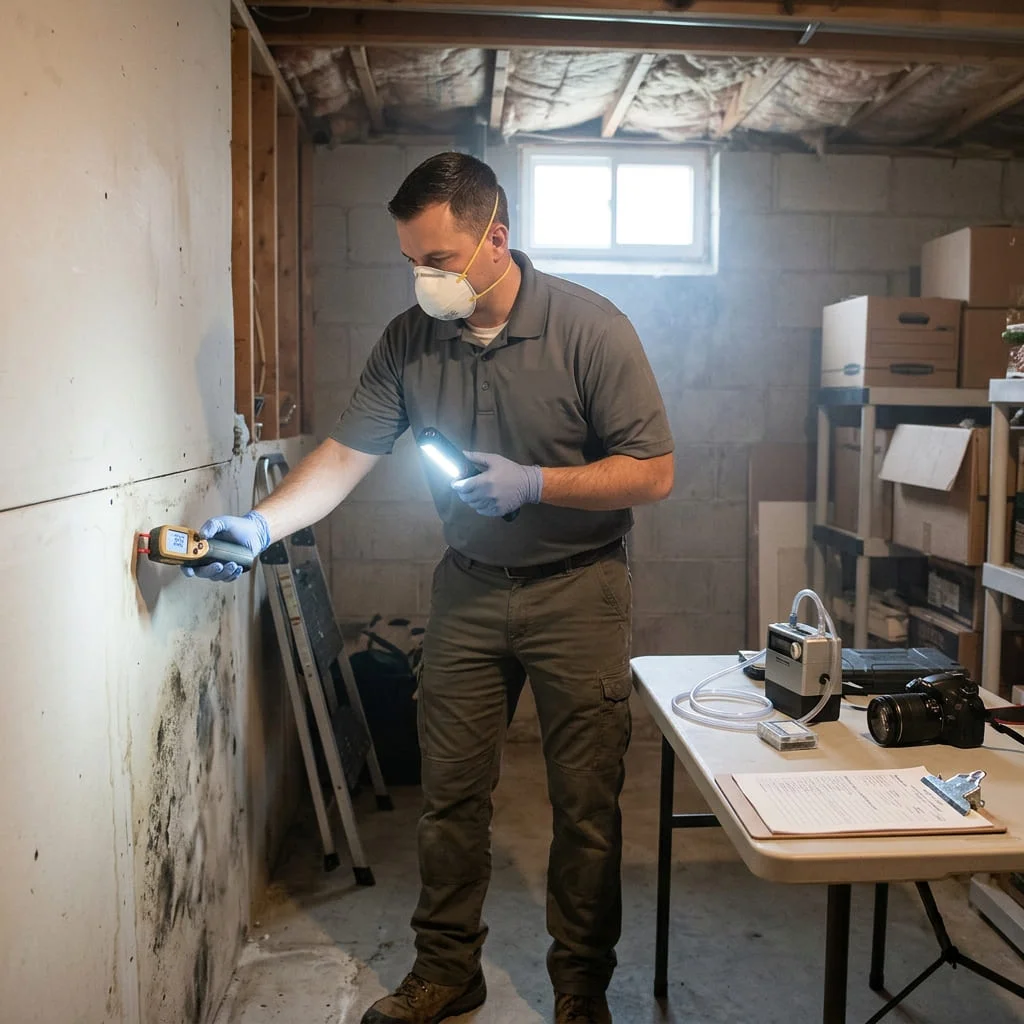 Comparing top-rated mold removal companies serving Chandler, Arizona
The signature mold job in Chandler starts underneath the house rather than above it. Most of the city was built between the early 1990s and the late 2000s on former agricultural land, slab on grade, with copper supply lines run in or beneath that slab — and those lines are now at the age where pinhole leaks become common. A slab leak does not announce itself. The water travels laterally along the underside of the flooring, and the first sign is usually a warm spot on a tile floor, a section of wood flooring that has cupped, an unexplained jump in the water bill, or a musty smell with no visible source anywhere.
Add Chandler's specific ground conditions — decades of flood-irrigated farmland, pockets of expansive clay soil that move with moisture, and the man-made lakes and heavy irrigation through Ocotillo — and you have a city where the moisture behind a mold problem is very often coming from below. Arizona Mold Pros compared the mold remediation contractors covering Chandler and the surrounding Southeast Valley. If you suspect a hidden source, start with mold inspection and testing that includes moisture mapping; if you already know where the water is, water damage restoration comes first.
Last Updated: September 2026
The companies below serve the Chandler area. We do not rank them, rate them, or verify their credentials on your behalf — that check is yours to make, and the steps below are the ones worth making it with. Arizona issues no mold-specific license, so the burden of confirming a contractor's licensing, insurance, and scope of work sits with the homeowner.
Arizona issues no mold-specific license, so crews work under a Registrar of Contractors license. Ask for the number and look it up — status, classification, and complaint history are all public.
Request a certificate of liability insurance naming you, sent directly from the insurer or agent rather than a copy from the contractor.
A written scope should name the moisture source, the containment method, what gets removed versus dried, and how completion will be confirmed.
Prices for the same job vary widely. Three written quotes tell you whether an outlier is thorough or simply expensive.
Remediation before the leak is repaired means paying for the same work twice. Any quote silent on the source is incomplete.
For anything past a small area, have post-remediation verification done by someone other than the company that did the removal in Chandler.
Quality-focused restoration company specializing in mold remediation, water damage, and insurance claim assistance for residential properties.
Professional mold remediation company using advanced moisture detection to eliminate mold and prevent recurrence. Serves Phoenix, Mesa, Chandler, Gilbert, and beyond.
Arizona's leading mold and water damage restoration company specializing in emergency response, mold inspection, and full property restoration.
Mold specialists handling emergency mold removal and remediation with itemized scopes of work.
Mold damage restoration specialists offering inspection, containment, removal, and repairs.
| Service | Average Cost Range |
|---|---|
| Mold Inspection | $300 – $600 |
| Small Area Remediation (under 50 sq ft) | $1,500 – $3,500 |
| Medium Remediation (50–200 sq ft) | $3,500 – $6,000 |
| Full Home Remediation (200+ sq ft) | $5,000 – $10,000 |
| Attic Mold Removal | $2,000 – $6,000 |
| Crawl Space Mold Removal | $2,500 – $7,000 |
| Black Mold Removal | $3,000 – $8,000 |
| Commercial Mold Remediation | $5,000 – $25,000+ |
Costs in Chandler can vary depending on the size of the affected area, type of mold, accessibility, and whether structural repairs are needed. Arizona's dry climate means mold often concentrates around specific moisture sources — monsoon water intrusion, swamp cooler leaks, or plumbing failures — rather than spreading across entire homes. We recommend getting at least 3 quotes from licensed contractors to compare pricing.
Get free quotes from top Chandler mold removal companiesSlab leaks are the defining Chandler problem. Homes built from the early 1990s onward were plumbed with copper, and copper in contact with certain soil chemistries — or simply carrying water at high velocity through a tight bend for twenty-five years — develops pinhole failures. Because the line is in or under a concrete slab, the leak has nowhere obvious to go: it saturates the sub-slab fill, wicks up through the concrete, and spreads under flooring across a surprising distance before anything is visible at the surface.
That delay is what makes slab leaks a mold problem rather than a plumbing problem. By the time a homeowner notices cupped wood flooring, loose tile, a warm patch underfoot on a hot-water line, or a water bill that jumped without explanation, the slab and the bottom plates of nearby walls have often been wet for weeks. The repair itself is straightforward for a plumber; the reason it becomes expensive is the drying and the mold remediation in the walls and flooring that the water reached on its way out.
The ground under Chandler is the second factor, and it is a legacy of what the land used to be. This was farmland — cotton, alfalfa, and citrus worked under flood irrigation for decades — and parts of the city still carry higher soil moisture and, in places, expansive clay that swells when wet and shrinks when it dries. That movement is slow and seasonal, and over years it stresses everything rigid that passes through it, including the copper and cast iron in the slab and the slab itself.
Above ground, the irrigation habit persists in a different form. Some older Chandler lots retain flood irrigation rights and still take water, and across the newer subdivisions landscape drip and turf spray run hard from spring through fall. None of that causes mold directly, but drip lines run against a stucco wall and spray hitting the building daily keep a wall base wet on a schedule, and a grade that has settled so it no longer falls away from the foundation turns every irrigation cycle into a small flood against the house. The tell is always low on the wall: bubbling paint, a softened baseboard, efflorescence on block, flooring lifting along an exterior edge.
Third is what the newer housing does with moisture once it is inside. Chandler homes from the 2000s onward are built to tighter energy standards than the mid-century stock in Tempe, with better sealed envelopes and less accidental ventilation. That is good for a power bill and bad for a leak, because a tightly sealed house gives interior moisture fewer ways out. A bathroom with a weak or unvented exhaust fan, a laundry room on an interior wall, or a kitchen with a recirculating range hood will hold humidity long enough to matter.
The Ocotillo lakes and the pools that are close to universal in Chandler add exterior moisture near the building, and second-floor bathrooms and laundry rooms in the two-story plans common here put supply lines directly above finished living space. A failure upstairs travels through a ceiling into a room below rather than across a floor you can see. Combine that with attic ducts sweating through a 150-degree July and there are three distinct routes for water to reach drywall, which is why an inspection worth paying for in Chandler covers the slab, the envelope, and the attic rather than just the stain.
A slab leak is the most expensive mold source in Chandler precisely because it is the quietest. The signs are all indirect, and every one of them is easy to explain away for a few months — which is exactly how long it takes to turn a plumbing repair into a remediation job. Here is what to actually watch for.
Start with the water bill, because it is the one objective measurement you already have. A jump of any size with no change in household use is worth investigating. You can confirm it yourself in about twenty minutes: turn off every fixture and appliance that uses water, then look at the water meter and note the position of the low-flow indicator or the sweep hand. Come back in an hour without using any water. If it has moved, water is leaving the system somewhere, and in a Chandler slab home the most likely somewhere is under the floor.
Then use your feet. A hot-water slab leak often produces a genuinely warm patch on a tile floor that has no reason to be warm — no sun exposure, no appliance nearby. Walk the house barefoot in the morning before the sun has been on the windows. Look for flooring that has changed: wood or laminate that has cupped or lifted at the seams, tile that has gone hollow or loose in one area, carpet that stays faintly damp along a particular wall. Listen at night in a quiet house for the sound of running water when nothing is running.
The smell matters too, and it is often the earliest sign. A persistent musty or earthy odor that seems to come from the floor or the base of a wall, with nothing visible anywhere, is a strong indicator in slab construction. Treat it as a moisture report rather than an odor to be masked — an air freshener plugged in near the source is genuinely the most expensive mistake available here, because it buys the leak another six months.
If two or more of those signs line up, the sequence matters. Get the leak located and repaired by a plumber first, then get the drying and remediation scoped — in that order. Paying for mold removal before the slab leak is fixed means paying for it twice, and any contractor who offers to replace flooring and drywall without a word about where the water came from is telling you something useful about how they work. For an area beyond roughly ten square feet, ask for independent post-remediation verification by someone other than the company that did the removal, so the confirmation that the work is finished comes from a party with no stake in the answer.
Arizona Mold Pros can connect you with a contractor covering Chandler — compare mold removal companies in Gilbert, Tempe, and Queen Creek alongside this page, browse all service areas, or get in touch.
A warm patch on a tile floor, an unexplained water bill increase, or flooring that cups or lifts along one wall is the classic Chandler slab-leak signature — mold feeding from below rather than a visible drip.
Bubbling paint, softened baseboard, or chalky efflorescence low on an exterior wall on a lot with a history of flood irrigation or expansive clay soil points to ground movement rather than a plumbing failure.
A ceiling stain in a two-story Chandler home, especially near Ocotillo, is worth tracing to the nearest upstairs bathroom or laundry room rather than assuming the fixture directly above is the source.
Expect the inspector to check for a slab leak first — a water-bill comparison and a moisture-mapped reading of the slab, not just a visual look at the stain.
Expect the contractor to check the grade and irrigation setback given Chandler's history as flood-irrigated farmland with pockets of expansive clay soil.
In a two-story home, expect the inspection to trace a downstairs ceiling stain to the nearest upstairs plumbing fixture along the joist run, which may be in a different room entirely.
Mold remediation is one of the few home services where the homeowner carries most of the verification burden. These four checks apply to every contractor on this page, and they are worth running before you sign anything.
Arizona does not issue a license specifically for mold remediation. Crews generally work under an Arizona Registrar of Contractors (ROC) license instead, which means verifying a contractor's ROC status and insurance is on the homeowner rather than on the state.
Check a license at the Arizona ROC →EPA guidance suggests that mold covering roughly more than 10 square feet is generally beyond a do-it-yourself cleanup and warrants professional remediation. Smaller patches can often be handled yourself — provided you have also fixed the moisture source feeding them.
EPA mold cleanup guidance →The ANSI/IICRC S520 standard is the widely recognized standard of care for professional mold remediation, covering containment, worker protection, and verification. A contractor who can tell you how their scope maps to it is giving you something you can hold them to.
Post-remediation verification confirms the work succeeded. Where the budget allows, have it performed by someone independent of the company that did the removal, so the party certifying the result is not the party being paid for it.
How this guide works. Arizona Mold Pros is a directory — we are not the remediation contractor and we do not perform the work ourselves. Listings are compiled from publicly available information about companies advertising mold services in the Chandler area, and ratings and review counts are approximate figures gathered from public sources that change over time, so verify them yourself before hiring. We may be compensated when a homeowner connects with a contractor through this site. That does not change the evaluation criteria above, and we recommend comparing at least three written scopes regardless of who you call.
An unexplained jump in the water bill, a warm patch on a tile floor with no sun or appliance nearby, wood or laminate flooring that has cupped or lifted at the seams, tile that has gone hollow or loose in one spot, carpet that stays faintly damp along a wall, and a musty smell that seems to come from the floor with nothing visible. You can check yourself by shutting off every water-using fixture and appliance, noting the meter position, and returning an hour later — if it has moved, water is leaving the system somewhere.
Most of Chandler was built from the early 1990s through the late 2000s on slab with copper supply lines run in or beneath the concrete, and that plumbing is now at the age where pinhole failures become common. The city was also built on former flood-irrigated farmland, and pockets of expansive clay soil that swell and shrink with moisture put slow, repeated stress on anything rigid passing through the ground, including the pipe and the slab itself.
Not from the water feature itself, but from the irrigation around it. Landscape spray hitting a stucco wall daily, drip lines run against a foundation, and turf watering on the uphill side of a house keep a wall base wet on a schedule, and stucco that stays damp low on the wall eventually passes moisture to the framing behind it. Check that the grade still falls away from the house and watch for bubbling paint, softened baseboard, or chalky efflorescence low on an exterior wall.
Costs run the usual $1,500-to-$10,000-plus range, but a slab-leak job can run higher since the plumbing repair has to happen before drying is worth paying for, and finding the leak sometimes takes as much work as fixing it.
It shows up most often from a slab leak wicking into bottom plates and flooring, from irrigation or expansive clay soil moisture reaching a foundation, or from an upstairs bathroom or laundry leak in a two-story home.
Compare your water bill month to month and walk the house barefoot in the morning checking for warm floor patches. Keep irrigation and drip lines off stucco walls. In a two-story home, check upstairs washer hoses and angle stops yearly.
Don't wait for mold to spread. Compare the top-rated mold removal contractors serving Chandler and the surrounding area. Get your free estimate today — no obligation, no pressure.
Call Now for Free QuotesFree estimates · No obligation · Licensed contractors