Preferred Choice Restoration
Quality-focused restoration company specializing in mold remediation, water damage, and insurance claim assistance for residential properties.
Services Mesa and the surrounding area

Compare ratings, reviews, and services from the best mold remediation contractors serving Mesa and the surrounding area — then get matched with a free, no-obligation quote.
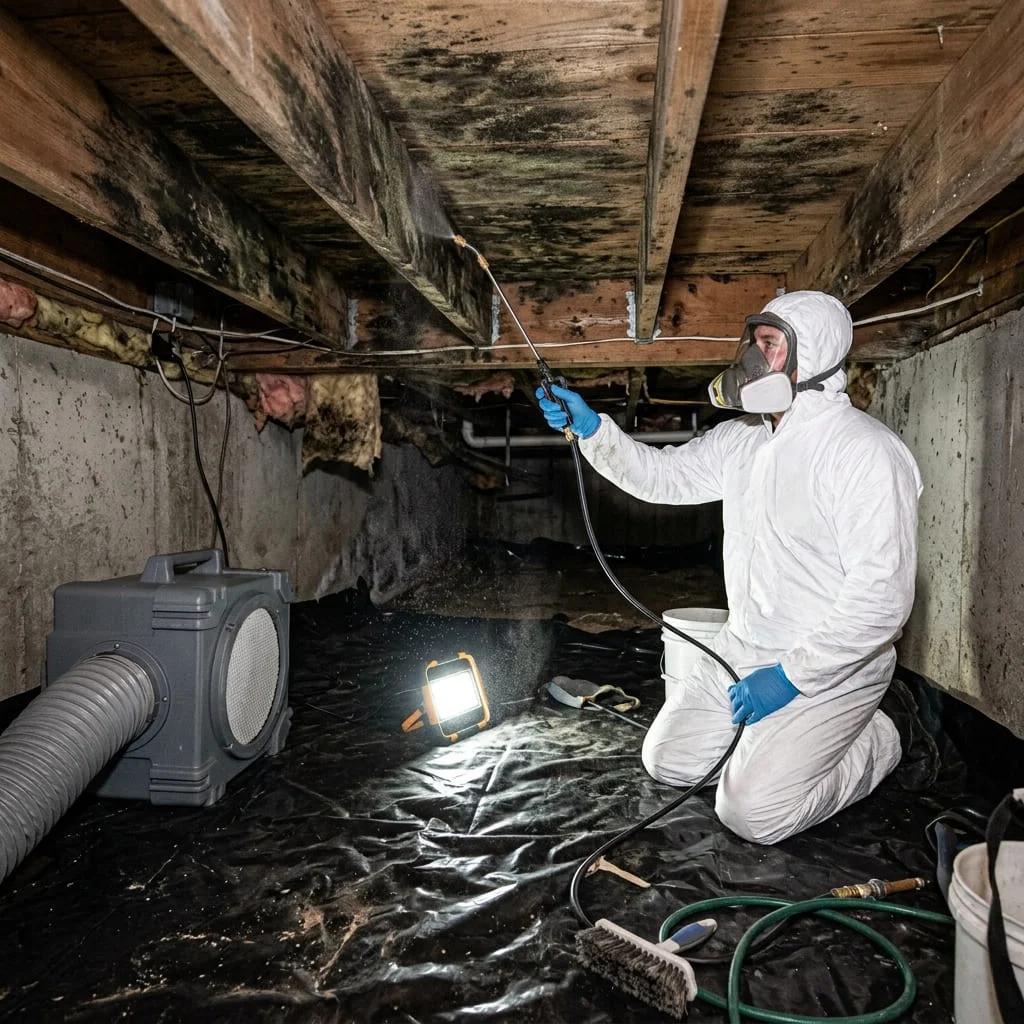 Comparing top-rated mold removal companies serving Mesa, Arizona
Two things make mold in Mesa different from mold anywhere else in the East Valley. The first is that a very large number of Mesa homes sit empty through the hottest months of the year. Mesa has one of the largest winter visitor populations in the country, spread across dozens of RV and park model resorts and age-restricted communities, and a house locked up in April and reopened in October has had six months for a small leak to become a large problem with nobody there to smell it.
The second is water in the yard. Flood irrigation still runs to older lots across central Mesa and Lehi, delivering several inches of water across the property on a schedule, and where decades of settling have flattened the fall away from the stem wall, some of that water ends up against the house instead of soaking into the lawn. Arizona Mold Pros compared the mold removal companies working Mesa and the surrounding East Valley so you can weigh coverage and response before you call. If you have just come back to a musty house, start with mold inspection and testing; if you have come back to standing water, water damage restoration is the urgent step.
Last Updated: September 2026
The companies below serve the Mesa area. We do not rank them, rate them, or verify their credentials on your behalf — that check is yours to make, and the steps below are the ones worth making it with. Arizona issues no mold-specific license, so the burden of confirming a contractor's licensing, insurance, and scope of work sits with the homeowner.
Arizona issues no mold-specific license, so crews work under a Registrar of Contractors license. Ask for the number and look it up — status, classification, and complaint history are all public.
Request a certificate of liability insurance naming you, sent directly from the insurer or agent rather than a copy from the contractor.
A written scope should name the moisture source, the containment method, what gets removed versus dried, and how completion will be confirmed.
Prices for the same job vary widely. Three written quotes tell you whether an outlier is thorough or simply expensive.
Remediation before the leak is repaired means paying for the same work twice. Any quote silent on the source is incomplete.
For anything past a small area, have post-remediation verification done by someone other than the company that did the removal in Mesa.
Quality-focused restoration company specializing in mold remediation, water damage, and insurance claim assistance for residential properties.
Professional mold remediation company using advanced moisture detection to eliminate mold and prevent recurrence. Serves Phoenix, Mesa, Chandler, Gilbert, and beyond.
Arizona's leading mold and water damage restoration company specializing in emergency response, mold inspection, and full property restoration.
Mold specialists handling emergency mold removal and remediation with itemized scopes of work.
Mold damage restoration specialists offering inspection, containment, removal, and repairs.
| Service | Average Cost Range |
|---|---|
| Mold Inspection | $300 – $600 |
| Small Area Remediation (under 50 sq ft) | $1,500 – $3,500 |
| Medium Remediation (50–200 sq ft) | $3,500 – $6,000 |
| Full Home Remediation (200+ sq ft) | $5,000 – $10,000 |
| Attic Mold Removal | $2,000 – $6,000 |
| Crawl Space Mold Removal | $2,500 – $7,000 |
| Black Mold Removal | $3,000 – $8,000 |
| Commercial Mold Remediation | $5,000 – $25,000+ |
Costs in Mesa can vary depending on the size of the affected area, type of mold, accessibility, and whether structural repairs are needed. Arizona's dry climate means mold often concentrates around specific moisture sources — monsoon water intrusion, swamp cooler leaks, or plumbing failures — rather than spreading across entire homes. We recommend getting at least 3 quotes from licensed contractors to compare pricing.
Get free quotes from top Mesa mold removal companiesThe closed-up summer house is Mesa's signature mold scenario, and the mechanism is always the same. A supply line to a toilet or a refrigerator ice maker, a corroded angle stop, or a water heater at the end of its life fails in June. Nobody is home. The water runs — sometimes for weeks — into a house with the air conditioning off or set so high it barely cycles, so nothing removes humidity and nothing dries out. By October the owner opens the door to a smell rather than a puddle.
Switching the air conditioning off entirely is the part that does the most damage. A system that never runs never dehumidifies, and during monsoon season a sealed house in Mesa can hold that moisture for days at interior temperatures well over 100 degrees. That is close to ideal growing conditions on any surface already damp. Leaving the thermostat at around 85 degrees costs far less than a remediation, and shutting the water off at the main before you leave removes the failure mode altogether rather than managing it.
Flood irrigation is the second Mesa-specific factor, and it is genuinely local — most of the Valley has no idea it still exists. Older lots in central Mesa and along the Lehi terrace near the Salt River receive scheduled irrigation deliveries that flood the yard several inches deep, a system inherited from the citrus and alfalfa era that predates the subdivisions built around it.
It works fine when the grade works. The trouble is that grades settle, patios and room additions get poured, block walls change where water can go, and after fifty years the fall away from the foundation the original builder established is often gone. Water then stands against the stem wall for hours at a time, several times a month, through the hottest part of the year. Inside, that shows up as efflorescence or a chalky line on lower block, soft baseboards along one exterior wall, or flooring that cups on the irrigated side of the house. Any of those is worth moisture readings before it becomes a mold remediation project.
Mesa's third risk is the housing type itself. Alongside the conventional stock, the city has an enormous inventory of manufactured homes and park models in resort communities, and they fail in ways site-built houses do not. The floor structure is wrapped in a belly board that can hold water like a shallow tub when a supply line above it leaks, so a drip that would soak a slab edge in a stick-built house instead pools under the floor and stays there. Skirted crawl areas trap ground moisture, and the low-slope metal roofs common on these units depend on sealed seams and a coating that degrades in Arizona sun.
Then there are Arizona rooms — the enclosed patios added to a huge share of Mesa's older homes and park models, often long after the original build and sometimes without a permit. The point where that added roof ties into the existing one is the most reliable leak in this housing stock, and because an Arizona room is usually the least-used space in the house, the leak has time to work. If yours has a stained ceiling, a soft spot in the floor, or a smell nobody can place, treat it as a moisture report rather than a decorating problem.
If you close up a house in Mesa every spring, nearly everything that determines whether you come back to a mold problem is decided in the week before you leave. This is the list worth working through.
Shut the water off at the main. This is the single highest-value thing you can do, and it costs nothing. With the main closed, a failed angle stop, ice maker line, or water heater cannot flood the house, because there is no water behind the failure. If you leave the water on for a landscaper or a caretaker, at minimum close the supply valves to the toilets, the laundry, and the refrigerator, and consider a leak detection system with an automatic shutoff — the kind that closes the main when it sees continuous flow.
Do not turn the air conditioning off. Set it to around 85 degrees with the fan on auto. A system that cycles occasionally keeps the interior below the temperatures where problems accelerate and, more importantly, pulls humidity out of the air during monsoon season. Before you leave, clear the condensate drain line — a clogged line in a system that only runs a few times a week backs up into the pan and overflows into the ceiling or the closet below, and nobody sees it until fall.
Deal with the water heater. A tank sitting full and hot in an empty garage for six months is a common failure. If yours is more than about ten years old, plan on replacing it rather than gambling on it, and know where its shutoff is. If it sits in a pan, confirm the pan actually drains somewhere useful rather than onto the garage slab.
Check the roof before you go, not after. The first monsoon storm is not the moment to discover a lifted seam, a failed evaporative cooler cap, or a cracked roof jack boot. On a park model or manufactured home, look at the seam condition and the coating; on an Arizona room, look specifically at the joint where the added roof meets the original one.
Have someone walk the house monthly. Ask them to go inside — not just look at the yard — and send photographs of the ceilings, under each sink, the water heater, and the air handler closet. A monthly photo record turns a six-month leak into a three-week one, and that difference is usually the difference between drying a wall and rebuilding it.
If it smells musty when you get back, resist the urge to open every window and run fans on it. Moving air around a contaminated space pushes spores into clean parts of the house. Find the water source first, photograph what you find, and book an inspection that includes moisture readings rather than a visual walk-through. Our guide to why mold is more common in Arizona than people expect covers the conditions behind this.
Arizona Mold Pros can connect you with a contractor covering Mesa. Compare mold removal companies in Gilbert, Tempe, Chandler, and Queen Creek alongside this page, browse all service areas, or get in touch.
A musty smell upon reopening a Mesa home that sat closed all summer, especially if the air conditioning was switched off entirely, is worth treating as a moisture report — a sealed house over 100 degrees is close to ideal growing conditions for anything already damp.
A chalky efflorescence line on lower block, soft baseboards along one exterior wall, or flooring that cups on the irrigated side of the house points to flood-irrigation grading issues common in central Mesa and Lehi.
A stained ceiling in an Arizona room, or a soft floor in a park model or manufactured home, points to the roof-tie-in or belly-wrap failures common in this part of Mesa's housing stock.
Expect the contractor to ask whether the water and air conditioning were handled correctly while the house was closed up — shutting off water at the main and leaving the AC running at a moderate setting rather than off.
If your property has flood-irrigation delivery, expect the inspector to check the grade and lower block for signs the water is no longer draining away from the foundation as originally built.
For an Arizona room or park model, expect the inspection to focus on the roof tie-in seam or the belly wrap specifically, rather than just the interior finishes.
Mold remediation is one of the few home services where the homeowner carries most of the verification burden. These four checks apply to every contractor on this page, and they are worth running before you sign anything.
Arizona does not issue a license specifically for mold remediation. Crews generally work under an Arizona Registrar of Contractors (ROC) license instead, which means verifying a contractor's ROC status and insurance is on the homeowner rather than on the state.
Check a license at the Arizona ROC →EPA guidance suggests that mold covering roughly more than 10 square feet is generally beyond a do-it-yourself cleanup and warrants professional remediation. Smaller patches can often be handled yourself — provided you have also fixed the moisture source feeding them.
EPA mold cleanup guidance →The ANSI/IICRC S520 standard is the widely recognized standard of care for professional mold remediation, covering containment, worker protection, and verification. A contractor who can tell you how their scope maps to it is giving you something you can hold them to.
Post-remediation verification confirms the work succeeded. Where the budget allows, have it performed by someone independent of the company that did the removal, so the party certifying the result is not the party being paid for it.
How this guide works. Arizona Mold Pros is a directory — we are not the remediation contractor and we do not perform the work ourselves. Listings are compiled from publicly available information about companies advertising mold services in the Mesa area, and ratings and review counts are approximate figures gathered from public sources that change over time, so verify them yourself before hiring. We may be compensated when a homeowner connects with a contractor through this site. That does not change the evaluation criteria above, and we recommend comparing at least three written scopes regardless of who you call.
Shut the water off at the main — yes, every time. Most summer floods in closed-up Mesa homes start at an angle stop, an ice maker line, or a water heater, and none of those can flood a house with no pressure behind them. The air conditioning is the opposite: leave it running at around 85 degrees rather than switching it off. A system that never cycles never removes humidity, and a sealed house over 100 degrees with monsoon moisture in it is close to ideal growing conditions for anything already damp.
It can when the grade no longer works. Flood irrigation puts several inches of water across the lot on a schedule, which is harmless as long as the ground falls away from the foundation — but after decades of settling, added patios, and new block walls, many older Mesa lots no longer drain the way the builder intended. Water then stands against the stem wall repeatedly through the summer. Look for a chalky efflorescence line on lower block, soft baseboards along one exterior wall, or flooring that cups on the irrigated side, and get moisture readings before assuming it is cosmetic.
Because of how they are built and how little they are used. An Arizona room is usually an enclosed patio added after the original construction, and the joint where that added roof ties into the existing roofline leaks more often than any other detail in this housing stock. Park models and manufactured homes add their own paths: a belly wrap under the floor that holds water rather than letting it drain, skirted crawl areas that trap ground moisture, and low-slope metal roofs whose seams and coating degrade in the sun. All of them are spaces nobody visits daily, so leaks run a long time before anyone notices.
Costs run the usual $1,500-to-$10,000-plus range, but a leak that ran through an entire closed summer can run higher since more material typically needs replacing rather than drying.
It shows up most often from a leak that ran unattended in a home closed up for the summer, from flood-irrigation grading issues in central Mesa and Lehi, or from an Arizona room or park model's characteristic roof-tie-in and belly-wrap failures.
Shut the water off at the main before closing up a house for the summer, and leave the air conditioning running at a moderate setting rather than off. Check the grade and lower block if your property receives flood irrigation. On an Arizona room or park model, check the roof tie-in seam and belly wrap periodically.
Don't wait for mold to spread. Compare the top-rated mold removal contractors serving Mesa and the surrounding area. Get your free estimate today — no obligation, no pressure.
Call Now for Free QuotesFree estimates · No obligation · Licensed contractors