SERVPRO of Litchfield / West Phoenix
National brand with local ownership serving the West Valley including Litchfield Park, Tolleson, Avondale, and Goodyear for mold remediation and water damage.
Services Glendale and the surrounding area
Compare ratings, reviews, and services from the best mold remediation contractors serving Glendale and the surrounding area — then get matched with a free, no-obligation quote.
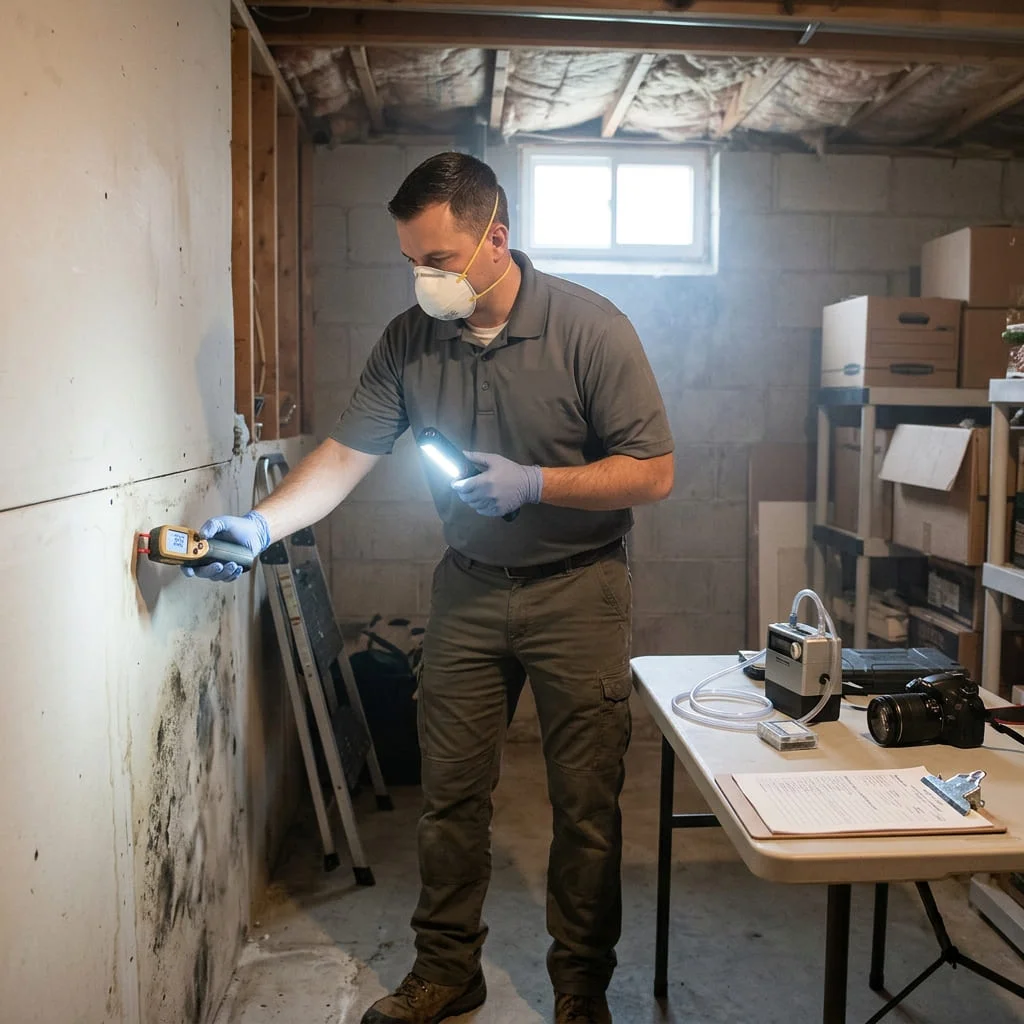 Comparing top-rated mold removal companies serving Glendale, Arizona
Glendale holds the oldest housing stock in the West Valley, and that gives the city a mold profile nothing else out here shares. The blocks around downtown — Catlin Court and the streets off Grand Avenue and 59th — went up in the 1910s, 1920s, and 1930s, when Glendale was a farm town and houses were still built on raised wood foundations rather than the concrete slabs that came later. Fifteen miles north, Arrowhead Ranch and the neighborhoods along the Loop 101 are stucco-and-tile production homes from the 1990s and 2000s. Same city, two completely different sets of failure modes.
Between them sits the middle of Glendale: block ranch houses from the 1950s through the 1970s, many still cooled at least partly by evaporative coolers, most with air conditioning ducts running through hot shallow attics. Arizona Mold Pros compared the mold removal companies serving Glendale and the wider West Valley so you can weigh coverage and response in one place before you start calling. If you have a musty smell you cannot place, start with mold inspection and testing; if a pipe or a roof has already failed, water damage restoration is the first call.
Last Updated: September 2026
The companies below serve the Glendale area. We do not rank them, rate them, or verify their credentials on your behalf — that check is yours to make, and the steps below are the ones worth making it with. Arizona issues no mold-specific license, so the burden of confirming a contractor's licensing, insurance, and scope of work sits with the homeowner.
Arizona issues no mold-specific license, so crews work under a Registrar of Contractors license. Ask for the number and look it up — status, classification, and complaint history are all public.
Request a certificate of liability insurance naming you, sent directly from the insurer or agent rather than a copy from the contractor.
A written scope should name the moisture source, the containment method, what gets removed versus dried, and how completion will be confirmed.
Prices for the same job vary widely. Three written quotes tell you whether an outlier is thorough or simply expensive.
Remediation before the leak is repaired means paying for the same work twice. Any quote silent on the source is incomplete.
For anything past a small area, have post-remediation verification done by someone other than the company that did the removal in Glendale.
National brand with local ownership serving the West Valley including Litchfield Park, Tolleson, Avondale, and Goodyear for mold remediation and water damage.
Environmental remediation company handling mold removal, asbestos abatement, and related remediation work.
General contractor offering mold removal, testing, water damage restoration, and reconstruction.
General contractor handling mold remediation, with an emphasis on assessment and a written scope before work begins.
Mold remediation specialists handling containment, removal, and structural drying.
| Service | Average Cost Range |
|---|---|
| Mold Inspection | $300 – $600 |
| Small Area Remediation (under 50 sq ft) | $1,500 – $3,500 |
| Medium Remediation (50–200 sq ft) | $3,500 – $6,000 |
| Full Home Remediation (200+ sq ft) | $5,000 – $10,000 |
| Attic Mold Removal | $2,000 – $6,000 |
| Crawl Space Mold Removal | $2,500 – $7,000 |
| Black Mold Removal | $3,000 – $8,000 |
| Commercial Mold Remediation | $5,000 – $25,000+ |
Costs in Glendale can vary depending on the size of the affected area, type of mold, accessibility, and whether structural repairs are needed. Arizona's dry climate means mold often concentrates around specific moisture sources — monsoon water intrusion, swamp cooler leaks, or plumbing failures — rather than spreading across entire homes. We recommend getting at least 3 quotes from licensed contractors to compare pricing.
Get free quotes from top Glendale mold removal companiesThe historic core is where Glendale differs most from its neighbors. Pre-war bungalows in and around Catlin Court were commonly built on raised foundations, which means a ventilated crawl space with wood joists, subfloor, and sill plates a foot or two above bare soil. Those spaces are meant to breathe, and the great majority of them no longer do — ninety years of added landscaping, raised planting beds, poured patios, and room additions have blocked or buried the foundation vents, so any moisture that gets under the house stays under it.
What gets it under there is usually plumbing. Supply and drain lines in these homes run in the crawl space where they are easy to reach and easy to ignore, and a weeping joint drips onto soil and framing for years without leaving a mark inside the house. The first symptoms owners notice are a springy patch of floor, a baseboard that has gone soft, or a smell that is stronger with the closet door shut. All of them call for someone to physically go under the house — the starting point for crawl space mold removal in an older Glendale home.
Glendale's mid-century middle ring carries the failure modes of block ranch construction and old cooling equipment. Evaporative coolers remain in service on plenty of these houses and add humidity to the interior by design; where a home converted to refrigerated air, the abandoned roof penetration was often capped quickly and forgotten, and a failed cap is one of the most dependable roof leaks in this part of the Valley. Below it the attic is shallow and lightly insulated, with ducts that sweat where their insulation has torn and drip onto the ceiling drywall all summer.
The ground works against these neighborhoods too. Central Glendale was platted flat, with the Arizona Canal and the Grand Canal cutting across the city and New River and Skunk Creek running the northwest edge, and storm drainage in the older grid is limited. A monsoon microburst that drops an inch in twenty minutes ponds in the streets and pushes water under garage doors and across ground-level thresholds wherever the yard no longer falls away from the house. A handful of older blocks still take flood irrigation as well, which puts the same question to the same grade several times a summer.
North Glendale is a different inspection entirely. Arrowhead Ranch, the Loop 101 corridor, and the newer subdivisions around them are stucco over frame with concrete tile roofs, and their leaks hide behind finished surfaces rather than under floors. Stucco drains through a weep screed at the base of the wall, and that only works while the screed stays clear of soil — bury it under a raised planting bed, a poured patio, or gravel brought up over the years and water sits against the sheathing behind the stucco with nowhere to go.
Add drip emitters placed tight against the wall, turf spray hitting stucco daily, and tile underlayment from the 1990s now reaching the end of its service life while the tile above still looks new, and the newer half of Glendale produces a steady stream of the same three calls: a dark patch at a baseboard on an exterior wall, a ceiling ring under a valley or a vent penetration, and a musty smell in a closet backing onto an irrigated side yard. Each one is a moisture path first and a black mold removal question second.
The most common mistake Glendale homeowners make is hiring on price without checking that the inspection matches the house. These two housing types fail in opposite directions, and the checklists barely overlap.
If your house is pre-war and downtown: the inspection lives under the floor. Ask whether the crawl space will be entered rather than viewed from the hatch, and have the inspector report on four things — standing water or damp soil, whether a vapor barrier exists over the ground, whether the foundation vents are still open to the outside air, and the condition of the joists, subfloor, and sill plates, particularly under bathrooms and the kitchen. Inside, check the floor for spring or cupping and the baseboards for softness along exterior walls. Where a room addition or a patio was poured over a vent, say so on the first call, because it explains why the space cannot dry.
Worth knowing before you plan exterior repairs: Catlin Court is a recognized historic district, and Glendale's preservation rules can apply to exterior changes on a listed property. It does not restrict what a contractor may do inside your walls, but it can affect siding, windows, and roofing work, so check with the city before committing to an exterior scope.
If your house is in Arrowhead or anywhere north of Bell: the inspection lives on the exterior wall and in the attic. Walk the perimeter and find the weep screed — the metal edge at the bottom of the stucco — and note anywhere soil, gravel, concrete, or a planter bed covers it. Move drip emitters off the foundation and adjust turf spray that hits the wall. Get moisture readings at the base of any wall with landscaping tight against it rather than relying on a visual check, since stucco can look perfect while the sheathing behind it stays wet. In the attic, look at the underside of every valley and penetration after a heavy storm, and ask whether the tile underlayment has ever been replaced.
For any Glendale house, mid-century included: find out whether a roof-mounted evaporative cooler was ever installed, and if it was, have both the roof cap and the attic side of that opening inspected. It is the fastest path from symptom to cause in this housing stock, and it costs nothing to ask.
Arizona Mold Pros can connect you with a contractor covering Glendale. Compare mold removal companies in Peoria, Phoenix, El Mirage, and Surprise alongside this page, browse all service areas, or get in touch.
A springy patch of floor or a softened baseboard in a pre-war Catlin Court bungalow points to a crawl space plumbing leak — these homes sit on raised foundations where a weeping joint can drip onto soil and framing for years unseen.
A ceiling stain under a current or former roof-mounted evaporative cooler in Glendale's mid-century block-ranch neighborhoods points to a failed cap or aging cooler equipment.
Bubbling paint or a softened baseboard low on a wall in Arrowhead Ranch or another north Glendale subdivision points to a weep screed buried under a planter bed or gravel rather than a roof leak.
For a pre-war bungalow, expect the crawl space to actually be entered rather than viewed from the hatch, with a report on standing water, the vapor barrier, vent condition, and framing.
For a mid-century block-ranch home, expect the roof checked for current and former evaporative cooler penetrations from both outside and the attic side.
For a north Glendale stucco home, expect the weep screed at the base of every exterior wall checked for burial under landscaping.
Mold remediation is one of the few home services where the homeowner carries most of the verification burden. These four checks apply to every contractor on this page, and they are worth running before you sign anything.
Arizona does not issue a license specifically for mold remediation. Crews generally work under an Arizona Registrar of Contractors (ROC) license instead, which means verifying a contractor's ROC status and insurance is on the homeowner rather than on the state.
Check a license at the Arizona ROC →EPA guidance suggests that mold covering roughly more than 10 square feet is generally beyond a do-it-yourself cleanup and warrants professional remediation. Smaller patches can often be handled yourself — provided you have also fixed the moisture source feeding them.
EPA mold cleanup guidance →The ANSI/IICRC S520 standard is the widely recognized standard of care for professional mold remediation, covering containment, worker protection, and verification. A contractor who can tell you how their scope maps to it is giving you something you can hold them to.
Post-remediation verification confirms the work succeeded. Where the budget allows, have it performed by someone independent of the company that did the removal, so the party certifying the result is not the party being paid for it.
How this guide works. Arizona Mold Pros is a directory — we are not the remediation contractor and we do not perform the work ourselves. Listings are compiled from publicly available information about companies advertising mold services in the Glendale area, and ratings and review counts are approximate figures gathered from public sources that change over time, so verify them yourself before hiring. We may be compensated when a homeowner connects with a contractor through this site. That does not change the evaluation criteria above, and we recommend comparing at least three written scopes regardless of who you call.
Some do, and they are concentrated in the oldest part of the city. Bungalows around Catlin Court and the historic downtown blocks were built before slab-on-grade became standard in the Valley, so they sit on raised foundations with a ventilated crawl space underneath. That matters for mold because there is wood framing above bare soil where a slow plumbing leak can work for years unseen, and because decades of added landscaping and room additions have blocked the vents on most of these houses. If yours is pre-war, ask whether the inspector will actually enter the space.
A cooler in good condition is not a mold problem in itself, but it adds moisture to the house by design, so anything already damp has more to work with all summer. The bigger risk is what happens after conversion to refrigerated air: the old roof penetration is frequently capped in a hurry and then never maintained, and a failed cap puts monsoon rain straight onto the roof deck above a shallow attic. If your home ever had a roof-mounted cooler, that opening should be inspected from both the roof and the attic side.
Neither is safe, they just fail differently. Older homes downtown hide their problems under a raised floor, where crawl space plumbing leaks and blocked foundation vents let moisture sit against wood framing. Newer homes in north Glendale hide theirs behind finished stucco, where a weep screed buried by landscaping or drip irrigation run against the wall keeps the sheathing wet. What actually predicts trouble is whether anyone has looked at the right part of the house — which is why the inspection should be matched to the construction era.
Costs run the usual $1,500-to-$10,000-plus range. A pre-war crawl-space job can run higher if the vents need reopening and the vapor barrier needs adding alongside the remediation.
It shows up most often from a crawl-space plumbing leak in the city's pre-war bungalows, from a failed evaporative cooler penetration in the mid-century block-ranch ring, or from a buried weep screed in the newer north Glendale stucco subdivisions.
In a pre-war home, keep foundation vents clear of landscaping and additions. In a mid-century home, have any evaporative cooler penetration inspected from the attic side. In a newer north Glendale home, keep the weep screed clear of planter beds and gravel.
Don't wait for mold to spread. Compare the top-rated mold removal contractors serving Glendale and the surrounding area. Get your free estimate today — no obligation, no pressure.
Call Now for Free QuotesFree estimates · No obligation · Licensed contractors