ASAP Restoration LLC
General contractor handling mold remediation, with an emphasis on assessment and a written scope before work begins.
Services Phoenix and the surrounding area
Compare ratings, reviews, and services from the best mold remediation contractors serving Phoenix and the surrounding area — then get matched with a free, no-obligation quote.
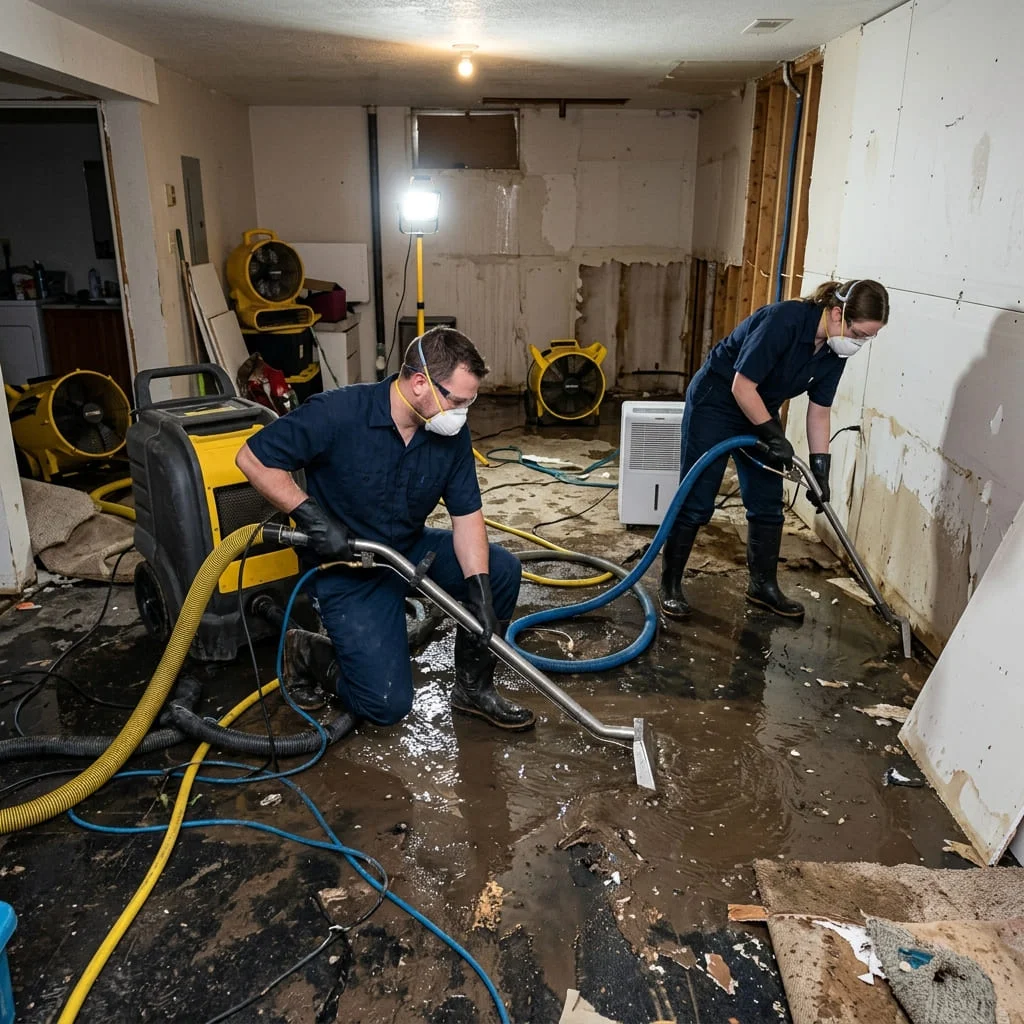 Comparing top-rated mold removal companies serving Phoenix, Arizona
Phoenix is not one housing market, and that is the most useful thing to know before you hire anyone to look for mold in your house. A 1928 brick bungalow in Willo, a 1955 block tract home in Maryvale, a 1979 ranch in Sunnyslope, and a 2004 two-story in Desert Ridge fail in completely different ways, and an inspector working the same checklist on all four will miss something on at least three of them.
What every Phoenix house does share is the climate: a July-through-September monsoon that delivers most of the year's rain in a handful of violent storms, and an urban core that no longer cools off at night the way the open desert around it does. Heat held by pavement and buildings keeps central Phoenix overnight lows well above the outlying areas, and a wall cavity that stays warm and wet is a wall cavity that dries slowly. Arizona Mold Pros compared the mold removal companies working across the city — from the Deer Valley and Desert Ridge corridors down through Ahwatukee — so you can weigh coverage and response time in one place. Start with mold inspection and testing if you are chasing a smell you cannot trace, or water damage restoration if a line has already let go.
Last Updated: September 2026
The companies below serve the Phoenix area. We do not rank them, rate them, or verify their credentials on your behalf — that check is yours to make, and the steps below are the ones worth making it with. Arizona issues no mold-specific license, so the burden of confirming a contractor's licensing, insurance, and scope of work sits with the homeowner.
Arizona issues no mold-specific license, so crews work under a Registrar of Contractors license. Ask for the number and look it up — status, classification, and complaint history are all public.
Request a certificate of liability insurance naming you, sent directly from the insurer or agent rather than a copy from the contractor.
A written scope should name the moisture source, the containment method, what gets removed versus dried, and how completion will be confirmed.
Prices for the same job vary widely. Three written quotes tell you whether an outlier is thorough or simply expensive.
Remediation before the leak is repaired means paying for the same work twice. Any quote silent on the source is incomplete.
For anything past a small area, have post-remediation verification done by someone other than the company that did the removal in Phoenix.
General contractor handling mold remediation, with an emphasis on assessment and a written scope before work begins.
Arizona restoration company handling mold removal, water damage repair, and carpet cleaning.
Uses a patented dry-fog system for non-invasive mold remediation that sterilizes mold and pathogens without demolition. Covers testing and remediation.
Mold remediation specialists handling containment, removal, and structural drying.
National franchise with local Arizona crews handling emergency mold removal and water damage restoration.
| Service | Average Cost Range |
|---|---|
| Mold Inspection | $300 – $600 |
| Small Area Remediation (under 50 sq ft) | $1,500 – $3,500 |
| Medium Remediation (50–200 sq ft) | $3,500 – $6,000 |
| Full Home Remediation (200+ sq ft) | $5,000 – $10,000 |
| Attic Mold Removal | $2,000 – $6,000 |
| Crawl Space Mold Removal | $2,500 – $7,000 |
| Black Mold Removal | $3,000 – $8,000 |
| Commercial Mold Remediation | $5,000 – $25,000+ |
Costs in Phoenix can vary depending on the size of the affected area, type of mold, accessibility, and whether structural repairs are needed. Arizona's dry climate means mold often concentrates around specific moisture sources — monsoon water intrusion, swamp cooler leaks, or plumbing failures — rather than spreading across entire homes. We recommend getting at least 3 quotes from licensed contractors to compare pricing.
Get free quotes from top Phoenix mold removal companiesPhoenix's pre-war core is the part of the city most people get wrong. The historic districts just north and east of downtown — Willo, Encanto-Palmcroft, Coronado, F.Q. Story, Roosevelt, Garfield — were largely built between the 1910s and the 1940s, before slab-on-grade became the Valley standard. A significant share of those homes sit on raised foundations with a crawl space underneath, and a small number have partial basements or cellars, which are close to nonexistent anywhere else in metro Phoenix.
That changes the whole investigation. Under a raised floor there is wood — joists, subfloor, sill plates — sitting a foot or two above bare soil, and a slow supply leak or a failed drain line down there feeds rot and mold for years without producing anything visible upstairs. Crawl space vents get blocked by decades of added landscaping, raised planting beds, and room additions, so whatever moisture gets under the house stops leaving it. If your home predates about 1945, ask directly whether the inspection includes entering the crawl space or basement rather than looking at it through a hatch — that is where crawl space mold removal work in this city almost always begins.
The 1950s through 1970s middle ring is a different animal. Maryvale, west Phoenix, Sunnyslope, north-central, and the Camelback corridor filled in with slab-on-grade block and frame tract housing, much of it cooled originally by roof-mounted evaporative coolers and roofed with low-slope built-up gravel rather than tile. Every one of those choices has a mold consequence sixty years on.
An evaporative cooler adds humidity to the house by design, and homes that later converted to refrigerated air usually left the roof penetration behind, capped in a hurry and then never looked at again. On a low-slope roof, a failed cap or a tired seam does not run off — it ponds and soaks the deck. Underneath, the attics in this era are shallow, lightly insulated, and often crossed by air conditioning ducts added long after the house was built, so cold supply air runs through a space that exceeds 150 degrees in July. Torn duct insulation sweats, drips onto ceiling drywall all summer, and produces a stain the owner reads as a roof leak. This is the most common path to attic mold removal in Phoenix.
The newer edges of the city — Ahwatukee, Deer Valley, Norterra, Desert Ridge, and the subdivisions facing the Estrellas in the southwest — bring the failure modes of 1990s and 2000s production building. These homes are stucco over frame with concrete tile roofs, and both systems hide water well. On a tile roof, the tile is the shell but the underlayment is the actual waterproofing, and underlayment from that era is now at or past the end of its service life while the tile above it still looks perfect.
At ground level, stucco drains through a weep screed at the base of the wall, which only works if it stays clear of soil. Decades of added landscaping, raised planters, poured patios, and drip emitters running against the wall bury that gap, and once the base of the stucco can no longer drain, water sits against the sheathing behind it. Add post-tension slab plumbing that fails as a hot spot or a quiet under-slab weep and you have the three most common calls in newer Phoenix housing. Any of them may show up first as a musty closet or a dark patch at a baseboard, which is why black mold removal that skips the moisture source simply buys the same repair twice.
Before you call anyone, work out roughly when your house was built and how it is put together, because that single fact determines what a competent inspection should cover — and it gives you a fast way to tell whether the person on the phone knows this city.
Pre-1945 (the historic districts). Ask whether the crawl space or basement will actually be entered, whether there is a vapor barrier over the soil, and whether the crawl vents are still open to the outside. Check the base of interior walls in rooms above the crawl space for soft baseboards and cupped flooring. Original cast iron drain lines are the usual culprit down there, and a separated joint leaks greywater rather than clean water, which changes the scope — contaminated material generally comes out rather than being dried in place.
1950s–1970s (Maryvale, west and north-central Phoenix, Sunnyslope). Get someone into the attic, not just under the ceiling stain. Look for current and former evaporative cooler openings and check the underside of each one, then follow every duct run for slumped insulation, disconnected collars, and damp fiberglass, paying particular attention to where a duct passes over a bathroom or a closet. On a low-slope roof, ask when it was last surfaced and whether water ponds anywhere after a storm.
1980s–2000s (Ahwatukee, Deer Valley, Desert Ridge, the newer southwest). Walk the exterior and find the weep screed — the metal edge at the bottom of the stucco. If soil, gravel, concrete, or a planter bed covers it, you have found a moisture path that will keep feeding whatever is inside the wall. Move drip emitters away from the foundation, and ask for moisture readings at the base of any wall with landscaping tight against it. If your water bill jumped without explanation and the floor has a warm spot, say so on the first call: that combination points at a slab leak, and the plumbing repair has to precede any remediation.
One more thing worth knowing in any era. Arizona has no state licensing program specific to mold assessment or remediation, and neither the City of Phoenix nor Maricopa County inspects mold inside a private home. The burden of vetting therefore sits with you: confirm the contractor holds an active Arizona ROC license in a classification that covers the work being proposed, ask for a written scope before anything is demolished, and consider having clearance testing done by someone other than the company that did the removal. Our guide to mold inspection versus remediation covers why those are two separate jobs.
Arizona Mold Pros can connect you with a contractor covering Phoenix. Compare mold removal companies in Glendale, Tempe, Scottsdale, and Laveen alongside this page, browse all service areas, or get in touch.
A springy patch of floor or a softened baseboard in a pre-1945 home around Willo, Encanto-Palmcroft, or another historic district points to a crawl space plumbing leak — original cast iron drain lines fail at the joints and leak greywater rather than clean water.
A ceiling stain under a current or former roof-mounted evaporative cooler in the 1950s-through-70s ring — Maryvale, west and north-central Phoenix, Sunnyslope — points to a failed cap or aging cooler equipment rather than general roof wear.
A warm spot on a tile floor paired with an unexplained water bill jump in an Ahwatukee, Deer Valley, or Desert Ridge-era home points to a slab leak, and a buried stucco weep screed is worth checking on any home from this era regardless of the symptom.
Expect the inspection to be matched to your home's decade rather than generic — pre-1945 gets a crawl space check, 1950s-70s gets an attic and cooler-penetration check, 1990s-2000s gets a weep-screed and slab check.
Understand that neither the City of Phoenix nor Maricopa County inspects mold inside a private home, and Arizona has no state licensing program specific to mold — the burden of vetting the contractor's Arizona ROC license is on you.
For a pre-war historic-district home, expect the crawl space to actually be entered rather than viewed from the hatch.
Mold remediation is one of the few home services where the homeowner carries most of the verification burden. These four checks apply to every contractor on this page, and they are worth running before you sign anything.
Arizona does not issue a license specifically for mold remediation. Crews generally work under an Arizona Registrar of Contractors (ROC) license instead, which means verifying a contractor's ROC status and insurance is on the homeowner rather than on the state.
Check a license at the Arizona ROC →EPA guidance suggests that mold covering roughly more than 10 square feet is generally beyond a do-it-yourself cleanup and warrants professional remediation. Smaller patches can often be handled yourself — provided you have also fixed the moisture source feeding them.
EPA mold cleanup guidance →The ANSI/IICRC S520 standard is the widely recognized standard of care for professional mold remediation, covering containment, worker protection, and verification. A contractor who can tell you how their scope maps to it is giving you something you can hold them to.
Post-remediation verification confirms the work succeeded. Where the budget allows, have it performed by someone independent of the company that did the removal, so the party certifying the result is not the party being paid for it.
How this guide works. Arizona Mold Pros is a directory — we are not the remediation contractor and we do not perform the work ourselves. Listings are compiled from publicly available information about companies advertising mold services in the Phoenix area, and ratings and review counts are approximate figures gathered from public sources that change over time, so verify them yourself before hiring. We may be compensated when a homeowner connects with a contractor through this site. That does not change the evaluation criteria above, and we recommend comparing at least three written scopes regardless of who you call.
Yes, though only in a narrow slice of the city. Homes in the pre-war historic districts around downtown — Willo, Encanto-Palmcroft, Coronado, F.Q. Story and their neighbors — were often built on raised foundations with a crawl space, and a small number have partial basements or cellars. It changes the inspection completely, because there is wood framing sitting above bare soil where a slow leak can feed rot and mold for years without showing upstairs. If your house predates roughly 1945, ask whether the inspector will physically enter that space rather than glance into it.
No. Neither agency investigates mold inside a private residence, and Arizona has no state licensing program specific to mold assessment or remediation. What does apply is ordinary contractor licensing: a firm doing the removal and repair work should hold an active Arizona ROC license in a classification covering that work. Because no regulator is checking the result for you, ask for a written scope before demolition starts and consider paying separately for clearance testing by someone other than the remediation contractor.
Building age predicts it far better than location does. The pre-war districts have crawl spaces and cast iron drains, the 1950s–70s ring has evaporative cooler penetrations and hot attics full of sweating ductwork, and the 1990s–2000s edges have buried stucco weep screeds, aging tile underlayment, and slab plumbing. The one place geography matters is drainage: the older flat street grid in central and west Phoenix has limited storm capacity, so monsoon water ponds and pushes into garages and ground-level thresholds wherever the grade slopes back toward the house.
Costs run the usual $1,500-to-$10,000-plus range. A pre-1945 home with a failing cast iron drain line can run higher, since that drain water is contaminated and the affected material generally has to be removed rather than dried.
It shows up under different conditions depending on the home's era — concealed cast iron plumbing in the pre-war districts, a failed evaporative cooler penetration in the 1950s-70s ring, or a buried stucco weep screed or slab leak in the 1990s-2000s subdivisions.
Match your prevention checklist to your home's decade: crawl space vents clear of landscaping if pre-1945, evaporative cooler penetrations checked from the attic if 1950s-70s, and the stucco weep screed kept clear of planters and gravel if 1990s or newer.
Don't wait for mold to spread. Compare the top-rated mold removal contractors serving Phoenix and the surrounding area. Get your free estimate today — no obligation, no pressure.
Call Now for Free QuotesFree estimates · No obligation · Licensed contractors