SERVPRO of Litchfield / West Phoenix
National brand with local ownership serving the West Valley including Litchfield Park, Tolleson, Avondale, and Goodyear for mold remediation and water damage.
Services Surprise and the surrounding area
Compare ratings, reviews, and services from the best mold remediation contractors serving Surprise and the surrounding area — then get matched with a free, no-obligation quote.
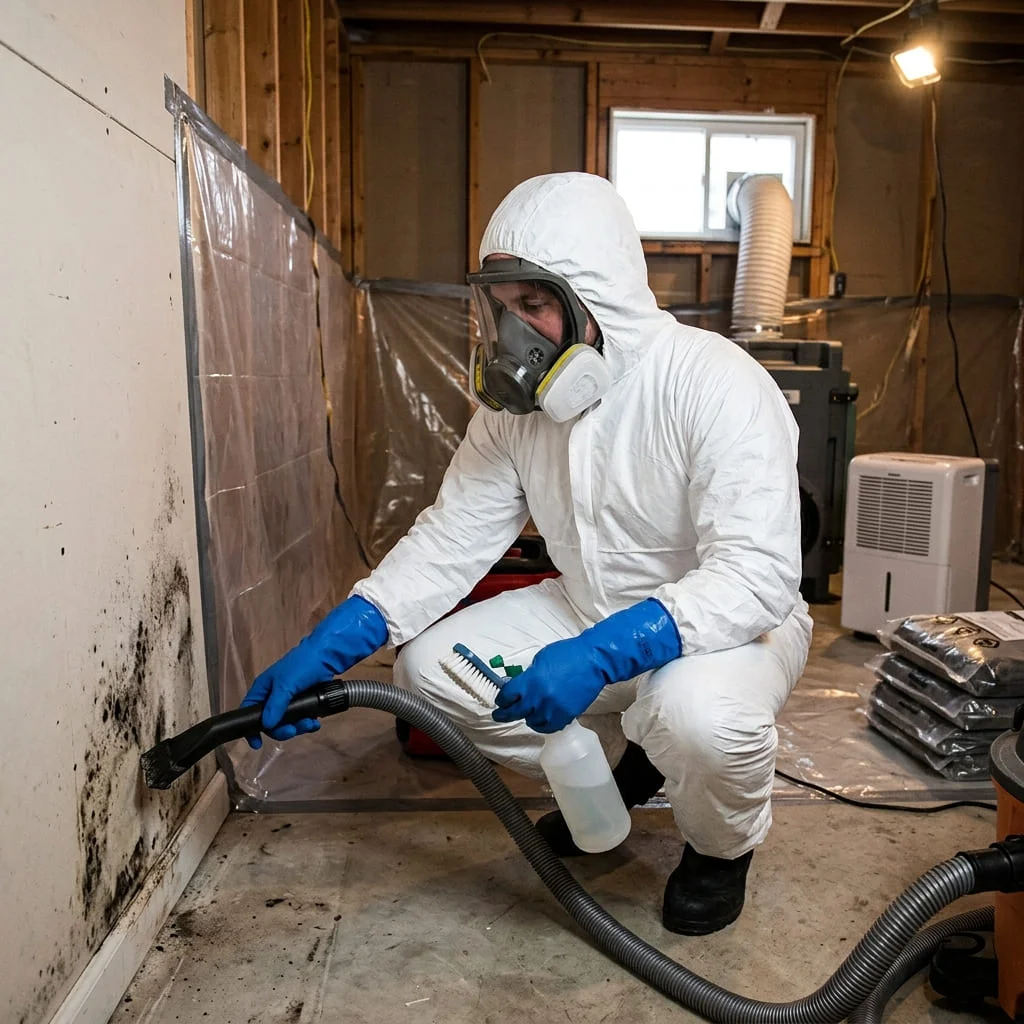 Comparing top-rated mold removal companies serving Surprise, Arizona
Surprise has a mold problem with a date on it. The city went from a few thousand residents to one of the fastest-growing places in the country between roughly 1996 and 2007, which means an enormous share of its housing was built inside a single decade — and is now reaching the age where the same components fail at the same time. Water heaters, angle stops, braided supply lines, air conditioning condensate systems, and tile roof underlayment all have service lives that land in the fifteen-to-twenty-five year band, and in Surprise a whole city's worth of them arrived together.
Layered on top of that is a large age-restricted and part-year population in Sun City Grand, Arizona Traditions, Sun Village, and the other adult communities, plus newer master-planned areas like Marley Park and Surprise Farms, plus the small Original Town Site holding the oldest stock in the city. Arizona Mold Pros compared the mold remediation contractors covering Surprise and the surrounding Northwest Valley so you can weigh coverage and response time in one place. Start with mold inspection and testing if you are chasing a smell, or water damage restoration if a line has already let go.
Last Updated: September 2026
The companies below serve the Surprise area. We do not rank them, rate them, or verify their credentials on your behalf — that check is yours to make, and the steps below are the ones worth making it with. Arizona issues no mold-specific license, so the burden of confirming a contractor's licensing, insurance, and scope of work sits with the homeowner.
Arizona issues no mold-specific license, so crews work under a Registrar of Contractors license. Ask for the number and look it up — status, classification, and complaint history are all public.
Request a certificate of liability insurance naming you, sent directly from the insurer or agent rather than a copy from the contractor.
A written scope should name the moisture source, the containment method, what gets removed versus dried, and how completion will be confirmed.
Prices for the same job vary widely. Three written quotes tell you whether an outlier is thorough or simply expensive.
Remediation before the leak is repaired means paying for the same work twice. Any quote silent on the source is incomplete.
For anything past a small area, have post-remediation verification done by someone other than the company that did the removal in Surprise.
National brand with local ownership serving the West Valley including Litchfield Park, Tolleson, Avondale, and Goodyear for mold remediation and water damage.
Environmental remediation company handling mold removal, asbestos abatement, and related remediation work.
General contractor offering mold removal, testing, water damage restoration, and reconstruction.
General contractor handling mold remediation, with an emphasis on assessment and a written scope before work begins.
Mold remediation specialists handling containment, removal, and structural drying.
| Service | Average Cost Range |
|---|---|
| Mold Inspection | $300 – $600 |
| Small Area Remediation (under 50 sq ft) | $1,500 – $3,500 |
| Medium Remediation (50–200 sq ft) | $3,500 – $6,000 |
| Full Home Remediation (200+ sq ft) | $5,000 – $10,000 |
| Attic Mold Removal | $2,000 – $6,000 |
| Crawl Space Mold Removal | $2,500 – $7,000 |
| Black Mold Removal | $3,000 – $8,000 |
| Commercial Mold Remediation | $5,000 – $25,000+ |
Costs in Surprise can vary depending on the size of the affected area, type of mold, accessibility, and whether structural repairs are needed. Arizona's dry climate means mold often concentrates around specific moisture sources — monsoon water intrusion, swamp cooler leaks, or plumbing failures — rather than spreading across entire homes. We recommend getting at least 3 quotes from licensed contractors to compare pricing.
Get free quotes from top Surprise mold removal companiesThe defining Surprise risk is a cohort problem rather than a weather problem. When a city builds most of its housing in one concentrated boom, the manufactured components inside those houses age on the same clock. A standard tank water heater runs eight to twelve years; the original units in Surprise boom-era homes are long past that and the first replacements are now aging too. Toilet and sink angle stops stiffen and weep after fifteen or twenty years. Braided washing machine hoses are rated for a similar span and tend to fail suddenly rather than gradually.
None of that is unique to Surprise — what is unique is the density. A contractor working this city sees the same failure in the same location in the same floor plan repeatedly, because the houses came off the same production line in the same years. The practical upside is that it makes prevention unusually predictable: if your Surprise home dates from the boom and still has original angle stops, supply lines, or a water heater near the end of its life, you are looking at the most common single origin of a whole-room mold remediation job in this city.
The age-restricted communities add a second pattern, and it is about who is in the building and when. Sun City Grand, Arizona Traditions, Sun Village, and the surrounding adult communities carry a substantial part-year population — houses closed up in April and not opened again until October, with full water pressure in the walls the entire time. An icemaker line, a toilet supply, a failing water heater, or an air conditioning condensate drain that clogs in June will run for months in an empty house with nobody to hear it.
Ownership structure matters here too. In attached homes, casitas, and the patio-home and condominium products common in these communities, the boundary between what the association maintains and what the owner maintains is rarely obvious during a water event — a leak originating in a shared wall, a common roof, or a shared plumbing stack can sit unresolved while two parties work out responsibility, and mold does not wait for that conversation. Read the governing documents before you need them, report a suspected leak in writing on the day you notice it, and photograph everything.
The third factor is the building envelope itself, and specifically what twenty-plus Arizona summers do to it. Surprise homes from the boom are stucco over frame on slab with concrete tile roofs. The tile lasts almost indefinitely; the underlayment beneath it does not, and twenty to twenty-five years is a realistic service life in this climate. Once that membrane goes brittle, water that gets under a tile during a monsoon downpour reaches the deck instead of running off it, and the resulting leak shows up as a ceiling stain some distance from where it entered.
Sealant fails on a similar schedule. The caulk at window flanges, hose bibs, dryer vents, and roof penetrations goes chalky and cracks, letting wind-driven monsoon rain into the wall assembly. Inside, cold supply ducts in an attic well over 150 degrees sweat wherever insulation has slumped or torn. Between the roof above and the ducts below, the attic is where a great deal of Surprise mold begins, which is why attic mold removal and roof-origin black mold removal are so common here relative to the age of the housing.
Most of Surprise was built inside about a decade, which means the list below is not a general maintenance checklist — it is a set of components that are statistically likely to be near or past end of life in your particular house right now. Working through them costs an afternoon and is the cheapest mold prevention available in this city.
First, the water heater. Find the manufacture date on the label rather than trusting a memory of when it was replaced. Anything past ten years is living on borrowed time, and a tank that lets go in a garage or an interior closet puts forty or more gallons into the slab and the adjoining wall in minutes. Second, the angle stops — the small shutoff valves under every sink and behind every toilet. Boom-era stops are now fifteen to twenty-five years old, and the failure mode is a slow weep behind a vanity where nobody looks, not a dramatic burst.
Third, the washing machine hoses. Braided stainless hoses are the standard replacement and they are not permanent either; if yours have been in place since the house was built, replace them and move the washer out far enough to look at the wall behind it while you are there. Fourth, the air conditioning condensate system. A clogged primary drain line in June sends water into a secondary pan, and if that pan or its float switch has failed, the overflow goes into the ceiling. Have the line cleared as part of a spring service and confirm the float switch actually works.
Fifth, the roof underlayment. You cannot see it from the ground and it is the item most often deferred, but at twenty to twenty-five years it is the single biggest envelope risk in a boom-era Surprise home. A roofing inspection that reports on underlayment condition rather than just cracked tiles is worth paying for before a monsoon season, not after. Sixth, the sealant at every penetration — window flanges, hose bibs, dryer vents, the base of any roof jack. Chalky, cracked caulk is an open door for wind-driven rain.
If you own in Sun City Grand or another age-restricted community and leave for the summer, add one step that outranks all six: shut the water off at the main before you go. If that is not practical, at minimum close the valves to the washer and the refrigerator icemaker. Leave the air conditioning running at a moderate setting rather than switching it off, leave interior doors open so air moves through the whole plan, and have someone walk the house monthly with a short list — under every sink, the base of the water heater, behind the washer, the floor around each toilet, and the ceiling below the air handler. Inexpensive leak sensors at those same points turn a three-month leak into a same-week one, which is the entire difference in cost.
For anything beyond a small area, ask for independent post-remediation verification by someone other than the company that did the removal. Arizona Mold Pros can connect you with a contractor covering Surprise — compare mold removal companies in Sun City West, Peoria, and El Mirage alongside this page, browse all service areas, or get in touch.
A water heater, angle stop, or washing machine hose you can't remember ever replacing is worth checking now rather than waiting for it to fail — Surprise's boom-era components are aging on the same clock across the whole city.
A leak that seems to originate in a shared wall, a common roof, or a shared plumbing stack in an attached home or condo is worth reporting immediately even before responsibility is settled — mold does not wait for that conversation.
A ceiling stain appearing some distance from any obvious roof damage points to tile underlayment reaching the end of its 20-to-25-year service life, common across the city's boom-era housing.
Expect a contractor familiar with Surprise to recognize this as a cohort issue — the same component failing in the same floor plan across many neighboring houses built in the same years.
In an attached home or condo, expect to need your association's governing documents before authorizing demolition, since the boundary between owner and association maintenance is rarely obvious during a water event.
If your home is in an age-restricted seasonal community, expect the same shut-off-at-the-main prevention advice used across Sun City, Sun City West, and other part-year Valley communities.
Mold remediation is one of the few home services where the homeowner carries most of the verification burden. These four checks apply to every contractor on this page, and they are worth running before you sign anything.
Arizona does not issue a license specifically for mold remediation. Crews generally work under an Arizona Registrar of Contractors (ROC) license instead, which means verifying a contractor's ROC status and insurance is on the homeowner rather than on the state.
Check a license at the Arizona ROC →EPA guidance suggests that mold covering roughly more than 10 square feet is generally beyond a do-it-yourself cleanup and warrants professional remediation. Smaller patches can often be handled yourself — provided you have also fixed the moisture source feeding them.
EPA mold cleanup guidance →The ANSI/IICRC S520 standard is the widely recognized standard of care for professional mold remediation, covering containment, worker protection, and verification. A contractor who can tell you how their scope maps to it is giving you something you can hold them to.
Post-remediation verification confirms the work succeeded. Where the budget allows, have it performed by someone independent of the company that did the removal, so the party certifying the result is not the party being paid for it.
How this guide works. Arizona Mold Pros is a directory — we are not the remediation contractor and we do not perform the work ourselves. Listings are compiled from publicly available information about companies advertising mold services in the Surprise area, and ratings and review counts are approximate figures gathered from public sources that change over time, so verify them yourself before hiring. We may be compensated when a homeowner connects with a contractor through this site. That does not change the evaluation criteria above, and we recommend comparing at least three written scopes regardless of who you call.
Because most of the city was built in one concentrated boom between roughly 1996 and 2007, so the components inside those houses age on the same clock. Water heaters run eight to twelve years, angle stops and braided supply hoses fifteen to twenty-five, and tile roof underlayment twenty to twenty-five. A city that built most of its housing in a single decade reaches all of those thresholds together, which is why the same failure in the same floor plan turns up repeatedly here.
It depends on where the water originated and on the specific governing documents, which is exactly why it causes delays. A leak from a shared wall, a common roof, or a shared plumbing stack is often treated differently than one from a fixture inside the unit. Read the CC&Rs before you need them, report any suspected leak in writing on the day you notice it, and photograph everything — mold grows during the weeks a responsibility question stays unresolved, so documentation protects you either way.
Shut the water off at the main before you leave, or at minimum close the valves to the washing machine and the refrigerator icemaker. Service the air conditioning and clear the condensate drain line, then leave the system running at a moderate setting rather than switching it off, since a sealed unconditioned house in July holds any moisture that gets in. Leave interior doors open, and have someone walk the house monthly checking under sinks, behind the washer, around toilets, and below the air handler.
Costs run the usual $1,500-to-$10,000-plus range. In an attached home or condo, the roof or common-element repair may be a separate cost the association covers rather than the owner — get that determined before assuming you're paying for all of it.
It shows up most often from an aging water heater, angle stop, or supply hose reaching the end of its service life, or from tile roof underlayment now 20 to 25 years old letting water into the deck.
Check the manufacture date on your water heater rather than trusting memory, replace angle stops and washer hoses if they're original to the house, and have roof underlayment assessed once it passes 20 years. If you're in a seasonal community, shut the water off at the main before you leave.
Don't wait for mold to spread. Compare the top-rated mold removal contractors serving Surprise and the surrounding area. Get your free estimate today — no obligation, no pressure.
Call Now for Free QuotesFree estimates · No obligation · Licensed contractors