SERVPRO of Litchfield / West Phoenix
National brand with local ownership serving the West Valley including Litchfield Park, Tolleson, Avondale, and Goodyear for mold remediation and water damage.
Services Peoria and the surrounding area
Compare ratings, reviews, and services from the best mold remediation contractors serving Peoria and the surrounding area — then get matched with a free, no-obligation quote.
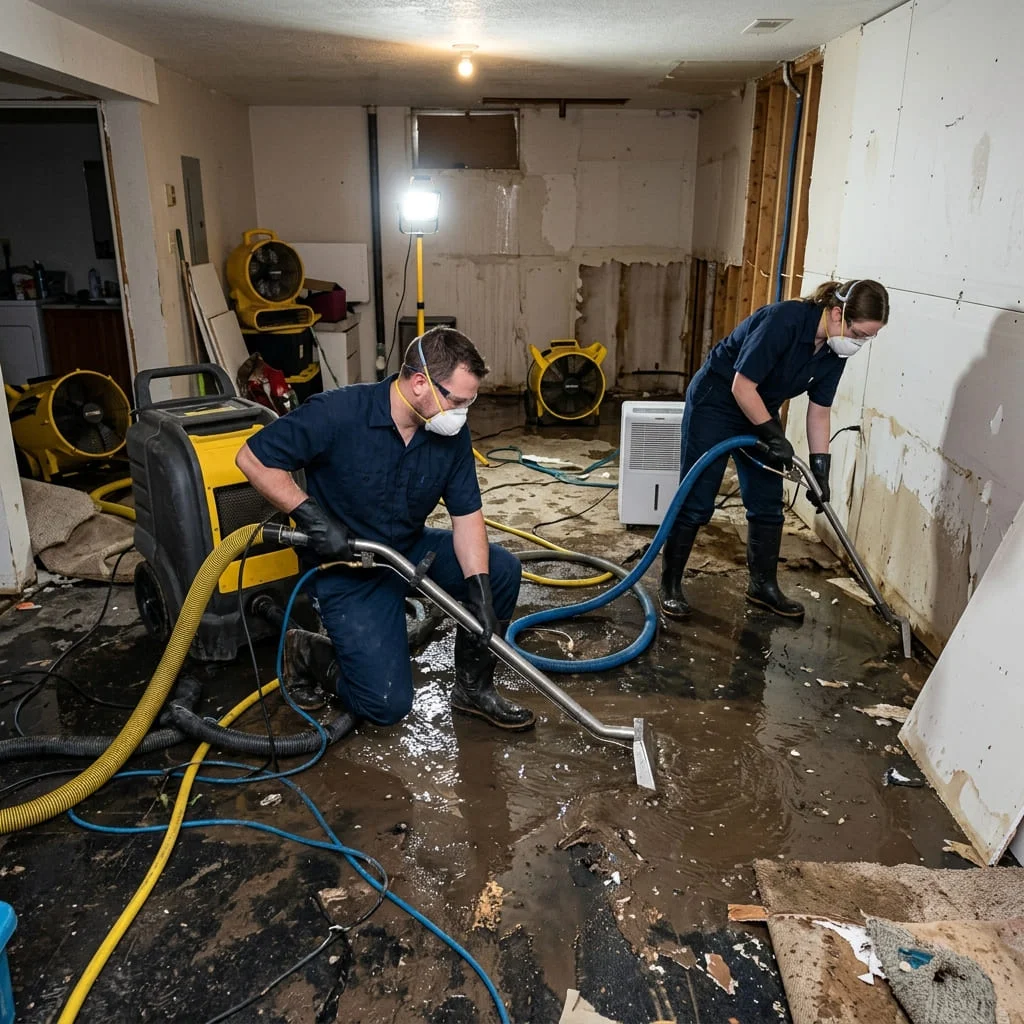 Comparing top-rated mold removal companies serving Peoria, Arizona
Peoria is two very different mold problems sharing one city name. The southern end around Old Town and Grand Avenue has housing going back to the 1920s — block and early frame construction, small lots, and a lot of homes still running or recently retired from evaporative cooling. Drive north past the Loop 303 and you are in Vistancia and the newer far-north subdivisions, built from roughly 2004 onward at noticeably higher elevation on the approach to Lake Pleasant. The moisture that causes mold in those two halves of Peoria arrives by completely different routes, and a contractor who only knows one of them will misread the other.
Arizona Mold Pros compared the mold removal companies working across Peoria so you can weigh coverage, response time, and public review history in one place before you start calling. If you have a musty smell you cannot place, start with mold inspection and testing; if a storm or a line failure has already put water in the house, water damage restoration is the step that actually prevents the mold job.
Last Updated: September 2026
The companies below serve the Peoria area. We do not rank them, rate them, or verify their credentials on your behalf — that check is yours to make, and the steps below are the ones worth making it with. Arizona issues no mold-specific license, so the burden of confirming a contractor's licensing, insurance, and scope of work sits with the homeowner.
Arizona issues no mold-specific license, so crews work under a Registrar of Contractors license. Ask for the number and look it up — status, classification, and complaint history are all public.
Request a certificate of liability insurance naming you, sent directly from the insurer or agent rather than a copy from the contractor.
A written scope should name the moisture source, the containment method, what gets removed versus dried, and how completion will be confirmed.
Prices for the same job vary widely. Three written quotes tell you whether an outlier is thorough or simply expensive.
Remediation before the leak is repaired means paying for the same work twice. Any quote silent on the source is incomplete.
For anything past a small area, have post-remediation verification done by someone other than the company that did the removal in Peoria.
National brand with local ownership serving the West Valley including Litchfield Park, Tolleson, Avondale, and Goodyear for mold remediation and water damage.
Environmental remediation company handling mold removal, asbestos abatement, and related remediation work.
General contractor offering mold removal, testing, water damage restoration, and reconstruction.
General contractor handling mold remediation, with an emphasis on assessment and a written scope before work begins.
Mold remediation specialists handling containment, removal, and structural drying.
| Service | Average Cost Range |
|---|---|
| Mold Inspection | $300 – $600 |
| Small Area Remediation (under 50 sq ft) | $1,500 – $3,500 |
| Medium Remediation (50–200 sq ft) | $3,500 – $6,000 |
| Full Home Remediation (200+ sq ft) | $5,000 – $10,000 |
| Attic Mold Removal | $2,000 – $6,000 |
| Crawl Space Mold Removal | $2,500 – $7,000 |
| Black Mold Removal | $3,000 – $8,000 |
| Commercial Mold Remediation | $5,000 – $25,000+ |
Costs in Peoria can vary depending on the size of the affected area, type of mold, accessibility, and whether structural repairs are needed. Arizona's dry climate means mold often concentrates around specific moisture sources — monsoon water intrusion, swamp cooler leaks, or plumbing failures — rather than spreading across entire homes. We recommend getting at least 3 quotes from licensed contractors to compare pricing.
Get free quotes from top Peoria mold removal companiesOld Town Peoria and the neighborhoods along the Grand Avenue corridor carry the city's oldest housing, and with it the city's most under-diagnosed mold source: evaporative cooling. A swamp cooler works by pushing air through a wet pad, which means it deliberately adds moisture to the house all summer. When the ducting is old, when the unit sits on the roof over an unconditioned attic, or when the bleed-off line drips onto a roof deck instead of draining clear, that added humidity ends up condensing somewhere you cannot see it.
Homes that have switched to refrigerated air are not automatically clear either. Abandoned cooler openings get capped badly, the old duct chase stays in the ceiling, and a roof penetration that nobody maintains becomes the leak nobody looks for. If your Peoria home is pre-1980 and has ever had a cooler on the roof, that penetration is the first place a competent inspector should go — and it is the usual reason a ceiling stain turns into attic mold removal.
Water moving across the ground is the second Peoria factor, and the city's geography concentrates it. The Agua Fria River runs along the eastern edge, New River comes down from the north, and Skunk Creek cuts through the southern part of the city — all of them dry most of the year and all of them capable of carrying serious volume during the July-through-September monsoon. Peoria's flood control infrastructure handles the main channels, but the water that actually gets into houses is usually local sheet flow: a street that ponds, a side yard that slopes the wrong way, a garage threshold sitting a half inch too low.
The damage is often quieter than people expect. An inch of water across a garage slab or through a ground-level door soaks the bottom plate, the drywall edge, and any cardboard or carpet pad it reaches, and then the surface dries while the framing does not. What you smell three weeks later is the part that never dried. After any intrusion the twenty-four to forty-eight hour window matters far more than the depth of the water, which is why prompt drying beats any amount of later cleaning.
North of the Loop 101 and especially past the 303, Peoria's housing changes character completely — Fletcher Heights and Westbrook Village through the 1980s and 1990s, then Vistancia and the far-north subdivisions from the mid-2000s. These are stucco over frame on slab with tile roofs, and the failure points are different from Old Town's. Cold supply ducts run through attics that pass 150 degrees in July, and wherever the insulation has slumped, torn, or been pushed aside by someone working up there, the duct sweats and drips onto the drywall below for an entire season.
Elevation adds a wrinkle in far north Peoria. The ground rises steadily toward Lake Pleasant, and the higher subdivisions run cooler overnight than the valley floor, which means slightly more condensation on cold surfaces and slightly longer drying times after a storm. Combined with tile roof underlayment that is now around twenty years into a service life that rarely exceeds twenty-five, the north end of the city is entering the window where roof-origin leaks become common. A stain on an upstairs ceiling in Vistancia is worth an inspection rather than a coat of paint.
Peoria stretches close to thirty miles north to south, and the honest answer to "where does mold start in a Peoria home" depends entirely on which end you live in. Knowing which list applies to you saves an inspection appointment and a good deal of money.
If your home is in Old Town, along Grand Avenue, or anywhere in the older grid south of Thunderbird, start on the roof. Find every past or present evaporative cooler penetration and look at how it was sealed, then go into the attic and look at the underside of that same spot for staining, rust streaks, or darkened sheathing. Check the ceiling below it from inside. Then work through the plumbing of a house old enough to have original drain lines: under every sink, the base of the water heater, the floor around each toilet, and the wall shared with the bathroom. Older Peoria homes frequently have original galvanized or cast iron waste lines, and a drain leak inside a wall produces a smell long before it produces a stain.
If your home is north Peoria — Fletcher Heights, Westbrook Village, Vistancia, or anything off the 303 — start in the attic instead. Walk the duct runs with a flashlight and look for flattened insulation, disconnected collars, and damp fiberglass, particularly where a duct crosses over a bathroom or a closet. Check the ceiling below the air handler and below every roof penetration. Then go outside and look at the grade and the irrigation: drip lines run against a stucco wall and turf spray hitting the building daily will keep a wall base wet on a schedule, and stucco that stays damp low on the wall eventually passes moisture into the framing behind it. The tell is always low — bubbling paint, a softened baseboard, chalky efflorescence on block, flooring lifting along an exterior edge.
Both halves of the city share one thing worth checking regardless of age: the laundry. A braided washer hose and the angle stops behind it are the single most common origin of a whole-room mold remediation job in a Peoria home, because the washer sits against a wall and nobody moves it. If yours has not been looked at in five years, look at it this week.
When you call for a quote, ask the contractor which part of Peoria they work in most. A firm that mostly services the newer north-end subdivisions may not think to check a capped cooler penetration, and one that works Old Town daily may not be current on tile roof underlayment. Arizona Mold Pros can connect you with a contractor covering Peoria — compare mold removal companies in Surprise, Sun City, and El Mirage alongside this page, browse all service areas, or get in touch.
A ceiling ring under a capped former evaporative cooler penetration in an Old Town or Grand Avenue-corridor home points to a roof seal that was never properly maintained after the switch to refrigerated air.
A sweating attic duct or a stained ceiling below the air handler in a north Peoria or Vistancia home is the newer side of the city's signature source, distinct from Old Town's roof-penetration problem.
Standing water in a garage or through a ground-level door after a storm near the Agua Fria, New River, or Skunk Creek corridors is worth drying within a day or two, since the surface drying while the framing stays wet is what produces a smell three weeks later.
Expect the inspection checklist to match your home's era and location — Old Town gets checked for cooler penetrations and aging drain lines, north Peoria gets checked for attic ducts and irrigation against stucco.
On either side of the city, expect the washing machine hose and angle stops to get checked, since that's the single most common origin of a whole-room remediation regardless of home age.
After any storm-related intrusion, expect the contractor to treat the 24-to-48-hour drying window as the priority over the depth of the water.
Mold remediation is one of the few home services where the homeowner carries most of the verification burden. These four checks apply to every contractor on this page, and they are worth running before you sign anything.
Arizona does not issue a license specifically for mold remediation. Crews generally work under an Arizona Registrar of Contractors (ROC) license instead, which means verifying a contractor's ROC status and insurance is on the homeowner rather than on the state.
Check a license at the Arizona ROC →EPA guidance suggests that mold covering roughly more than 10 square feet is generally beyond a do-it-yourself cleanup and warrants professional remediation. Smaller patches can often be handled yourself — provided you have also fixed the moisture source feeding them.
EPA mold cleanup guidance →The ANSI/IICRC S520 standard is the widely recognized standard of care for professional mold remediation, covering containment, worker protection, and verification. A contractor who can tell you how their scope maps to it is giving you something you can hold them to.
Post-remediation verification confirms the work succeeded. Where the budget allows, have it performed by someone independent of the company that did the removal, so the party certifying the result is not the party being paid for it.
How this guide works. Arizona Mold Pros is a directory — we are not the remediation contractor and we do not perform the work ourselves. Listings are compiled from publicly available information about companies advertising mold services in the Peoria area, and ratings and review counts are approximate figures gathered from public sources that change over time, so verify them yourself before hiring. We may be compensated when a homeowner connects with a contractor through this site. That does not change the evaluation criteria above, and we recommend comparing at least three written scopes regardless of who you call.
It can, and it is one of the most overlooked sources in older Peoria neighborhoods. A swamp cooler adds moisture to the house by design, so when ducting is old, the unit sits over an unconditioned attic, or the bleed-off line drips onto the roof deck rather than draining clear, that moisture condenses somewhere hidden. Homes that switched to refrigerated air still need the old roof penetration checked, because a badly capped cooler opening is a leak nobody thinks to look for.
Treat twenty-four to forty-eight hours as the working limit, regardless of how shallow the water was. An inch across a garage slab or through a ground-level door soaks the bottom plate and drywall edge, and the surface dries long before the framing does. Getting drying equipment in quickly is far cheaper than the remediation that follows a wall cavity that stayed wet for three weeks, and prompt action is also what separates a sudden-event insurance claim from one an insurer treats as deferred maintenance.
Lower in some ways, not in others. Newer north Peoria homes do not have the aging drain lines or cooler penetrations that older Old Town stock carries, but they concentrate risk in the attic — cold supply ducts running through attics well over 150 degrees in July will sweat wherever insulation has slumped or torn. Tile roof underlayment on the mid-2000s subdivisions is also now around twenty years old, which is the point where roof-origin leaks start appearing, so an upstairs ceiling stain deserves an inspection rather than paint.
Costs run the usual $1,500-to-$10,000-plus range. An Old Town home may run higher if aging drain lines need addressing; a north Peoria home may run higher if roof underlayment needs replacing alongside the remediation.
It shows up most often from a capped evaporative cooler penetration in Old Town's older homes, from sweating attic ductwork in north Peoria and Vistancia, or from storm water that wasn't dried within the first day or two.
Check the washing machine hose and angle stops regardless of which part of the city you're in. In an older home, have any capped cooler penetration checked from the attic side. In a newer home, check duct insulation and keep irrigation off stucco walls.
Don't wait for mold to spread. Compare the top-rated mold removal contractors serving Peoria and the surrounding area. Get your free estimate today — no obligation, no pressure.
Call Now for Free QuotesFree estimates · No obligation · Licensed contractors