Steamy Concepts
Established restoration company serving Arizona since 1998 with over 7,000 five-star reviews for mold removal, water damage repair, and carpet cleaning.
Compare ratings, reviews, and services from the best mold remediation contractors serving Mount Lemmon and the surrounding area — then get matched with a free, no-obligation quote.
Comparing top-rated mold removal companies serving Mount Lemmon, ArizonaMount Lemmon is the one place in Arizona where mold behaves the way it does in the Rockies rather than the way it does in the desert. Summerhaven and the cabins strung along the top of the Catalina Highway sit near 7,700 feet in mixed conifer forest, with the summit above 9,100 — roughly 25 road miles from Tucson, but an hour's drive and an entirely different climate. Real snow, a real freeze-thaw cycle, and several times the annual precipitation recorded on the valley floor. Almost everything a Tucson homeowner knows about desert mold stops being true somewhere around the 6,000-foot marker.
The mechanics are effectively inverted up here. Down in the valley, mold is usually a leak that has nowhere to dry. On Mount Lemmon it is far more often warm, humid indoor air driven up into a freezing attic or pressed against cold sheathing until it condenses, snowmelt backing up under shingles at a cold eave, or a cabin that has sat shut, unheated, and unvisited for four months. None of those leave a puddle on the floor for you to find, which is exactly why they get discovered late.
Arizona Mold Pros compared the mold remediation contractors that will genuinely make the drive up the mountain, because that is the real constraint here — the Catalina Highway is long, steep, and occasionally closed for snow, and not every firm advertising "Tucson metro" means Summerhaven when it says it. Use the comparison below to weigh coverage, emergency availability, and realistic response time before you start calling. If you have opened a cabin for the season and met a musty smell, start with mold inspection and testing; if a line has frozen and split, water damage restoration is the urgent first call.
Last Updated: July 2026
Every company listed below is evaluated on customer reviews, Google ratings, licensing and insurance status, response time and availability, the range of mold services offered, and experience with Arizona-specific mold issues like monsoon moisture and swamp cooler condensation. We only feature companies that actively serve the Mount Lemmon area.
Verified Google ratings and the volume and consistency of homeowner reviews.
Companies that carry the licensing and insurance Arizona homeowners should expect.
How quickly a company can be on site — including 24/7 emergency coverage.
Inspection, testing, remediation, and water damage restoration under one roof.
Familiarity with monsoon moisture, swamp cooler condensation, and desert construction.
Only companies that actively serve the Mount Lemmon area make our list.
Established restoration company serving Arizona since 1998 with over 7,000 five-star reviews for mold removal, water damage repair, and carpet cleaning.
Tucson-based restoration contractor specializing in mold remediation, moisture mapping, and structural drying, with independent testing available on request.
Mold, water, and fire damage restoration franchise offering inspection, containment, removal, and reconstruction for Tucson-area homes and businesses.
Neighborly-affiliated restoration franchise handling mold remediation, water damage mitigation, and odor removal for residential and light commercial properties.
Locally owned franchise of the national restoration brand, handling mold remediation, water damage, and structural drying across the Tucson metro with 24/7 emergency dispatch.
| Service | Average Cost Range |
|---|---|
| Mold Inspection | $300 – $600 |
| Small Area Remediation (under 50 sq ft) | $1,500 – $3,500 |
| Medium Remediation (50–200 sq ft) | $3,500 – $6,000 |
| Full Home Remediation (200+ sq ft) | $5,000 – $10,000 |
| Attic Mold Removal | $2,000 – $6,000 |
| Crawl Space Mold Removal | $2,500 – $7,000 |
| Black Mold Removal | $3,000 – $8,000 |
| Commercial Mold Remediation | $5,000 – $25,000+ |
Costs in Mount Lemmon can vary depending on the size of the affected area, type of mold, accessibility, and whether structural repairs are needed. Arizona's dry climate means mold often concentrates around specific moisture sources — monsoon water intrusion, swamp cooler leaks, or plumbing failures — rather than spreading across entire homes. We recommend getting at least 3 quotes from licensed contractors to compare pricing.
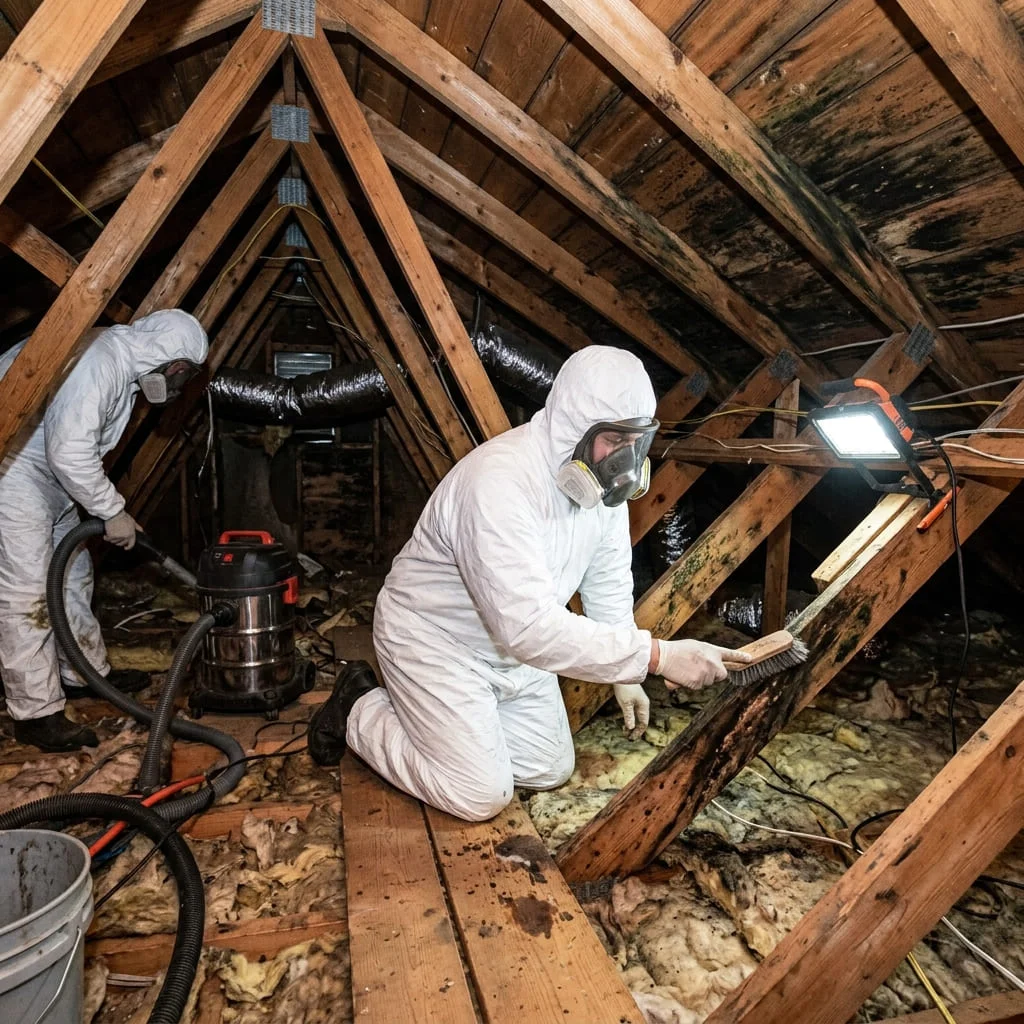
Compare free quotes from top Mount Lemmon mold removal companiesThe dominant mold risk on Mount Lemmon is winter roof and attic moisture, and it arrives by two separate routes. The first is condensation. A heated cabin pushes warm, moist air upward — from showers, cooking, laundry, and a wood stove or propane heater running hard — and if the ceiling plane is not tightly air sealed, that air leaks into an attic whose sheathing may be well below freezing. Moisture condenses on the cold underside of the roof deck, frosts, then melts during a warm afternoon and drips back down onto the insulation. Homeowners describe it as a mystery roof leak that only happens in winter, which is the classic signature.
The second route is snowmelt. Heat escaping through a poorly insulated ceiling warms the roof deck, melts the snowpack sitting on it, and that meltwater runs down to the cold overhang where it refreezes into a ridge of ice. Water then backs up behind the ridge and works its way under the shingles and into the roof assembly. Neither problem is visible from the ground, and both feed the ceiling and wall cavities steadily all season. That is why a serious mold inspection on Mount Lemmon starts in the attic with a moisture meter and an eye on insulation and ventilation detailing, and why attic mold removal is the most common scope of work at this elevation.
The second factor is how the buildings are actually used. A large share of the housing on Mount Lemmon is seasonal — weekend cabins, summer escapes from the Tucson heat, and rentals that sit empty between bookings. A closed building still has water pressure in every line, and a supply line, a water heater, or a toilet fill valve that lets go in February will run for weeks before anyone drives up the mountain to notice. Owners who shut the heat off entirely to save propane make it worse in a specific way: the building drops below freezing, water standing in traps and lines can freeze and split fittings, and then the structure sits cold, sealed, and unventilated while the thaw soaks it.
Winterizing properly is the countermeasure, and it is a genuinely different checklist from the one a valley homeowner uses. Shut off the main and drain the system rather than simply turning the thermostat down, leave enough heat to hold the building above freezing if the plumbing stays charged, and have somebody physically walk the property after major storms. If you return to a cabin and find bubbling paint, a stained ceiling, or that unmistakable earthy smell in a closed bedroom, treat it as a moisture report and get an inspection before you start opening walls yourself — the same starting point behind effective black mold removal and full mold remediation.
Third is the building stock itself and the ground it sits on. The 2003 Aspen Fire destroyed most of Summerhaven — several hundred structures — and a great deal of the village was rebuilt in the years that followed, so the community today is an unusual mix: newer, tighter, better-insulated construction standing alongside older cabins that survived, some of them decades old and built to no particular standard. Those two groups fail differently. Tight modern envelopes trap interior moisture when ventilation is inadequate; older cabins leak air freely but often have minimal vapor control, uninsulated crawl spaces, and roof assemblies never designed for the snow loads they now carry.
The terrain adds its own load. Cabins sit on steep, forested slopes, frequently on piers or over vented crawl spaces, with snowmelt and summer monsoon runoff moving downhill directly at them. Ground that stays shaded under conifers holds moisture for weeks after the valley has dried out, decks and stairs stay damp, and skirting or lattice around a crawl space traps humidity underneath the floor. Properties on wells and septic systems carry a further set of moisture sources that a standard city-water inspection would never look at. Any competent contractor working on Mount Lemmon should be checking the crawl space and the drainage above the house, not just the room where you found the stain.
Search for mold advice in Arizona and you will be told about evaporative coolers, monsoon humidity spikes, and flat roofs baking in the sun. Practically none of it applies in Summerhaven. The Catalina high country is a cold, wet, forested climate sitting on top of a desert, and the mechanisms driving mold growth here are the ones that drive it in any mountain town — vapor drive, condensation on cold surfaces, ice damming, and long stretches when nothing dries because the sun never reaches it.
Start with vapor drive, because it explains most of the confusing cases. Warm air holds more moisture than cold air. When a heated interior at 68 degrees meets an attic or a wall cavity at 20, the moisture in that warm air condenses the moment it touches a cold surface, and it keeps condensing all winter. The result is a wet roof deck, damp insulation, and mold on framing — with no leak anywhere in the roof. The fixes are air sealing at the ceiling plane, adequate insulation, and genuinely functional attic ventilation, and they are repairs a mold contractor should be raising with you, because removing the growth without addressing the vapor path guarantees it comes back next winter.
Ice dams are the second mechanism. They form when heat loss through the roof melts snow on the warm upper section while the eave stays frozen, and the fix is the same underlying one: keep the roof deck cold by insulating and air sealing, rather than chipping ice off an overhang every January. If you have noticed icicles hanging in a heavy line from one particular section of roof, that is not a decoration — it is a map of where the building is losing heat, and quite often a map of where the water is getting in.
Third, budget for the drive. A remediation crew coming up the Catalina Highway is committing to about an hour each way in good conditions, and the road does close for snow and ice. That has real consequences: expect a travel charge, expect scheduling to be less flexible than it would be in Tucson, and ask directly whether the company has worked at elevation before, since attic and crawl space assemblies up here are not what its technicians see every day. It also means the first 24 to 48 hours after a discovery matter even more than usual, because that window is when a wet building can still be dried instead of demolished. If you can safely stop the water, move belongings off wet flooring, and get air moving before help arrives, you are meaningfully changing the size of the job.
Finally, ask what happens after the removal. On a seasonal cabin the most valuable part of the engagement is often the closing conversation — what to fix before winter, how to winterize the plumbing properly, whether the crawl space needs a vapor barrier, and what to check on the first visit each spring. Arizona Mold Pros can connect you with a licensed contractor covering the Mount Lemmon area. Compare nearby listings for mold removal companies in Vail, Marana, and Sahuarita, browse all service areas, or get in touch.
The most obvious sign is visible growth — black, green, or white spots spreading across walls and ceilings, under sinks, or around window frames. But mold in Mount Lemmon homes often hides, so a persistent musty or earthy odor in a bathroom, closet, or other enclosed space is just as important to take seriously. That smell usually means moisture is feeding something you can't yet see.
Context matters too. If your Mount Lemmon home has had recent water damage, flooding, or a plumbing leak, mold can begin growing within 24 to 48 hours. Watch for peeling paint, bubbling wallpaper, or discoloration on surfaces, and pay attention to condensation collecting on windows or walls. Unexplained respiratory symptoms, worsening allergies, or headaches that ease when you leave the house can also point to a hidden mold problem.
If you notice any of these signs in your Mount Lemmon home, contact a licensed mold remediation professional for an inspection before the problem spreads.
A quality mold removal company in Mount Lemmon starts with an inspection and assessment to identify the type of mold and the extent of the problem. Once the scope is clear, the crew contains the affected area with plastic sheeting and negative air pressure so spores don't spread to clean parts of the house, then runs HEPA air filtration to capture anything airborne.
From there, the actual remediation begins: physical removal of mold using antimicrobial treatments and scrubbing, followed by thorough drying and dehumidification of the affected areas. Any damaged materials — drywall, insulation, or flooring — are repaired or replaced, and reputable contractors finish with post-remediation testing to confirm mold levels are back to normal.
The best mold removal companies serving Mount Lemmon will provide a detailed scope of work and walk you through each step before starting any remediation.
Mold remediation is one of the few home services where the homeowner carries most of the verification burden. These four checks apply to every contractor on this page, and they are worth running before you sign anything.
Arizona does not issue a license specifically for mold remediation. Crews generally work under an Arizona Registrar of Contractors (ROC) license instead, which means verifying a contractor's ROC status and insurance is on the homeowner rather than on the state.
Check a license at the Arizona ROC →EPA guidance suggests that mold covering roughly more than 10 square feet is generally beyond a do-it-yourself cleanup and warrants professional remediation. Smaller patches can often be handled yourself — provided you have also fixed the moisture source feeding them.
EPA mold cleanup guidance →The ANSI/IICRC S520 standard is the widely recognized standard of care for professional mold remediation, covering containment, worker protection, and verification. A contractor who can tell you how their scope maps to it is giving you something you can hold them to.
Post-remediation verification confirms the work succeeded. Where the budget allows, have it performed by someone independent of the company that did the removal, so the party certifying the result is not the party being paid for it.
How this guide works. Arizona Mold Pros is a directory — we are not the remediation contractor and we do not perform the work ourselves. Listings are compiled from publicly available information about companies advertising mold services in the Mount Lemmon area, and ratings and review counts are approximate figures gathered from public sources that change over time, so verify them yourself before hiring. We may be compensated when a homeowner connects with a contractor through this site. That does not change the evaluation criteria above, and we recommend comparing at least three written scopes regardless of who you call.
Almost certainly condensation rather than a leak. Warm, humid indoor air escapes through gaps in the ceiling and reaches a roof deck that is below freezing, where the moisture condenses, frosts, and later melts back down into the insulation. It looks exactly like a roof leak but only appears in winter. The repair is air sealing the ceiling plane, improving insulation, and making sure attic ventilation actually works — removing the mold without fixing the vapor path means it returns the following winter.
Several Tucson-area firms do, but the list is shorter than it is in the city and you should confirm it explicitly. The Catalina Highway is roughly 25 miles of steep mountain road, about an hour each way, and it can close for snow and ice in winter. Expect a possible travel charge and less scheduling flexibility, and ask whether the company has worked at elevation before, since attic and crawl space assemblies on the mountain are not what most Tucson technicians see day to day.
Do not simply turn the thermostat down and leave. Either shut off the water main and drain the system, or leave enough heat to keep the building reliably above freezing if the plumbing stays charged. Frozen and split lines in an empty cabin can run for weeks before anyone notices. Arrange for someone to check the property physically after major storms, and on the first visit each spring look for stained ceilings, softened drywall, and musty odors in closed rooms before you settle in.
Mold removal costs in Mount Lemmon typically range from $1,500 for small areas to $10,000 or more for full-home remediation. The exact cost depends on the size of the affected area, type of mold, and whether structural repairs are needed. We recommend getting at least 3 quotes from licensed contractors.
Most residential mold remediation jobs in Mount Lemmon take 1 to 5 days. Larger projects involving multiple rooms, extensive water damage, or structural repairs can take up to 2 weeks. Your contractor should provide a timeline before work begins.
It depends on the cause. Arizona homeowners insurance typically covers mold remediation if the mold resulted from a sudden, accidental event like a burst pipe or storm damage. Mold caused by ongoing neglect, deferred maintenance, or pre-existing conditions is usually not covered. Check with your insurance provider for specifics.
Yes. Despite Arizona's dry climate, black mold (Stachybotrys chartarum) can develop anywhere with persistent moisture — bathrooms, attics, crawl spaces, and behind walls near plumbing. Monsoon season, swamp coolers, and water heater failures are common causes of black mold growth in Mount Lemmon homes.
It depends on the severity. For small, contained areas, you can usually stay home while the remediation crew works. For larger projects involving multiple rooms or HVAC system contamination, temporary relocation may be recommended — especially for households with children, elderly family members, or anyone with respiratory conditions.
Fix the moisture source first — that's the number one priority. After that, improve ventilation in bathrooms and kitchens, use exhaust fans, consider a dehumidifier for enclosed spaces, and schedule regular inspections especially before and after monsoon season (July through September). In Mount Lemmon, pay extra attention to swamp cooler areas and any rooms adjacent to exterior plumbing.
Don't wait for mold to spread. Compare the top-rated mold removal contractors serving Mount Lemmon and the surrounding area. Get your free estimate today — no obligation, no pressure.
Call Now for Free QuotesFree estimates · No obligation · Licensed contractors