SERVPRO of Tucson Valley
Locally owned franchise of the national restoration brand, handling mold remediation and water damage across the Tucson valley.
Services Sahuarita and the surrounding area

Compare ratings, reviews, and services from the best mold remediation contractors serving Sahuarita and the surrounding area — then get matched with a free, no-obligation quote.
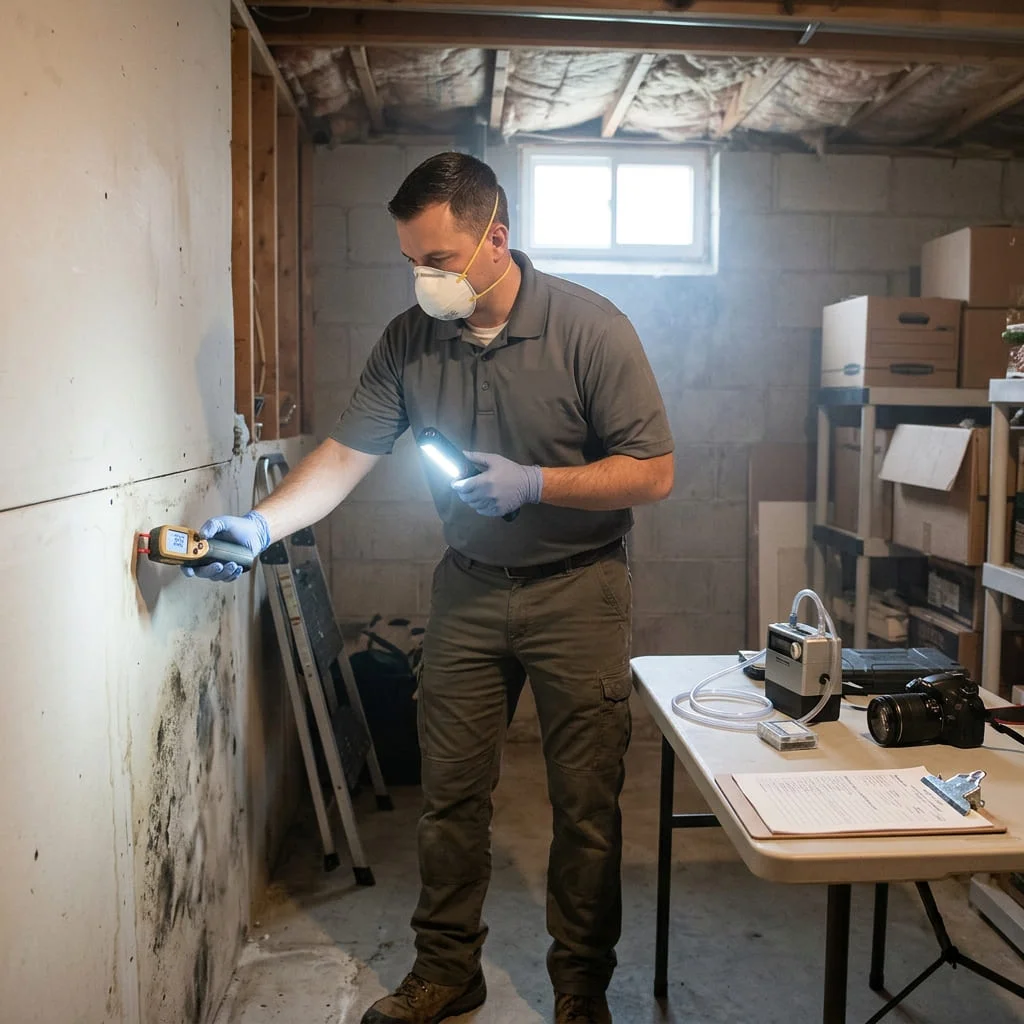 Comparing top-rated mold removal companies serving Sahuarita, Arizona
Sahuarita is surrounded by one of the largest irrigated pecan operations in the world. The orchards that line the Santa Cruz Valley on either side of I-19 are flood irrigated on a schedule through the growing season, which means the ground around this town holds far more moisture, far more often, than the open desert twenty miles away. That single fact changes what a competent mold inspection in Sahuarita should look at.
Layered on top of it is a town that barely existed in its current form thirty years ago. Sahuarita incorporated in 1994 and built out fast, so most of the housing here is modern slab-on-grade stucco-and-tile construction — Rancho Sahuarita around its community lake, the Quail Creek 55-plus neighborhoods out toward the Santa Rita foothills, and the newer subdivisions filling in between them. Modern homes fail differently from old ones, and the failures are installation defects rather than wear.
Arizona Mold Pros compared the mold remediation contractors covering the Santa Cruz Valley south of Tucson so you can weigh ratings, service range, and realistic response times in one place before you start calling. Whether you need mold inspection and testing, full mold remediation, or urgent water damage restoration, start with the comparison below.
Last Updated: September 2026
The companies below serve the Sahuarita area. We do not rank them, rate them, or verify their credentials on your behalf — that check is yours to make, and the steps below are the ones worth making it with. Arizona issues no mold-specific license, so the burden of confirming a contractor's licensing, insurance, and scope of work sits with the homeowner.
Arizona issues no mold-specific license, so crews work under a Registrar of Contractors license. Ask for the number and look it up — status, classification, and complaint history are all public.
Request a certificate of liability insurance naming you, sent directly from the insurer or agent rather than a copy from the contractor.
A written scope should name the moisture source, the containment method, what gets removed versus dried, and how completion will be confirmed.
Prices for the same job vary widely. Three written quotes tell you whether an outlier is thorough or simply expensive.
Remediation before the leak is repaired means paying for the same work twice. Any quote silent on the source is incomplete.
For anything past a small area, have post-remediation verification done by someone other than the company that did the removal in Sahuarita.
Locally owned franchise of the national restoration brand, handling mold remediation and water damage across the Tucson valley.
Full-service restoration franchise covering southern Arizona, offering mold remediation, water and fire damage repair, and reconstruction under one contract.
Emergency-focused franchise handling mold removal and water damage response across the Tucson area.
Franchise territory covering the northwest corridor — Marana, Avra Valley, Oro Valley, and Casas Adobes — for mold remediation, water extraction, and post-storm structural drying.
Neighborly-affiliated restoration franchise handling mold remediation, water damage mitigation, and odor removal for residential and light commercial properties.
| Service | Average Cost Range |
|---|---|
| Mold Inspection | $300 – $600 |
| Small Area Remediation (under 50 sq ft) | $1,500 – $3,500 |
| Medium Remediation (50–200 sq ft) | $3,500 – $6,000 |
| Full Home Remediation (200+ sq ft) | $5,000 – $10,000 |
| Attic Mold Removal | $2,000 – $6,000 |
| Crawl Space Mold Removal | $2,500 – $7,000 |
| Black Mold Removal | $3,000 – $8,000 |
| Commercial Mold Remediation | $5,000 – $25,000+ |
Costs in Sahuarita can vary depending on the size of the affected area, type of mold, accessibility, and whether structural repairs are needed. Arizona's dry climate means mold often concentrates around specific moisture sources — monsoon water intrusion, swamp cooler leaks, or plumbing failures — rather than spreading across entire homes. We recommend getting at least 3 quotes from licensed contractors to compare pricing.
Get free quotes from top Sahuarita mold removal companiesWater in the ground is the factor that sets Sahuarita apart, and it comes from agriculture rather than weather. The pecan groves along the Santa Cruz Valley here are among the largest irrigated pecan operations anywhere, and flood irrigation means fields are deliberately inundated on a repeating schedule from spring through fall. Ground alongside irrigated acreage stays damp far longer than desert soil, and a number of Sahuarita subdivisions sit on or directly beside land that was orchard or farm within living memory.
Damp ground does not create mold on its own — but it changes where the moisture shows up. Water arriving from below or from the side announces itself at the bottom of a wall: bubbling paint low on the drywall, softened baseboard, chalky efflorescence on block or slab edges, flooring lifting along an exterior wall, or a persistent musty smell in a closet on the perimeter of the house. If a contractor quotes drywall replacement without a word about site drainage, grading, or irrigation setback, you are likely buying the same repair a second time.
The second factor is that most of Sahuarita is new. Rancho Sahuarita, Quail Creek, and the subdivisions between them are largely post-1995 construction: slab on grade, stucco over frame, tile roofs, and a tight, well-sealed building envelope. That envelope is excellent for a summer electric bill and unforgiving of a leak. An improperly sealed shower pan, window flashing lapped the wrong way, an unsealed penetration, or an air conditioning condensate line running where it should not will keep a wall cavity wet for months instead of letting it dry out.
Cooling equipment adds to it. A unit sized larger than the house needs reaches the thermostat setting quickly and short-cycles, cooling the air without running long enough to remove much humidity from it. And above the ceiling, cold supply ducts crossing an attic well over 150 degrees in July will sweat anywhere the insulation has slumped, torn, or been disturbed by a trade working up there — dripping onto drywall for an entire season before a stain appears. That path is the usual route to attic mold removal in newer Sahuarita homes.
Third is who is home, and when. Quail Creek is an active adult community with a substantial part-year population, and there are seasonal owners and rentals scattered through the rest of Sahuarita as well. A house closed up in April and not opened until October still has water pressure in every wall — an icemaker line, a braided washer hose, a toilet supply, an aging water heater, or a condensate drain that clogs in June will run for months with nobody in the building to hear it.
Owners who switch the air conditioning off entirely make it worse, because a sealed, unventilated house in a Sonoran Desert summer has nowhere for moisture to go. The other seasonal pattern is the community water feature at Rancho Sahuarita and the landscape irrigation everywhere: spray hitting a stucco wall daily, drip line run tight against a foundation, or turf watering on the uphill side of a house will keep the base of a wall wet on a schedule, and stucco that stays damp low eventually passes moisture into the framing behind it. Whatever the source, once a smell has developed in a closed room the work needs containment and HEPA filtration, which is the standard behind proper black mold removal.
Start outside, because in Sahuarita the outside is usually where the story begins. Walk the perimeter of the house and check that the grade still falls away from the foundation on every side — newer lots here are compact, side yards are narrow, and it takes very little settling for the slope to reverse. Look at where every irrigation head sprays and where every drip line sits: emitters pushed up against a stucco wall, or a head that has been knocked off aim and now waters the house instead of the shrub, will keep a wall base wet indefinitely. Note any efflorescence, the chalky white mineral bloom that appears on block and stucco where water has been moving through masonry, because that is a moisture report you can read from the driveway.
Then check the parts of the building that summer works hardest on. In the attic, look at the air handler, the condensate pan and its secondary drain, and every duct joint, particularly where insulation has slumped away from cold metal. On the roof, look at valley flashing, the sealant at every penetration, and the underlayment beneath the tile if the house is now old enough for that to matter. Inside, check the ceiling directly below any attic equipment, the floor around each toilet, under every sink, behind and beneath the washing machine, and the base of the water heater.
If your home is in Quail Creek or is otherwise closed for part of the year, the highest-leverage step is not an inspection at all — it is shutting the water off at the main before you leave. Nearly every expensive summer mold job in a seasonal Santa Cruz Valley home traces back to a supply line that stayed pressurized in an empty house. If shutting the main is impractical, at minimum close the valves to the washing machine and the refrigerator icemaker, clear the air conditioning condensate line before you go, and leave the system running at a moderate setting rather than switching it off entirely. Inexpensive leak sensors that alert a phone turn a three-month leak into a same-week one, and that is the entire difference in cost.
When you get quotes, ask the same three questions of everyone: will containment and HEPA filtration be established before any demolition starts, how far above and beyond the visible damage will material be removed, and will dryness be confirmed with a moisture meter and documented in a drying log rather than judged by touch. For anything past a small contained area, post-remediation verification performed by someone independent of the company that did the removal is the cleanest confirmation the work is actually finished. Arizona Mold Pros can connect you with a licensed contractor covering Sahuarita — compare mold removal companies in Green Valley, Vail, and Marana alongside this page, browse all service areas, or get in touch.
Bubbling paint, softened baseboard, or chalky efflorescence low on an exterior wall on a lot near the pecan orchards points to irrigation-driven ground moisture rather than a plumbing leak.
Growth behind a shower wall or under a window in a Rancho Sahuarita or Quail Creek home only a few years old, with no visible warning beforehand, is a sign of an installation defect trapped inside a sealed new-construction envelope.
A musty smell noticed upon reopening a Quail Creek home after a summer away is worth treating as a moisture report — the house has been pressurized and sealed the entire time you were gone.
Given the pecan orchard irrigation nearby, expect the contractor to check site drainage and irrigation setback before assuming the moisture is coming from inside the house.
If your home is still within its builder warranty period, expect to document the damage and notify the builder in writing before demolition begins.
If your home is seasonal, the single highest-leverage step is shutting the water off at the main before you leave — expect the contractor to ask whether you did.
Mold remediation is one of the few home services where the homeowner carries most of the verification burden. These four checks apply to every contractor on this page, and they are worth running before you sign anything.
Arizona does not issue a license specifically for mold remediation. Crews generally work under an Arizona Registrar of Contractors (ROC) license instead, which means verifying a contractor's ROC status and insurance is on the homeowner rather than on the state.
Check a license at the Arizona ROC →EPA guidance suggests that mold covering roughly more than 10 square feet is generally beyond a do-it-yourself cleanup and warrants professional remediation. Smaller patches can often be handled yourself — provided you have also fixed the moisture source feeding them.
EPA mold cleanup guidance →The ANSI/IICRC S520 standard is the widely recognized standard of care for professional mold remediation, covering containment, worker protection, and verification. A contractor who can tell you how their scope maps to it is giving you something you can hold them to.
Post-remediation verification confirms the work succeeded. Where the budget allows, have it performed by someone independent of the company that did the removal, so the party certifying the result is not the party being paid for it.
How this guide works. Arizona Mold Pros is a directory — we are not the remediation contractor and we do not perform the work ourselves. Listings are compiled from publicly available information about companies advertising mold services in the Sahuarita area, and ratings and review counts are approximate figures gathered from public sources that change over time, so verify them yourself before hiring. We may be compensated when a homeowner connects with a contractor through this site. That does not change the evaluation criteria above, and we recommend comparing at least three written scopes regardless of who you call.
Indirectly, yes. The pecan groves along the Santa Cruz Valley are flood irrigated on a repeating schedule from spring through fall, and ground next to irrigated acreage holds moisture far longer than open desert. That does not create mold by itself, but it changes where moisture reaches a house — typically at the bottom of a wall rather than from a ceiling. Watch for bubbling paint low on the drywall, softened baseboard, efflorescence on block, or flooring lifting along an exterior edge.
Because the house is still pressurized while nobody is in it. An icemaker line, a washer hose, a toilet supply, a failing water heater, or a clogged condensate drain can run for months in a closed home with no one to hear it, and owners who shut the cooling off entirely leave the building sealed and unventilated through a desert summer. Shutting the water off at the main, clearing the condensate line, and leaving the thermostat at a moderate setting prevent the large majority of these.
It can be, if the underlying cause is a construction defect and you are still inside the warranty period, but the order of operations decides it. Photograph the damage with dates before anything is removed and notify the builder in writing, since Arizona provides a notice and opportunity to repair process for residential construction defect claims. At the same time get extraction and drying underway, because growth can begin within 24 to 48 hours, and consider an independent moisture assessment alongside the builder's so the record is not written by one side alone.
Costs run the usual $1,500-to-$10,000-plus range. If the cause is a builder construction defect and the home is still under warranty, the builder may cover some or all of the repair — get that determined before assuming you're paying out of pocket.
It shows up most often from an installation defect in the area's largely new-construction housing, from irrigation-driven ground moisture near the pecan orchards, or from a leak that ran unattended in a Quail Creek home closed up for the season.
Shut the water off at the main before closing up a seasonal home, and check that irrigation and drip lines aren't running against any exterior wall. In a newer home, keep an eye out for any musty smell even though the house is young.
Don't wait for mold to spread. Compare the top-rated mold removal contractors serving Sahuarita and the surrounding area. Get your free estimate today — no obligation, no pressure.
Call Now for Free QuotesFree estimates · No obligation · Licensed contractors