SERVPRO of Litchfield / West Phoenix
National brand with local ownership serving the West Valley including Litchfield Park, Tolleson, Avondale, and Goodyear for mold remediation and water damage.
Services Sun City and the surrounding area
Compare ratings, reviews, and services from the best mold remediation contractors serving Sun City and the surrounding area — then get matched with a free, no-obligation quote.
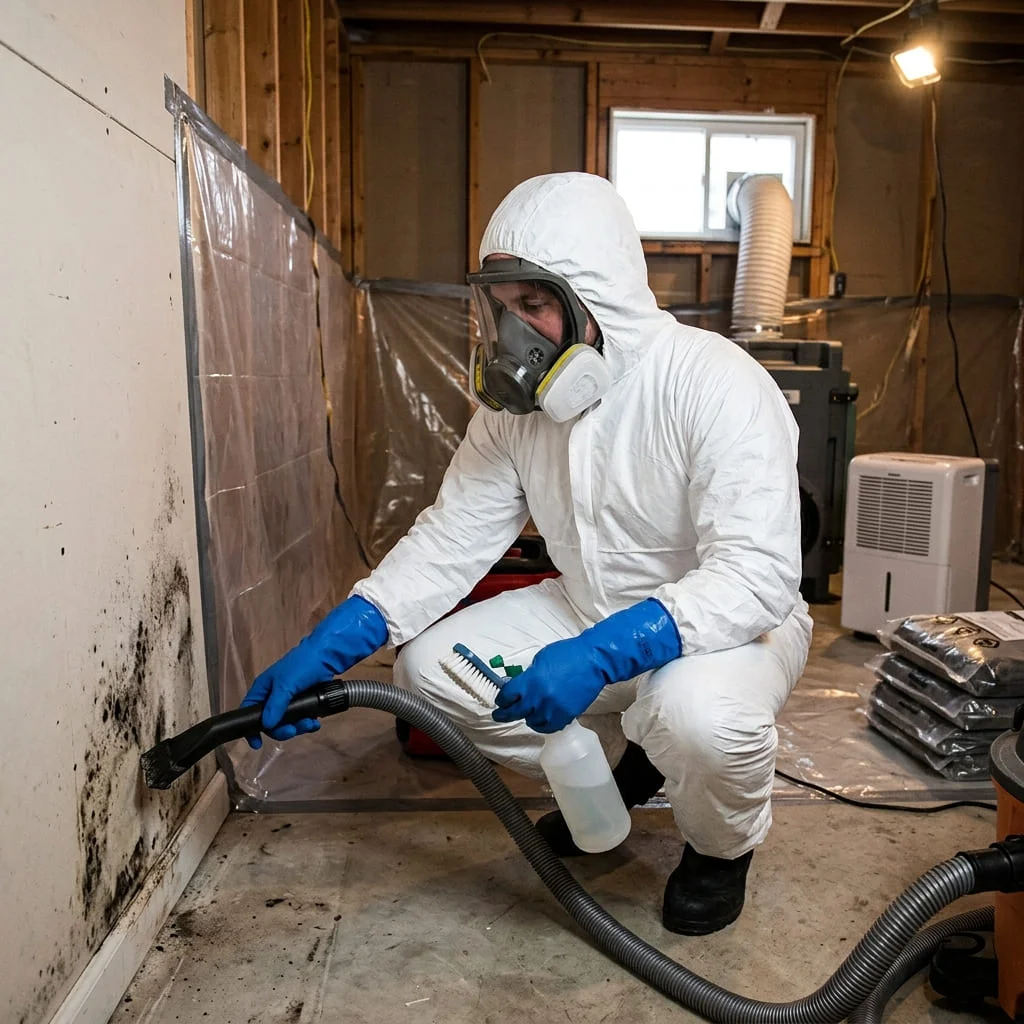 Comparing top-rated mold removal companies serving Sun City, Arizona
Sun City has a mold profile you can almost read off its build dates. Del Webb opened the community in 1960 and finished building it out through the late 1970s, which means every home here is now somewhere between roughly fifty and sixty-five years old — running on original or first-replacement plumbing, original slab penetrations, and roofs that have been through half a century of monsoons. Mold in Sun City is rarely a mystery. It is almost always an old component that finally started seeping.
Arizona Mold Pros compared the mold removal companies serving Sun City and the surrounding northwest Valley on ratings, response time, and whether they handle inspection, containment, removal, and repair under one roof. If you have found a warm spot on the floor, a musty smell in an Arizona room, or staining that appeared after a storm, start with mold inspection and testing and compare the contractors below before you commit to anyone.
Last Updated: September 2026
The companies below serve the Sun City area. We do not rank them, rate them, or verify their credentials on your behalf — that check is yours to make, and the steps below are the ones worth making it with. Arizona issues no mold-specific license, so the burden of confirming a contractor's licensing, insurance, and scope of work sits with the homeowner.
Arizona issues no mold-specific license, so crews work under a Registrar of Contractors license. Ask for the number and look it up — status, classification, and complaint history are all public.
Request a certificate of liability insurance naming you, sent directly from the insurer or agent rather than a copy from the contractor.
A written scope should name the moisture source, the containment method, what gets removed versus dried, and how completion will be confirmed.
Prices for the same job vary widely. Three written quotes tell you whether an outlier is thorough or simply expensive.
Remediation before the leak is repaired means paying for the same work twice. Any quote silent on the source is incomplete.
For anything past a small area, have post-remediation verification done by someone other than the company that did the removal in Sun City.
National brand with local ownership serving the West Valley including Litchfield Park, Tolleson, Avondale, and Goodyear for mold remediation and water damage.
Environmental remediation company handling mold removal, asbestos abatement, and related remediation work.
General contractor offering mold removal, testing, water damage restoration, and reconstruction.
General contractor handling mold remediation, with an emphasis on assessment and a written scope before work begins.
Mold remediation specialists handling containment, removal, and structural drying.
| Service | Average Cost Range |
|---|---|
| Mold Inspection | $300 – $600 |
| Small Area Remediation (under 50 sq ft) | $1,500 – $3,500 |
| Medium Remediation (50–200 sq ft) | $3,500 – $6,000 |
| Full Home Remediation (200+ sq ft) | $5,000 – $10,000 |
| Attic Mold Removal | $2,000 – $6,000 |
| Crawl Space Mold Removal | $2,500 – $7,000 |
| Black Mold Removal | $3,000 – $8,000 |
| Commercial Mold Remediation | $5,000 – $25,000+ |
Costs in Sun City can vary depending on the size of the affected area, type of mold, accessibility, and whether structural repairs are needed. Arizona's dry climate means mold often concentrates around specific moisture sources — monsoon water intrusion, swamp cooler leaks, or plumbing failures — rather than spreading across entire homes. We recommend getting at least 3 quotes from licensed contractors to compare pricing.
Get free quotes from top Sun City mold removal companiesSlab leaks are the signature Sun City mold source. These homes are slab-on-grade with supply lines run beneath the concrete, and after five or six decades those lines develop pinhole failures that release water directly into the slab and the base of the walls above it. Nothing drips from a ceiling and nothing pools on the floor — the water moves sideways through the slab and wicks up into bottom plates, baseboards, and the lower few inches of drywall, which is exactly where mold takes hold first.
The tells are subtle and easy to dismiss: a warm patch on a tile floor, a water bill that climbed without explanation, flooring that lifts or buckles along one wall, or the sound of water running when every fixture is off. Cast-iron drain lines from the same era fail the same quiet way, seeping at joints rather than bursting. Any of these is worth a professional mold inspection that includes moisture mapping of the slab, not just a look at the visible stain.
The roofs and the add-ons are the second cluster. Sun City homes typically pair a low-pitch main roof with genuinely flat or low-slope sections over carports, patios, and the enclosed "Arizona rooms" that so many owners added over the years. Those additions were often built to a lighter specification than the original house, and where an added roof ties into the existing wall, the flashing at that seam is the first thing to give up. Water entering there tracks along the deck and shows up on a ceiling well away from the actual breach.
Evaporative coolers add their own layer. Plenty of Sun City homes still run swamp coolers, which by design push humid air through the house all summer and can leave condensation collecting around ducts and ceiling penetrations. Homes converted to refrigerated air are not automatically in the clear either — an abandoned cooler opening that was capped quickly rather than properly sealed and flashed becomes a direct roof penetration nobody thinks about again. Both scenarios lead to attic mold removal, and where a storm was involved, water damage restoration as well.
The third factor is how Sun City homes are lived in. As an age-restricted community, Sun City has a large share of seasonal residents who close the house up and leave for the summer, and a leak that starts in June is not discovered until the owner returns in October. Four months is more than enough for a pinhole in a supply line to saturate a floor assembly and feed growth through the bottom of the walls, turning a plumbing repair into a multi-room remediation.
There is also a health dimension worth taking seriously here. Public health guidance consistently notes that older adults and people with existing respiratory conditions, asthma, or weakened immune systems tend to be more affected by mold exposure than the general population — which describes a meaningful share of Sun City households. That is a reason to treat a persistent musty odor as a scheduling priority rather than a background annoyance, and to get a professional black mold removal assessment rather than attacking it with a spray bottle.
If you own a Sun City home and you smell something musty you cannot place, check the floor before you check the ceiling. Walk the house barefoot in the morning and note any patch of tile or flooring that reads warm — that is the classic signature of a hot-water line leaking under the slab. Then pull up a corner of baseboard in the room nearest the suspicion and look at the drywall in the lowest few inches, because slab-fed moisture climbs from the bottom rather than falling from above. Compare a recent water bill against the same month last year, and try the old trick of shutting every fixture off and watching whether the meter still creeps.
What makes this worth catching early is the cost curve. Caught at the pinhole stage, you are looking at a plumbing repair and a small area of drywall. Left running for a season, the same leak means saturated bottom plates, contaminated insulation, cabinet kickboards, and often flooring across several rooms — and if the home was closed up while it happened, the whole assembly has been sitting warm and wet with no air movement, which is the ideal condition for growth. That gap is why water damage restoration and mold remediation so often get quoted together on Sun City jobs.
One practical thing to insist on when you compare estimates: the scope should name the moisture source and its correction, not just the square footage of drywall coming out. A slab leak that gets remediated but never repaired brings the mold straight back. Arizona Mold Pros can connect you with a specialist covering Sun City and the northwest Valley — nearby you can also compare mold removal companies in Sun City West and Youngtown, or browse all service areas.
A warm patch on a tile floor, a water bill that climbed without explanation, or flooring that lifts or buckles along one wall is the classic Sun City slab-leak signature — mold feeding from below rather than from a visible drip.
Staining on a ceiling under an Arizona room addition, or near a capped former evaporative cooler opening on the roof, points to the flashing seam at that addition or penetration rather than anything in the middle of the roof.
Because Sun City is age-restricted with a large part-year population, a musty smell noticed only upon returning from a summer away should be treated as a moisture report from a leak that may have run the entire season — worth booking an inspection promptly rather than assuming it's just a closed-house smell, especially since older adults and people with existing respiratory conditions tend to be more affected by mold exposure.
Expect the inspector to check the floor and slab-edge moisture before the ceiling — a moisture-mapped inspection of the slab, not just a visual walkthrough, is the standard here given how often the source is a slab leak.
If your home has an Arizona room addition or a former evaporative cooler opening, expect that specific seam or penetration checked as a likely source rather than a generic roof inspection.
Given Sun City's older population, expect a reasonable contractor to work around medical or mobility considerations when scheduling, and to treat a reported musty odor as worth prioritizing rather than routine.
Mold remediation is one of the few home services where the homeowner carries most of the verification burden. These four checks apply to every contractor on this page, and they are worth running before you sign anything.
Arizona does not issue a license specifically for mold remediation. Crews generally work under an Arizona Registrar of Contractors (ROC) license instead, which means verifying a contractor's ROC status and insurance is on the homeowner rather than on the state.
Check a license at the Arizona ROC →EPA guidance suggests that mold covering roughly more than 10 square feet is generally beyond a do-it-yourself cleanup and warrants professional remediation. Smaller patches can often be handled yourself — provided you have also fixed the moisture source feeding them.
EPA mold cleanup guidance →The ANSI/IICRC S520 standard is the widely recognized standard of care for professional mold remediation, covering containment, worker protection, and verification. A contractor who can tell you how their scope maps to it is giving you something you can hold them to.
Post-remediation verification confirms the work succeeded. Where the budget allows, have it performed by someone independent of the company that did the removal, so the party certifying the result is not the party being paid for it.
How this guide works. Arizona Mold Pros is a directory — we are not the remediation contractor and we do not perform the work ourselves. Listings are compiled from publicly available information about companies advertising mold services in the Sun City area, and ratings and review counts are approximate figures gathered from public sources that change over time, so verify them yourself before hiring. We may be compensated when a homeowner connects with a contractor through this site. That does not change the evaluation criteria above, and we recommend comparing at least three written scopes regardless of who you call.
Sun City homes are slab-on-grade with supply lines run under the concrete, and after five or six decades those lines develop pinhole failures. The water does not appear on the floor — it moves through the slab and wicks up into bottom plates, baseboards, and the lower few inches of drywall, feeding growth inside the wall where nobody can see it. Warm spots on the floor, buckling flooring, or an unexplained water bill are the usual first clues.
It can, in two different ways. A running swamp cooler pushes humid air through the house all summer, and that moisture can collect around ductwork and ceiling penetrations where it is never seen. Separately, homes converted to refrigerated air sometimes have an old cooler opening that was capped quickly rather than properly sealed and flashed, leaving a roof penetration that leaks quietly for years.
It is worth considering on both sides of the transaction, because the housing stock is old enough that hidden moisture is common and a standard home inspection is largely visual. An inspection that includes moisture readings on the slab, in wall bases, and in the attic will find things a walkthrough will not — and for a seller, knowing about it first is far better than having it surface during a buyer’s due diligence.
Costs run $1,500 to $10,000 or more depending on scope, the same range as the rest of the northwest Valley. A slab-leak job can run toward the higher end since the plumbing repair has to happen before drying is worth paying for.
Most jobs take 1 to 5 days, but a leak that ran through an entire closed summer can extend that, since more material typically needs replacing rather than drying.
A sudden slab leak is generally treated like any other plumbing failure, but a leak that ran undetected for months in a home closed up for the season is the kind of gradual, preventable loss insurers routinely question. Get the plumber's repair date and findings documented clearly.
It shows up most often from a slab leak wicking into bottom plates and drywall, or from an Arizona room seam or capped evaporative cooler opening that was never properly sealed and flashed.
For a contained area, most residents can stay home. Given the age of Sun City's population, ask the contractor to work around any medical or mobility needs in the household, and for a larger job consider staying with family — the health guidance on mold affecting older adults more than the general population is a legitimate reason to be cautious rather than to stay in a construction zone.
Walk the house barefoot in the morning and note any warm patch on tile flooring, and compare your water bill month to month. Check the seam where any Arizona room addition meets the original roof, and the flashing at any former evaporative cooler opening. If you're buying or selling, get a moisture-inclusive inspection given the age of this housing stock.
Don't wait for mold to spread. Compare the top-rated mold removal contractors serving Sun City and the surrounding area. Get your free estimate today — no obligation, no pressure.
Call Now for Free QuotesFree estimates · No obligation · Licensed contractors