Preferred Choice Restoration
Quality-focused restoration company specializing in mold remediation, water damage, and insurance claim assistance for residential properties.
Services San Tan Valley and the surrounding area

Compare ratings, reviews, and services from the best mold remediation contractors serving San Tan Valley and the surrounding area — then get matched with a free, no-obligation quote.
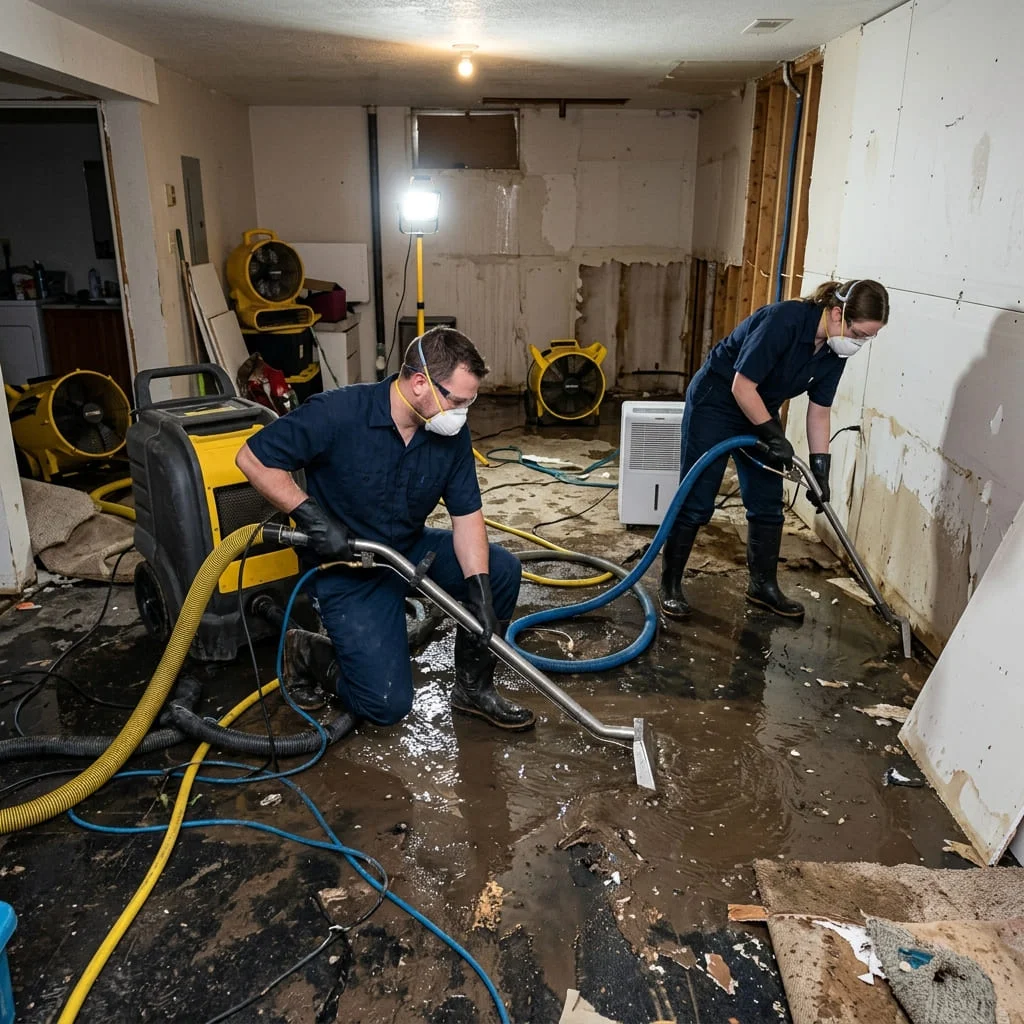 Comparing top-rated mold removal companies serving San Tan Valley, Arizona
San Tan Valley grew from a scattering of desert homesteads into one of the fastest-growing unincorporated communities in the country almost entirely within the 2000s housing boom, and that compressed timeline shapes its mold risk more than almost anything else about the place. Because San Tan Valley has never incorporated as a city, there is no single municipal government that built the roads, ran the water lines, or enforced one uniform building code across Circle Cross Ranch, San Tan Heights, Skyline Ranch, Regency at San Tan, and the golf community at Encanterra — Pinal County handles permitting, and for years the community's private water and wastewater utility struggled badly enough to draw state regulatory action.
Add the San Tan Mountains rising along the community's eastern edge, with washes that drain straight across newer subdivisions during the monsoon, and you have three separate moisture sources layered on top of each other. Arizona Mold Pros compared the mold removal companies that actually cover San Tan Valley — not every East Valley contractor treats the drive out past Queen Creek as routine — so you can weigh coverage and response time before you call. Start with mold inspection and testing if you have a stain with no obvious source, or water damage restoration if water is already down.
Last Updated: September 2026
The companies below serve the San Tan Valley area. We do not rank them, rate them, or verify their credentials on your behalf — that check is yours to make, and the steps below are the ones worth making it with. Arizona issues no mold-specific license, so the burden of confirming a contractor's licensing, insurance, and scope of work sits with the homeowner.
Arizona issues no mold-specific license, so crews work under a Registrar of Contractors license. Ask for the number and look it up — status, classification, and complaint history are all public.
Request a certificate of liability insurance naming you, sent directly from the insurer or agent rather than a copy from the contractor.
A written scope should name the moisture source, the containment method, what gets removed versus dried, and how completion will be confirmed.
Prices for the same job vary widely. Three written quotes tell you whether an outlier is thorough or simply expensive.
Remediation before the leak is repaired means paying for the same work twice. Any quote silent on the source is incomplete.
For anything past a small area, have post-remediation verification done by someone other than the company that did the removal in San Tan Valley.
Quality-focused restoration company specializing in mold remediation, water damage, and insurance claim assistance for residential properties.
Professional mold remediation company using advanced moisture detection to eliminate mold and prevent recurrence. Serves Phoenix, Mesa, Chandler, Gilbert, and beyond.
Arizona's leading mold and water damage restoration company specializing in emergency response, mold inspection, and full property restoration.
Mold specialists handling emergency mold removal and remediation with itemized scopes of work.
Mold damage restoration specialists offering inspection, containment, removal, and repairs.
| Service | Average Cost Range |
|---|---|
| Mold Inspection | $300 – $600 |
| Small Area Remediation (under 50 sq ft) | $1,500 – $3,500 |
| Medium Remediation (50–200 sq ft) | $3,500 – $6,000 |
| Full Home Remediation (200+ sq ft) | $5,000 – $10,000 |
| Attic Mold Removal | $2,000 – $6,000 |
| Crawl Space Mold Removal | $2,500 – $7,000 |
| Black Mold Removal | $3,000 – $8,000 |
| Commercial Mold Remediation | $5,000 – $25,000+ |
Costs in San Tan Valley can vary depending on the size of the affected area, type of mold, accessibility, and whether structural repairs are needed. Arizona's dry climate means mold often concentrates around specific moisture sources — monsoon water intrusion, swamp cooler leaks, or plumbing failures — rather than spreading across entire homes. We recommend getting at least 3 quotes from licensed contractors to compare pricing.
Get free quotes from top San Tan Valley mold removal companiesSan Tan Valley's water and wastewater situation is unlike anywhere else covered on this site, because the community itself has no city utility department. For years the primary private utility serving the area struggled with sewage treatment failures serious enough to draw Arizona Corporation Commission and ADEQ enforcement action, and while a larger utility has since taken over the system, that history matters for mold risk: a wastewater backup is a contamination event, not just a water event, and it calls for a different remediation approach than a clean supply-line leak.
Outside the developed water-utility footprint — on the older ranchette parcels and larger lots toward the foothills — plenty of San Tan Valley homes still run on a private well and a septic system. A failing septic leach field or a well pressure tank that starts weeping behaves the same way it does anywhere else in rural Arizona: quietly, low to the ground, and often discovered by smell rather than sight. Anyone booking a mold inspection here should say upfront whether the home is on the utility, a well, or septic, since it changes where the inspector needs to look.
The second risk is simply how fast San Tan Valley was built. The overwhelming majority of the community's housing went up between roughly 2003 and 2008, when dozens of production builders were pouring slabs and framing stucco-over-frame homes across Circle Cross Ranch, San Tan Heights, Skyline Ranch, and the surrounding subdivisions as fast as crews could move. Pinal County — not a city building department — handled inspections across that entire boom, and the sheer volume of permits pulled during those years means quality varied more between builders and even between phases of the same subdivision than it does in communities that grew more gradually.
The failure points are the same ones that show up in Gilbert and Chandler's boom-era stock — a stucco weep screed later buried under landscaping, a slab plumbing line at the age where pinhole leaks start, an upstairs laundry room sitting over finished ceiling — but with less certainty about how carefully any individual detail was inspected the first time. That is a reason to have an older San Tan Valley production home checked, not a reason to worry, and it is exactly what a proper mold remediation scope should account for.
Third is the terrain itself. The San Tan Mountains and San Tan Mountain Regional Park rise directly along the community's southeastern edge, and the desert washes draining off them cross several of the newer subdivisions built out onto the alluvial fan at the base of the range. During a monsoon downpour that runoff arrives fast and all at once, and roads like Hunt Highway have flood-prone low crossings that give a sense of how much water moves through the area in a heavy storm.
A home built close to a natural wash or below grade relative to the street can take on water at the garage, a ground-level slider, or a low point in the yard within minutes of a storm starting, and in a community this spread out, an emergency call does not always get an immediate response. If a wash has ever flowed onto your property or water has come in at a threshold, prompt water damage restoration in the first 24 to 48 hours is the difference between drying it out and starting a remediation.
Nearly every other city on this site can assume a single municipal water and sewer system and a single building department. San Tan Valley cannot, and that is the first thing to sort out before anyone starts an inspection. Tell the contractor upfront whether your home is served by the area's utility water and sewer, by a private well, or by a well-and-septic combination — the moisture sources an inspector needs to check are genuinely different in each case, from a wastewater backup at a cleanout to a weeping well pressure tank to a saturated leach field.
If your home is inside one of the production subdivisions built during the 2003-to-2008 boom — Circle Cross Ranch, San Tan Heights, Skyline Ranch, or the similar tracts around them — walk the exterior and find the stucco weep screed at the base of every wall. Because so much of this construction went up on a compressed timeline, it is common for landscaping added years later to bury that screed under soil, gravel, or a raised planter bed without anyone noticing, and a buried weep screed traps water against the sheathing behind the stucco no matter how new the house looks. Pair that with a look at slab plumbing age — most of this housing stock is now old enough for copper pinhole leaks to start — and an upstairs laundry room check if the home is two stories, the same failure point covered on our Gilbert and Chandler pages.
Regency at San Tan and other age-restricted sections of the community carry one more consideration: like Sun City and Sun City West, these are single-story homes now well into their second decade, often owned by residents who travel seasonally and may not be home to catch a slow leak early. If you or a family member owns in an age-restricted San Tan Valley community and leaves the house for extended periods, treat the pre-departure checklist the same way — water shut off at the main, air conditioning left running rather than off, and someone checking the house periodically rather than only the yard.
Around Encanterra and the community's golf and lake features, the irrigation feeding those landscapes runs close to a lot of exterior walls, and the same stucco weep-screed rule applies — a wall base that never fully dries because a drip line or turf spray hits it daily is a slow, quiet moisture source regardless of how far the house is from any wash.
Arizona Mold Pros can connect you with a contractor covering San Tan Valley. Compare mold removal companies in Queen Creek, Higley, and Gilbert alongside this page, browse all service areas, or get in touch.
A sewage smell near a floor drain, a cleanout, or the lowest fixture in the house — a shower stall, a laundry standpipe, a downstairs bathroom — is worth acting on immediately in San Tan Valley. It is the classic early sign of a wastewater backup, whether the cause is the community's private utility system or a septic leach field that has started to fail, and it is a different, more contaminated problem than an ordinary supply leak.
On a well or septic property, watch the ground and the utility spaces rather than just the walls. A patch of leach-field lawn that stays green and soft when the rest of the yard is dry, a damp ring or mineral crust at the base of a pressure tank or well fittings, or a musty smell concentrated in a garage or utility room where the tank sits are all signs the water source itself is the moisture problem.
In a two-story production home from the 2003-to-2008 boom, a ceiling stain downstairs with no obvious cause overhead often traces back to an upstairs laundry room or bathroom rather than the room below it — the same pattern as Gilbert. And after any hard monsoon storm, check the garage floor and any ground-level threshold near a wash for a waterline or silt, even if it has since dried; a wash that reached the house once will reach it again. If you notice any of this, contact a licensed mold remediation professional for an inspection before the problem spreads.
The first question a San Tan Valley contractor should ask is where your water comes from — the area utility, a private well, or a septic system — because it changes the scope before anyone opens a wall. A clean supply-line leak is handled the way it would be anywhere: contain the area, run HEPA filtration, dry and treat. A sewage backup from a septic or wastewater failure is Category 3 contaminated water, and the standard of care is to remove the affected porous material — drywall, insulation, subflooring — rather than attempt to dry and save it.
Permitting works differently here too, though not in a way that should change who you hire. San Tan Valley is unincorporated, so there is no city building department — Pinal County handles what permitting applies — but the contractor still needs an active Arizona ROC license in a classification covering the work, exactly as anywhere else in the state. If the job involves a septic system, expect the mold remediation contractor and a licensed septic contractor to coordinate: the tank or leach field gets fixed first, then the drying and remediation.
From there the job looks like remediation anywhere in the East Valley: antimicrobial treatment and scrubbing, dehumidification, repair or replacement of any damaged material, and post-remediation testing to confirm the space is clear. The best companies serving San Tan Valley will say plainly whether they treat this as a clean-water job or a contamination job before writing the scope — that distinction is the one that matters most here.
Mold remediation is one of the few home services where the homeowner carries most of the verification burden. These four checks apply to every contractor on this page, and they are worth running before you sign anything.
Arizona does not issue a license specifically for mold remediation. Crews generally work under an Arizona Registrar of Contractors (ROC) license instead, which means verifying a contractor's ROC status and insurance is on the homeowner rather than on the state.
Check a license at the Arizona ROC →EPA guidance suggests that mold covering roughly more than 10 square feet is generally beyond a do-it-yourself cleanup and warrants professional remediation. Smaller patches can often be handled yourself — provided you have also fixed the moisture source feeding them.
EPA mold cleanup guidance →The ANSI/IICRC S520 standard is the widely recognized standard of care for professional mold remediation, covering containment, worker protection, and verification. A contractor who can tell you how their scope maps to it is giving you something you can hold them to.
Post-remediation verification confirms the work succeeded. Where the budget allows, have it performed by someone independent of the company that did the removal, so the party certifying the result is not the party being paid for it.
How this guide works. Arizona Mold Pros is a directory — we are not the remediation contractor and we do not perform the work ourselves. Listings are compiled from publicly available information about companies advertising mold services in the San Tan Valley area, and ratings and review counts are approximate figures gathered from public sources that change over time, so verify them yourself before hiring. We may be compensated when a homeowner connects with a contractor through this site. That does not change the evaluation criteria above, and we recommend comparing at least three written scopes regardless of who you call.
No — San Tan Valley is an unincorporated community in Pinal County, not a city, so there is no municipal water department covering it uniformly. Most of the developed area is served by a private utility (the system has changed hands over the years after past state regulatory scrutiny over wastewater treatment problems), while many outlying and older parcels toward the San Tan Mountains run on a private well and septic system instead. Know which one applies to your property before booking an inspection, since it changes where the moisture risk actually is.
Not inherently, but the era is worth knowing. The large majority of San Tan Valley housing — Circle Cross Ranch, San Tan Heights, Skyline Ranch, and the tracts around them — went up between roughly 2003 and 2008, when Pinal County inspectors were processing an enormous volume of permits from many different production builders working at once. That does not mean the houses are defective; it means quality and construction detail can vary more from one subdivision or builder to the next than in a community that grew more slowly, which is a reason to have an inspection cover the same detail points — stucco weep screeds, slab plumbing age, upstairs laundry rooms — that matter in Gilbert and Chandler’s similar-era stock.
It can, especially in newer subdivisions built on the alluvial fan at the base of the range. Desert washes draining off the San Tan Mountains and San Tan Mountain Regional Park carry a large volume of water very quickly during a monsoon downpour, and a home sited near a natural wash or at a low point relative to the street can take on water at a garage, slider, or threshold within minutes. If a wash has ever reached your property, treat any recurring dampness there as worth a professional look, and get standing water addressed within 24 to 48 hours to avoid a full mold remediation.
Costs run in the same range as the rest of the East Valley — roughly $1,500 for a small contained area up to $10,000 or more for a full remediation — but the water source changes the number. A sewage backup from a septic or wastewater failure is Category 3 contaminated water, and the affected material generally has to be removed rather than dried in place, which pushes the job toward the higher end of that range faster than a clean supply-line leak would. Get the water source identified before comparing quotes, and get at least three.
Most jobs run 1 to 5 days, the same as elsewhere in the East Valley, but confirm response time when you book rather than assuming a same-day arrival — San Tan Valley sits well past Queen Creek and Gilbert, and not every East Valley contractor treats the drive out as routine. A sewage backup or a septic failure can also add a day if a licensed septic contractor needs to clear or repair the system before remediation work can start.
It depends on the cause, and San Tan Valley's mix of water sources makes that answer less automatic than in a city on standard municipal water and sewer. A sudden failure on the utility side is usually treated like anywhere else, but sewage backup from a septic system or a sewer line is frequently excluded from a standard homeowners policy unless you carry a separate sewer/septic backup endorsement — check whether you have one before assuming coverage. Damage from a slow well or septic problem that went unreported for months is the kind of gradual, preventable loss insurers routinely deny.
It shows up under the same conditions it does anywhere in Arizona — persistent moisture, not the dry climate — and San Tan Valley has a few distinct sources of it: a sewage backup from the area wastewater system or a failing septic leach field, a well pressure tank or supply line weeping quietly in a garage or utility room, or monsoon runoff off the San Tan Mountains reaching a garage or ground-level threshold. Any of those left unaddressed for more than a couple of days gives black mold what it needs.
For a small, contained area on a clean water source, most households stay home. A sewage backup is different — Category 3 water calls for more aggressive containment and generally more of the affected material removed rather than dried, and a contractor may recommend staying elsewhere for a night or two while that work is underway, especially with children, older residents, or anyone with respiratory conditions in the house.
Start with knowing your own water source and checking it specifically. On septic, keep the tank pumped on a normal schedule and watch for slow drains or soggy ground over the leach field. On a well, check the pressure tank and supply line fittings for weeping. On any home, confirm the stucco weep screed at the base of every exterior wall is still clear of landscaping, and after a heavy monsoon storm, walk the property to see whether a wash reached the house. Fixing the moisture source always comes first.
Don't wait for mold to spread. Compare the top-rated mold removal contractors serving San Tan Valley and the surrounding area. Get your free estimate today — no obligation, no pressure.
Call Now for Free QuotesFree estimates · No obligation · Licensed contractors