Preferred Choice Restoration
Quality-focused restoration company specializing in mold remediation, water damage, and insurance claim assistance for residential properties.
Services Scottsdale and the surrounding area

Compare ratings, reviews, and services from the best mold remediation contractors serving Scottsdale and the surrounding area — then get matched with a free, no-obligation quote.
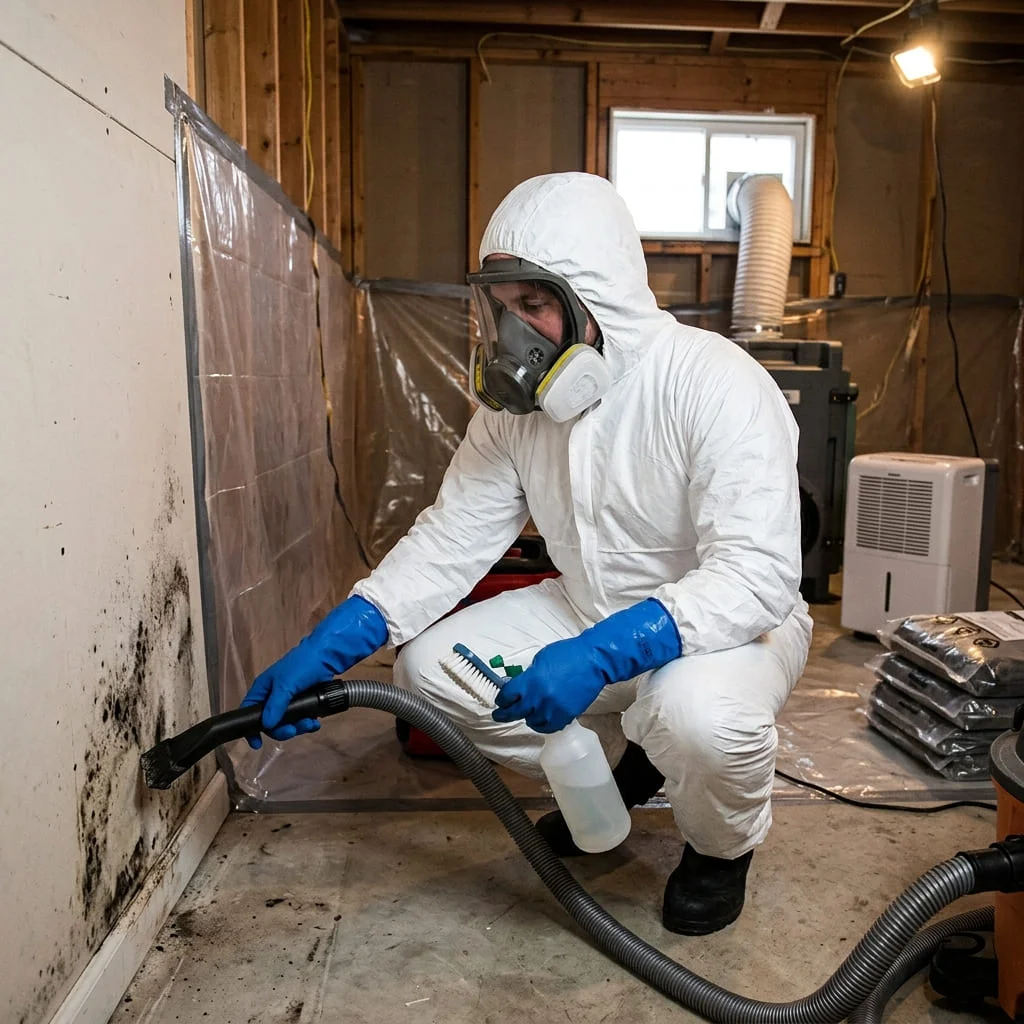 Comparing top-rated mold removal companies serving Scottsdale, Arizona
Most ceiling mold in Scottsdale starts on the roof, and the reason is architectural. More than almost anywhere else in the Valley, Scottsdale built flat and low-slope roofs — the desert contemporary vocabulary that runs from the 1960s ranches around Old Town through McCormick Ranch and out to the custom hillside homes in north Scottsdale. A pitched tile roof sheds a monsoon storm in minutes. A flat roof holds it, and whatever is under the membrane has hours to take on water.
The second factor is occupancy. A large share of Scottsdale housing is second homes, seasonal residences, and short-term rentals, which means a great many properties have no one living in them to notice a stain spreading across a ceiling or a supply line weeping behind a vanity. Arizona Mold Pros compared the mold removal companies serving Scottsdale and the northeast Valley so you can weigh coverage and emergency response in one place. If you have a ceiling stain and no idea where it came from, start with mold inspection and testing; if water is actively coming in, water damage restoration comes first.
Last Updated: September 2026
The companies below serve the Scottsdale area. We do not rank them, rate them, or verify their credentials on your behalf — that check is yours to make, and the steps below are the ones worth making it with. Arizona issues no mold-specific license, so the burden of confirming a contractor's licensing, insurance, and scope of work sits with the homeowner.
Arizona issues no mold-specific license, so crews work under a Registrar of Contractors license. Ask for the number and look it up — status, classification, and complaint history are all public.
Request a certificate of liability insurance naming you, sent directly from the insurer or agent rather than a copy from the contractor.
A written scope should name the moisture source, the containment method, what gets removed versus dried, and how completion will be confirmed.
Prices for the same job vary widely. Three written quotes tell you whether an outlier is thorough or simply expensive.
Remediation before the leak is repaired means paying for the same work twice. Any quote silent on the source is incomplete.
For anything past a small area, have post-remediation verification done by someone other than the company that did the removal in Scottsdale.
Quality-focused restoration company specializing in mold remediation, water damage, and insurance claim assistance for residential properties.
Professional mold remediation company using advanced moisture detection to eliminate mold and prevent recurrence. Serves Phoenix, Mesa, Chandler, Gilbert, and beyond.
Arizona's leading mold and water damage restoration company specializing in emergency response, mold inspection, and full property restoration.
Mold specialists handling emergency mold removal and remediation with itemized scopes of work.
Mold damage restoration specialists offering inspection, containment, removal, and repairs.
| Service | Average Cost Range |
|---|---|
| Mold Inspection | $300 – $600 |
| Small Area Remediation (under 50 sq ft) | $1,500 – $3,500 |
| Medium Remediation (50–200 sq ft) | $3,500 – $6,000 |
| Full Home Remediation (200+ sq ft) | $5,000 – $10,000 |
| Attic Mold Removal | $2,000 – $6,000 |
| Crawl Space Mold Removal | $2,500 – $7,000 |
| Black Mold Removal | $3,000 – $8,000 |
| Commercial Mold Remediation | $5,000 – $25,000+ |
Costs in Scottsdale can vary depending on the size of the affected area, type of mold, accessibility, and whether structural repairs are needed. Arizona's dry climate means mold often concentrates around specific moisture sources — monsoon water intrusion, swamp cooler leaks, or plumbing failures — rather than spreading across entire homes. We recommend getting at least 3 quotes from licensed contractors to compare pricing.
Get free quotes from top Scottsdale mold removal companiesSpray polyurethane foam roofs are the defining Scottsdale mold risk. Foam is a genuinely good system for a low-slope desert roof — it is seamless, it insulates, and it can be walked — but it is only as good as the elastomeric coating protecting it, and Arizona sun destroys that coating on a schedule. Roofers and manufacturers generally expect a recoat every five years or so, which means a foam roof is maintenance rather than a one-time purchase. Let the topcoat go and the foam itself begins to degrade, at which point it absorbs water instead of shedding it.
What makes a foam or membrane failure so hard to trace is that the water does not fall where it enters. It travels laterally between the roof system and the deck, then finds the first penetration, seam, or fastener hole to drop through, so the stain in the ceiling can be fifteen feet from the actual breach. Chasing the stain gets you nowhere; the roof needs a moisture survey — infrared scanning or test cuts — to map the wet area before anyone starts opening ceilings. Any contractor proposing to replace drywall without that step is guessing with your money.
Tile roofs in Scottsdale fail the other way: silently, while looking perfect. On a concrete tile roof the tile is a rain shield, but the waterproofing is the underlayment beneath it, and the felt used through the 1980s and 1990s does not last as long as the tile above it. Whole neighborhoods of that vintage are now past underlayment life with roofs that look immaculate from the street.
Leaks from a tired underlayment concentrate where water concentrates — valleys, the uphill side of chimneys and skylights, and around every plumbing and vent penetration. They usually appear first as a faint ceiling ring after a heavy storm that dries and is forgotten, then returns bigger after the next one. That cycle of wetting and partial drying in an enclosed attic space is exactly what produces the growth behind attic mold removal calls. If your tile roof has never had the underlayment replaced and the house is thirty years old, treat any storm-related stain as an underlayment report rather than a one-off.
Occupancy and site conditions finish the picture. In a house occupied part of the year or rented out by the week, a slow leak has no witness: a guest checking out on Sunday does not report the smell in the guest bath, and the cleaning turn between stays is not an inspection. The same hidden failures that a resident would catch in days run for months in a vacant home — which is why leak detection sensors and an automatic shutoff valve are worth more here than in almost any other Valley city.
Outside, north Scottsdale's hillside lots sit on decomposed granite that sheds monsoon rain as fast as it lands, sending sheet flow across pads and down driveways toward garages and ground-level thresholds. Central Scottsdale is better protected — the Indian Bend Wash greenbelt was built precisely to carry flood flows through the middle of the city — but neighborhood and lot-level drainage still decides what happens at your door. Add resort-style landscaping, water features, and irrigation running against stucco walls, and you have a second, slower moisture path working at the base of the house year-round.
Scottsdale homeowners call about ceilings. The useful conversation is almost always about roofs, and there are three questions that get you to the answer faster than any amount of looking at the stain.
What kind of roof is it, and when was it last serviced? If it is foam, you want the date of the last recoat — not the date of installation. A recoat interval in the neighborhood of five years is the working assumption for an Arizona foam roof, so a fifteen-year-old roof that has never been recoated is not a maintenance question any more. If it is tile, you want to know whether the underlayment has ever been replaced. The answer for most 1980s and 1990s Scottsdale homes is no.
Is there an attic to inspect at all? This catches people out. Many of Scottsdale's flat-roofed contemporary homes have little or no accessible attic — the ceiling is close under the deck, with the insulation inside the roof assembly rather than sitting above a drywall lid. When that is the case, nobody can crawl up and find the wet spot, and moisture can sit in the assembly for a long time with only a faint stain to show for it. That is where infrared scanning or test cuts earn their keep. Ask up front how the contractor intends to locate moisture in a roof with no attic access; if the answer is vague, keep calling.
Where does the water actually enter? On low-slope roofs the answer is rarely the middle of the field. Look at parapet walls and their caps, scuppers and drains, the curbs around mechanical units, and every pipe penetration — and look for ponding, the shallow standing water that remains a day after a storm and marks a low spot where the system is under the most stress.
Two practical notes for part-time residents and rental owners. First, put water leak sensors under sinks, behind toilets, at the water heater, and in the air handler closet, and pair them with an automatic shutoff valve on the main. In an unoccupied Scottsdale house that hardware is cheaper than one remediation. Second, if the property is managed or rented, write down who is responsible for reporting moisture and who authorizes emergency work. Most of the expensive outcomes we hear about in seasonal homes come from a delay of weeks while people work out whose call it was.
When you do get a scope, make sure it separates the roof repair from the remediation. Drying and rebuilding a ceiling under a roof that still leaks is money spent twice — see how remediation is properly staged for what a complete scope should include.
Arizona Mold Pros can connect you with a contractor covering Scottsdale. Compare mold removal companies in Paradise Valley, Phoenix, Fountain Hills, and Cave Creek alongside this page, browse all service areas, or get in touch.
A ceiling stain appearing well away from any obvious roof damage, on a flat or foam-roofed Scottsdale home, points to water tracking along the deck from a failed scupper or parapet cap rather than a leak directly above.
A ceiling ring that reappears after each heavy storm and fades in between is the classic tile-underlayment failure signature — it looks like the roof, but the tile is intact and the waterproofing beneath it has failed.
A musty smell discovered upon returning to a part-time or rental home after weeks away is worth treating as a moisture report, since a leak could have run the entire time no one was there to notice.
Expect the contractor to ask for the date of the roof's last recoat (if foam) or whether the underlayment has ever been replaced (if tile) — not the installation date.
On a flat-roofed home, expect the inspector to ask whether there's an accessible attic at all, since many of Scottsdale's contemporary homes have little or none — infrared scanning or test cuts may be needed instead.
If the home sits vacant part of the year, expect leak sensors and an automatic shutoff valve to come up as a preventive recommendation rather than an afterthought.
Mold remediation is one of the few home services where the homeowner carries most of the verification burden. These four checks apply to every contractor on this page, and they are worth running before you sign anything.
Arizona does not issue a license specifically for mold remediation. Crews generally work under an Arizona Registrar of Contractors (ROC) license instead, which means verifying a contractor's ROC status and insurance is on the homeowner rather than on the state.
Check a license at the Arizona ROC →EPA guidance suggests that mold covering roughly more than 10 square feet is generally beyond a do-it-yourself cleanup and warrants professional remediation. Smaller patches can often be handled yourself — provided you have also fixed the moisture source feeding them.
EPA mold cleanup guidance →The ANSI/IICRC S520 standard is the widely recognized standard of care for professional mold remediation, covering containment, worker protection, and verification. A contractor who can tell you how their scope maps to it is giving you something you can hold them to.
Post-remediation verification confirms the work succeeded. Where the budget allows, have it performed by someone independent of the company that did the removal, so the party certifying the result is not the party being paid for it.
How this guide works. Arizona Mold Pros is a directory — we are not the remediation contractor and we do not perform the work ourselves. Listings are compiled from publicly available information about companies advertising mold services in the Scottsdale area, and ratings and review counts are approximate figures gathered from public sources that change over time, so verify them yourself before hiring. We may be compensated when a homeowner connects with a contractor through this site. That does not change the evaluation criteria above, and we recommend comparing at least three written scopes regardless of who you call.
The working assumption for a spray foam roof in Arizona is a recoat roughly every five years, because the elastomeric topcoat — not the foam — is what the sun attacks. Once the coating fails, the foam begins absorbing water rather than shedding it, and on a low-slope Scottsdale roof that water travels sideways under the system before dropping through the first available penetration. That is why the ceiling stain is often nowhere near the breach, and why a moisture survey of the roof should come before anyone opens a ceiling.
On a tile roof the tile is the rain shield and the underlayment beneath it is the actual waterproofing. Underlayment installed in the 1980s and 1990s reaches the end of its life well before the concrete tile does, so a roof can look immaculate while the layer that keeps water out has failed. Leaks show up where water concentrates: valleys, the uphill side of chimneys and skylights, and around vent penetrations. A stain that reappears after each heavy storm and dries in between is a classic underlayment signature.
Instrument it and give someone clear authority. Put leak sensors under sinks, behind toilets, at the water heater, and in the air handler closet, and fit an automatic shutoff valve on the main so a failure closes itself. Have someone go inside monthly and photograph the ceilings, cabinets, and mechanical spaces rather than only checking the exterior. If the house is managed or rented, agree in writing who reports moisture and who can authorize emergency work — the costly outcomes in seasonal homes usually come from weeks lost deciding whose call it was.
Costs run the usual $1,500-to-$10,000-plus range for the remediation itself, but a roof-origin job often needs a separate roofing repair or recoat — ask for that cost broken out from the mold remediation cost so you can see where the money is going.
It shows up most often from a foam roof past its recoat interval, from tile underlayment that's reached the end of its service life, or from a leak that ran unattended in a part-time or rental home.
Track your foam roof's recoat schedule — roughly every five years is the working assumption in this climate — or have tile underlayment assessed once the roof passes twenty years old. If the home sits vacant part of the year, install leak sensors and an automatic shutoff valve.
Don't wait for mold to spread. Compare the top-rated mold removal contractors serving Scottsdale and the surrounding area. Get your free estimate today — no obligation, no pressure.
Call Now for Free QuotesFree estimates · No obligation · Licensed contractors