SERVPRO of Tucson Valley
Locally owned franchise of the national restoration brand, handling mold remediation and water damage across the Tucson valley.
Services Green Valley and the surrounding area
Compare ratings, reviews, and services from the best mold remediation contractors serving Green Valley and the surrounding area — then get matched with a free, no-obligation quote.
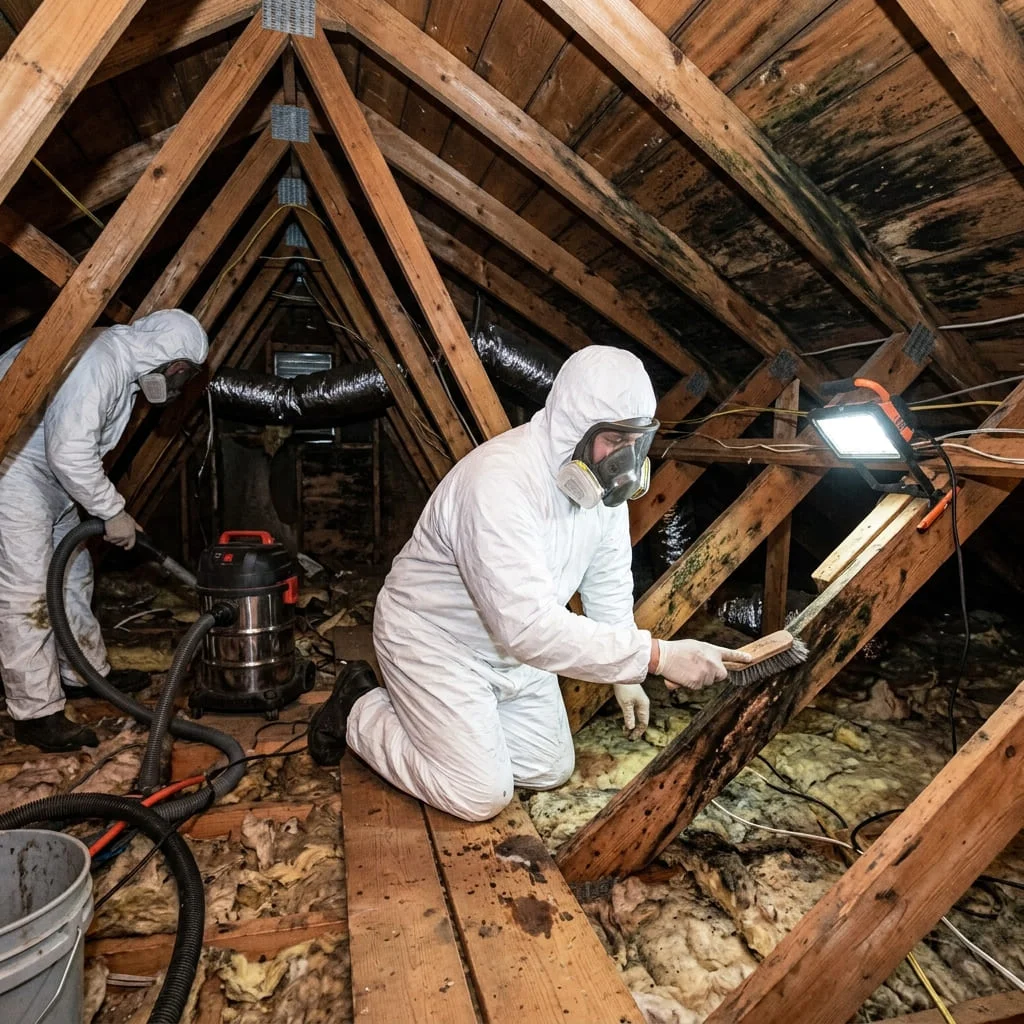 Comparing top-rated mold removal companies serving Green Valley, Arizona
Green Valley is one of the oldest planned retirement communities in Arizona, and its housing stock tells you exactly where mold turns up here. Development began in the 1960s and ran hard through the 1970s and 1980s, producing thousands of patio homes, townhomes, and condominium units — many of them with low-slope or nearly flat roof sections, evaporative coolers, and plumbing now well past fifty years old. Age is the whole story in Green Valley, in a way it simply is not in the newer towns up and down I-19.
The second complication is ownership. A very large share of Green Valley housing sits inside homeowners associations, and a great deal of it shares walls and roofs with neighboring units. When water appears in a townhome or condo, the first real question is not which contractor to call — it is who is responsible for what, because the roof, the exterior wall, and the plumbing inside a shared wall are frequently not the unit owner's to repair.
Arizona Mold Pros compared the mold remediation contractors covering the Santa Cruz Valley so Green Valley homeowners can weigh ratings, coverage, and response time in one place. If you have found a stain on a ceiling or a musty smell in a closed room, start with mold inspection and testing; if a line has let go, water damage restoration is the urgent step.
Last Updated: September 2026
The companies below serve the Green Valley area. We do not rank them, rate them, or verify their credentials on your behalf — that check is yours to make, and the steps below are the ones worth making it with. Arizona issues no mold-specific license, so the burden of confirming a contractor's licensing, insurance, and scope of work sits with the homeowner.
Arizona issues no mold-specific license, so crews work under a Registrar of Contractors license. Ask for the number and look it up — status, classification, and complaint history are all public.
Request a certificate of liability insurance naming you, sent directly from the insurer or agent rather than a copy from the contractor.
A written scope should name the moisture source, the containment method, what gets removed versus dried, and how completion will be confirmed.
Prices for the same job vary widely. Three written quotes tell you whether an outlier is thorough or simply expensive.
Remediation before the leak is repaired means paying for the same work twice. Any quote silent on the source is incomplete.
For anything past a small area, have post-remediation verification done by someone other than the company that did the removal in Green Valley.
Locally owned franchise of the national restoration brand, handling mold remediation and water damage across the Tucson valley.
Full-service restoration franchise covering southern Arizona, offering mold remediation, water and fire damage repair, and reconstruction under one contract.
Emergency-focused franchise handling mold removal and water damage response across the Tucson area.
Franchise territory covering the northwest corridor — Marana, Avra Valley, Oro Valley, and Casas Adobes — for mold remediation, water extraction, and post-storm structural drying.
Neighborly-affiliated restoration franchise handling mold remediation, water damage mitigation, and odor removal for residential and light commercial properties.
| Service | Average Cost Range |
|---|---|
| Mold Inspection | $300 – $600 |
| Small Area Remediation (under 50 sq ft) | $1,500 – $3,500 |
| Medium Remediation (50–200 sq ft) | $3,500 – $6,000 |
| Full Home Remediation (200+ sq ft) | $5,000 – $10,000 |
| Attic Mold Removal | $2,000 – $6,000 |
| Crawl Space Mold Removal | $2,500 – $7,000 |
| Black Mold Removal | $3,000 – $8,000 |
| Commercial Mold Remediation | $5,000 – $25,000+ |
Costs in Green Valley can vary depending on the size of the affected area, type of mold, accessibility, and whether structural repairs are needed. Arizona's dry climate means mold often concentrates around specific moisture sources — monsoon water intrusion, swamp cooler leaks, or plumbing failures — rather than spreading across entire homes. We recommend getting at least 3 quotes from licensed contractors to compare pricing.
Get free quotes from top Green Valley mold removal companiesRoofs are the first thing to understand about mold in Green Valley. A great deal of the housing built here from the 1960s through the 1980s used low-slope or nearly flat roof sections, which behave completely differently from the pitched tile roofs on newer Arizona homes. A low-slope roof does not shed water — it holds it briefly and relies entirely on a membrane or coating and on correctly sloped drainage to move it off. Built-up, foam, and coated systems all have a finite service life, and once the coating chalks, cracks, or blisters, water sits on the surface and finds the seams.
Because that water enters through the roof plane rather than down a wall, the first sign is almost always a ceiling: a brown ring or bloom, a soft patch of drywall, sagging in a corner, or blistering paint overhead. The trap is that a leak in a low-slope assembly can travel a long way through the insulation before it appears, so the stain is frequently nowhere near the actual breach. That is why a competent mold inspection in a Green Valley home starts on the roof and in the attic space rather than at the visible mark, and why attic mold removal is such a common scope here.
The second factor is everything else that is old. Homes of this era in Green Valley carry aging supply and drain plumbing, worn shower pans, tub surrounds whose grout and sealant gave up years ago, and bathrooms that vent weakly or vent into an attic instead of outside. Many still run evaporative coolers, which by design push humid air through the house all summer — excellent for comfort and cost, and a steady humidity source that any lingering dampness behind a wall will happily use. Water heaters reaching the end of a long life are another quiet standby, particularly in a closet or garage where a slow weep can run for weeks unseen.
Outside, the Santa Cruz Valley setting adds its own load. The pecan orchards nearby are flood irrigated through the growing season, landscape irrigation runs against foundations everywhere, and the older lots have had decades for grading to settle out of true. Water arriving at grade shows up at the bottom of a wall — bubbling paint low on the drywall, softened baseboard, efflorescence on block — which is a different diagnosis and a different repair from the ceiling stains that come off the roof.
Third is who lives here and how the buildings are used. Green Valley has a very large part-year population, and a home closed in April and reopened in October still has water pressure in every wall. A toilet supply line, a braided washer hose, a refrigerator icemaker line, or an aging water heater will run for months in an empty house with nobody to hear it, and owners who switch the cooling off entirely leave the building sealed and unventilated through a desert summer.
That matters more here than it would elsewhere because of who is exposed to the result. Mold exposure is generally harder on people with asthma, COPD, other chronic respiratory conditions, or a weakened immune system, and Green Valley's population skews substantially older than the state average. That is not a reason for alarm, but it is a reason to treat a persistent musty odor as something to investigate now rather than at the end of the season, and a reason to insist that any work larger than a small contained patch is done with proper containment and HEPA filtration rather than surface cleaning — the standard behind genuine black mold removal and full mold remediation.
In a detached house the answer is simple — it is yours. In a Green Valley townhome or condominium it usually is not, and getting this wrong costs owners real money. Before you authorize any demolition, read your association's declaration of covenants, conditions and restrictions along with the bylaws, and find the section that divides the unit from the common elements. In most condominium documents the roof, the exterior walls, the structural framing, and frequently the plumbing running inside a shared wall are common elements maintained by the association, while the finished surfaces inward — drywall, paint, flooring, cabinets, fixtures — belong to the owner.
That division decides two separate things: who is responsible for fixing the source, and who pays for repairing the damage. They are not the same question and they do not always land on the same party. If a failed roof membrane over a shared building let water into your ceiling, the roof repair is very often the association's obligation while the interior finishes may still be yours or your insurer's. Getting a written answer from the association before work starts is far easier than arguing about it after the drywall is in a dumpster.
So put the notice in writing. Email or letter, dated, with photographs attached, describing what you found and when — then keep a copy. A verbal report to a board member or a maintenance contractor leaves you with no record, and if the source turns out to be a common element that the association was on notice about, that dated written report is the single most useful document you have. Notify your own insurer at the same time, and ask specifically how your policy interacts with the association's master policy, because the seam between the two is exactly where mold claims in shared buildings get stuck.
None of that means waiting while the unit stays wet. Emergency extraction and drying are urgent regardless of who eventually pays, because growth can begin on wet drywall, insulation, and carpet padding within 24 to 48 hours. Do the documentation first — dated photographs of every affected room and a shot of the high-water line before anything is moved — then get the water out. Ask the restoration firm for moisture readings and daily drying logs and keep both, since that paperwork is what turns a dispute into a claim.
One more thing worth insisting on in a shared building: mold does not respect a unit boundary. If water has been in a party wall, the neighboring unit may have a problem its owner does not know about yet, and a contained scope that stops at your side of the framing can leave the source untouched. Ask how far above and beyond the visible damage material will be removed, confirm that containment and HEPA filtration go up before demolition rather than after, and for anything beyond a small area have post-remediation verification performed by someone independent of the company that did the removal. Arizona Mold Pros can connect you with a licensed contractor covering Green Valley — compare mold removal companies in Sahuarita, Vail, and Marana alongside this page, browse all service areas, or get in touch.
A brown ring or bloom on a ceiling, soft drywall, or blistering paint overhead — appearing well away from where the roof actually failed — is the classic Green Valley signature of a low-slope roof letting water travel through the deck before it shows.
In a townhome or condo, staining near a party wall shared with a neighboring unit is worth flagging to the association immediately, since mold does not respect a unit boundary and the source may be a common-element roof or wall.
A musty smell noticed upon reopening a home closed for the season is worth acting on quickly given Green Valley's older population — public health guidance notes that older adults and people with respiratory conditions tend to be more affected by mold exposure.
In a townhome or condominium, expect to read your association's governing documents before authorizing demolition — the roof, exterior walls, and shared-wall plumbing are frequently common elements the association is responsible for, not the unit owner.
Expect the inspection to start on the roof and in the attic space rather than at the visible ceiling mark, since low-slope roof leaks travel before they show.
If the home is seasonal, expect the contractor to ask how long it's been closed, and to raise the same prevention steps used in other seasonal communities.
Mold remediation is one of the few home services where the homeowner carries most of the verification burden. These four checks apply to every contractor on this page, and they are worth running before you sign anything.
Arizona does not issue a license specifically for mold remediation. Crews generally work under an Arizona Registrar of Contractors (ROC) license instead, which means verifying a contractor's ROC status and insurance is on the homeowner rather than on the state.
Check a license at the Arizona ROC →EPA guidance suggests that mold covering roughly more than 10 square feet is generally beyond a do-it-yourself cleanup and warrants professional remediation. Smaller patches can often be handled yourself — provided you have also fixed the moisture source feeding them.
EPA mold cleanup guidance →The ANSI/IICRC S520 standard is the widely recognized standard of care for professional mold remediation, covering containment, worker protection, and verification. A contractor who can tell you how their scope maps to it is giving you something you can hold them to.
Post-remediation verification confirms the work succeeded. Where the budget allows, have it performed by someone independent of the company that did the removal, so the party certifying the result is not the party being paid for it.
How this guide works. Arizona Mold Pros is a directory — we are not the remediation contractor and we do not perform the work ourselves. Listings are compiled from publicly available information about companies advertising mold services in the Green Valley area, and ratings and review counts are approximate figures gathered from public sources that change over time, so verify them yourself before hiring. We may be compensated when a homeowner connects with a contractor through this site. That does not change the evaluation criteria above, and we recommend comparing at least three written scopes regardless of who you call.
It depends on where the water came from and what your association's governing documents say. In most condominium declarations the roof, exterior walls, structural framing, and plumbing inside shared walls are common elements maintained by the association, while finished surfaces inward belong to the owner. Fixing the source and repairing the damage are separate questions that do not always land on the same party. Report the problem to the association in writing with dated photographs, notify your own insurer, and get a written answer before any demolition starts.
Because a lot of the housing built here from the 1960s through the 1980s has low-slope or nearly flat roof sections. Those roofs do not shed water the way a pitched tile roof does — they rely on a membrane or coating and correct drainage, and once the coating chalks, cracks, or blisters, water sits and finds the seams. It then enters through the roof plane and can travel some distance through the insulation, so the ceiling stain often appears well away from the actual breach.
Mold exposure is generally harder on people with asthma, COPD, other chronic respiratory conditions, or a weakened immune system, and Green Valley's population skews older than the state average. That is not cause for alarm, but it is a good reason to investigate a persistent musty odor promptly rather than at the end of the season, and to insist that anything beyond a small contained patch is handled with proper containment and HEPA filtration rather than surface cleaning.
Costs run the usual $1,500-to-$10,000-plus range for the remediation itself. In a townhome or condo, the roof or common-element repair may be a separate cost billed to the association rather than the unit owner — get that determined before assuming you're covering all of it.
It shows up most often from a low-slope roof letting water into the deck and travel through the insulation, from aging plumbing and worn shower pans in this 1960s-through-1980s housing stock, or from a leak that ran unattended in a home closed up for the season.
Have a low-slope or flat roof section inspected for coating condition before monsoon season rather than after a ceiling stains. In a townhome or condo, know your association's maintenance boundaries before you need them. If the home is seasonal, shut the water off at the main before you leave.
Don't wait for mold to spread. Compare the top-rated mold removal contractors serving Green Valley and the surrounding area. Get your free estimate today — no obligation, no pressure.
Call Now for Free QuotesFree estimates · No obligation · Licensed contractors