An evaporative cooler works by soaking a pad and pulling outside air through it — the same water evaporating into that air is what cools your house. It is also, by design, a machine that stays wet on a schedule. Most of the time that's fine. When maintenance slips, it is one of the more direct paths to mold in an Arizona home.
Here is where swamp cooler mold actually comes from, how to tell it's happening before the smell gives it away, and the maintenance schedule that keeps a cooler from becoming a moisture problem.
Why Swamp Coolers Are a Real Moisture Source
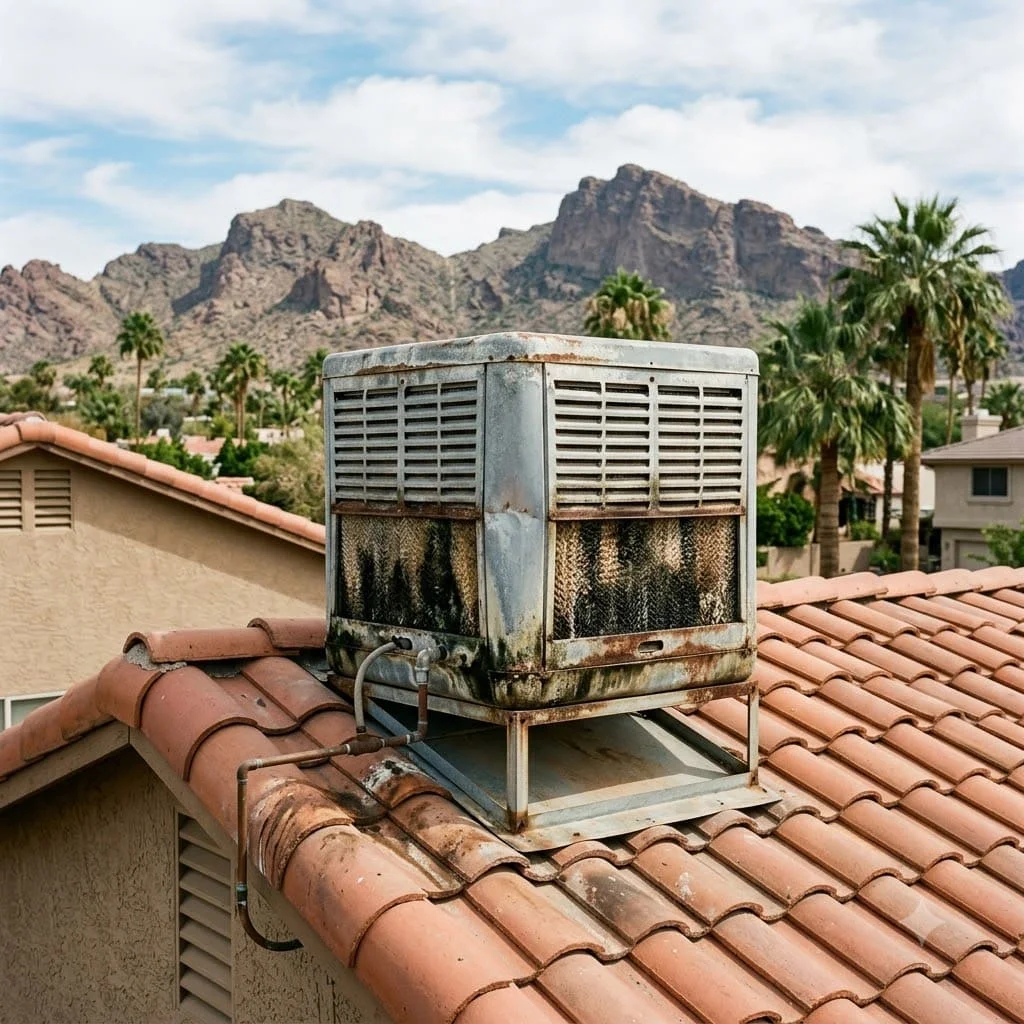 Weathered evaporative cooler unit on an Arizona tile roof with visible dark staining around the base and cooling pads
Refrigerated air conditioning cools by removing heat and, as a side effect, pulling humidity out of the air. A swamp cooler does close to the opposite — it cools by adding moisture, which means it is deliberately raising indoor humidity every time it runs. That's a reasonable tradeoff in Arizona's dry spring and early summer. It becomes a liability in August, once monsoon moisture has already pushed outdoor dew points up and the cooler's added humidity has nowhere easy to go.
The unit itself compounds the problem in three specific spots:
- The cooling pads. Pads that stay wet between cycles, rather than draining and drying, hold organic material and mineral deposits from hard water — both of which feed mold directly on the pad surface.
- The reservoir. Standing water that isn't fully draining between uses, especially at the end of a cooling season when the unit sits unused for months, is close to ideal growing conditions.
- Ductwork and vents. Humid air moving through ducts that run through hot attic space creates condensation points inside the duct itself, and that moisture can sit against duct insulation for the length of the cooling season.
Signs Your Swamp Cooler Has a Mold Problem
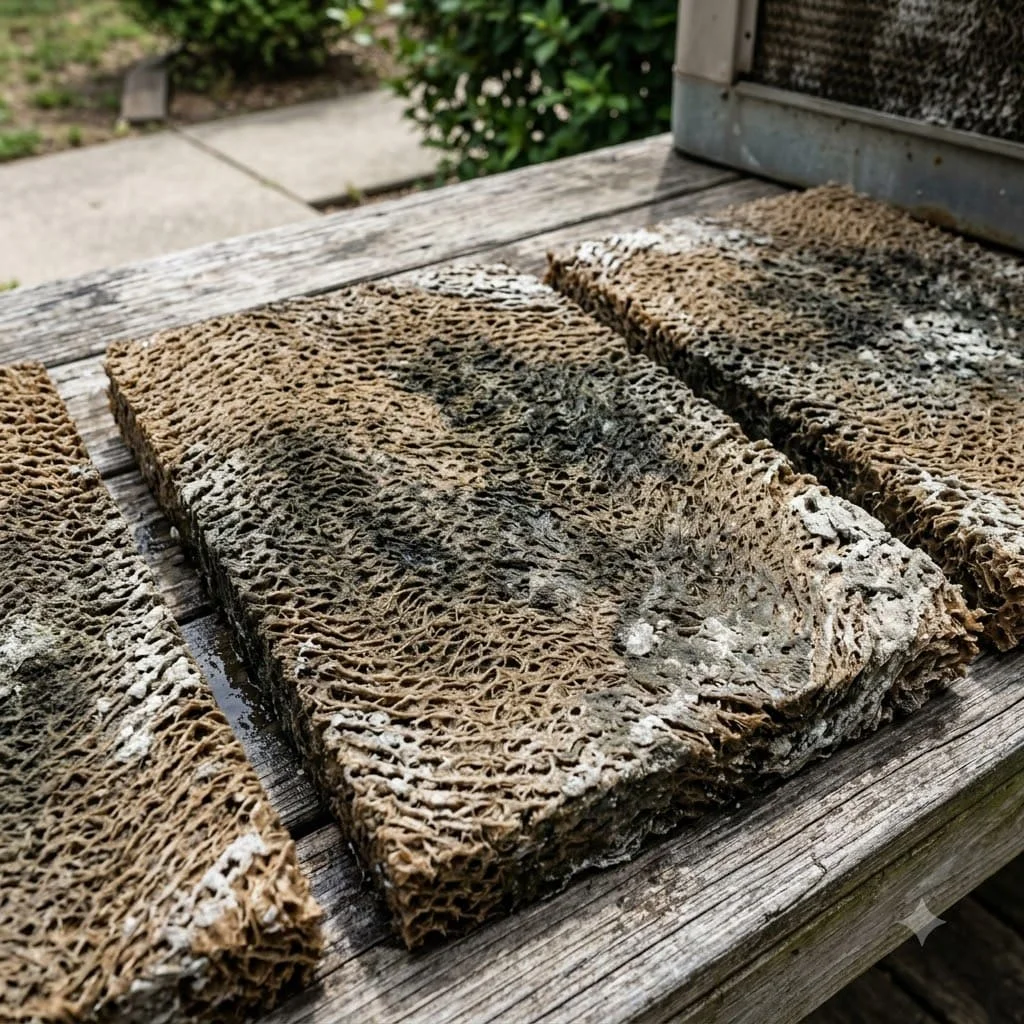 Close-up of evaporative cooler pads with dark mold staining and mineral buildup
The reliable indicators, in order of how early they show up:
- A musty smell specifically when the unit is running — the single clearest signal, since it ties the odor directly to the system rather than somewhere else in the house
- Visible dark staining on the pads, housing, or reservoir when you inspect the unit directly
- A ring of dark staining around a vent or register the humid air passes through
- Increased allergy symptoms — sneezing, congestion, itchy eyes — that track with the cooling season and ease when the system is off
The test that separates the unit from the ductwork: if the smell is strongest right at a vent but the pads and reservoir look clean, the growth has likely moved past the cooler itself and into the ducting — which is a bigger job than replacing pads.
Seasonal Maintenance That Actually Prevents This
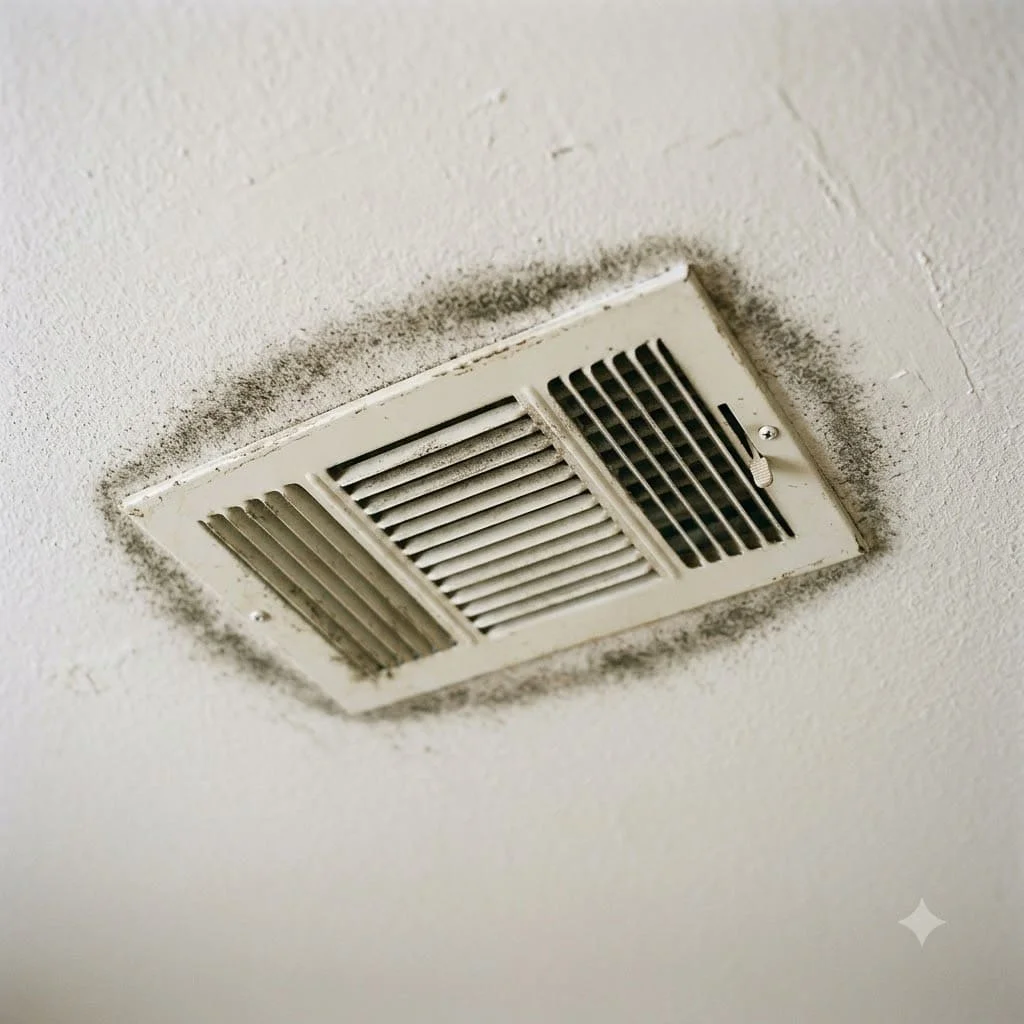 Ceiling air vent with a faint ring of dark staining from humid airflow
| When | What to do |
|---|---|
| Before the season starts | Replace pads — don't reuse last year's, even if they look fine. Scrub the reservoir and housing with a mild detergent solution. |
| Monthly during cooling season | Check the reservoir for standing water buildup and mineral scale. Confirm the float valve is shutting off properly rather than overfilling. |
| After a monsoon storm | Check for wind-driven rain around the unit's roof penetration and line set — the same storms that stress roofing stress cooler housings too. |
| End of season | Drain the reservoir completely rather than leaving it full over the winter months when the unit sits unused. |
If a smell persists after a full pad replacement and reservoir cleaning, the moisture has likely reached ductwork or insulation that a homeowner cleaning pass cannot fix. That's the point to bring in professional mold remediation rather than another round of pad swaps — cleaning the unit again does nothing for growth that has already moved into the ducts feeding it.
Where This Shows Up Most in Arizona
Swamp coolers are most common on older housing stock that was built with them as the primary system, or added them as a supplemental unit before refrigerated air became standard. The pre-war and mid-century housing across central Phoenix carries decades of roof-penetration history from swamp cooler installs, some still active and some simply capped over. West Valley neighborhoods like Glendale's older districts and Avondale show the same pattern — older, more affordable housing stock where a swamp cooler was the original or supplemental cooling system and the roof penetration it needs has had decades to develop gaps.
Arizona Mold Pros is a directory, not a remediation company — we compare the contractors who handle both HVAC-related mold and full remediation so you can get a second opinion before assuming a pad swap fixed the problem. Call for free, no-obligation quotes from specialists serving your area.